Five Emergent Writing Invitations That Build Confidence in Kindergarten

Emergent writing invitations are one of the most powerful ways to help young children see themselves as writers. In Kindergarten, writing (and pre-writing) does not have to rely on a worksheet or a formal lesson. It is a play-based exploration where children experiment with marks, symbols, letters, and stories in meaningful ways. When educators create intentional emergent writing invitations, children begin to see writing as a tool for communication, creativity, and self-expression.

These invitations are simple to set up, low-prep, and deeply aligned with the Ontario Kindergarten Program. They support oral language, fine-motor development, storytelling, and early print awareness — all through play. Below are five emergent writing invitations you can introduce in your classroom this week.
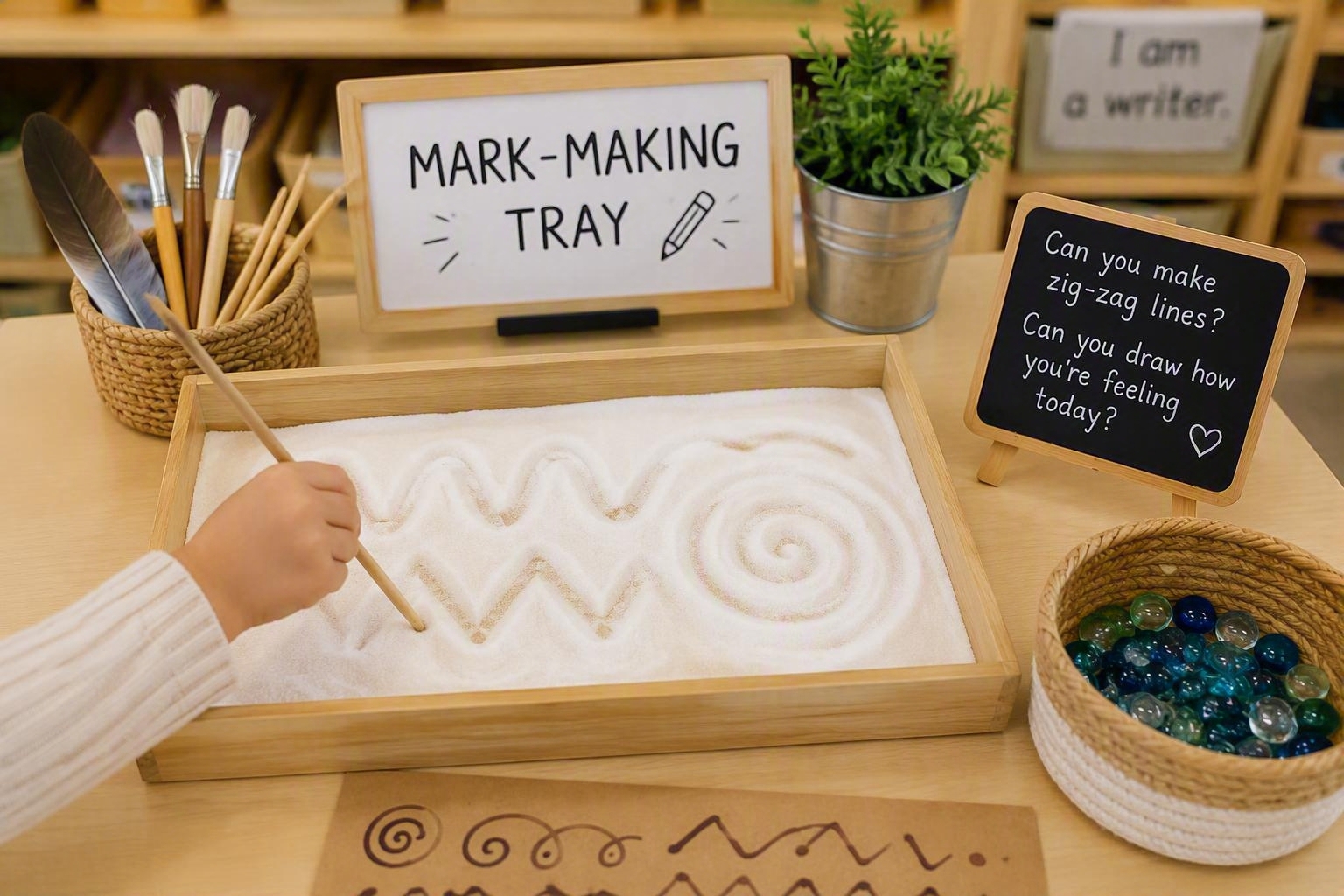
Emergen Writing Invitations - Mark-Making Trays

1. Mark-Making Trays

Mark-making is the foundation of emergent writing. Before children form letters, they explore lines, curves, shapes, and patterns. A mark-making tray can be filled with salt, sand, coloured rice, or kinetic sand. Add tools such as paintbrushes, dowels, feathers, or simply fingers.

Mark-making trays allow children to experiment freely without the pressure of permanence. They can erase, redo, and explore again. This freedom builds confidence and encourages risk-taking — two essential components of emergent writing.

To extend the invitation, offer prompts like “Can you make zig-zag lines?” or “Can you draw how you’re feeling today?” These prompts support emotional expression and fine-motor development while keeping the experience open-ended.

2. Labeling Invitations
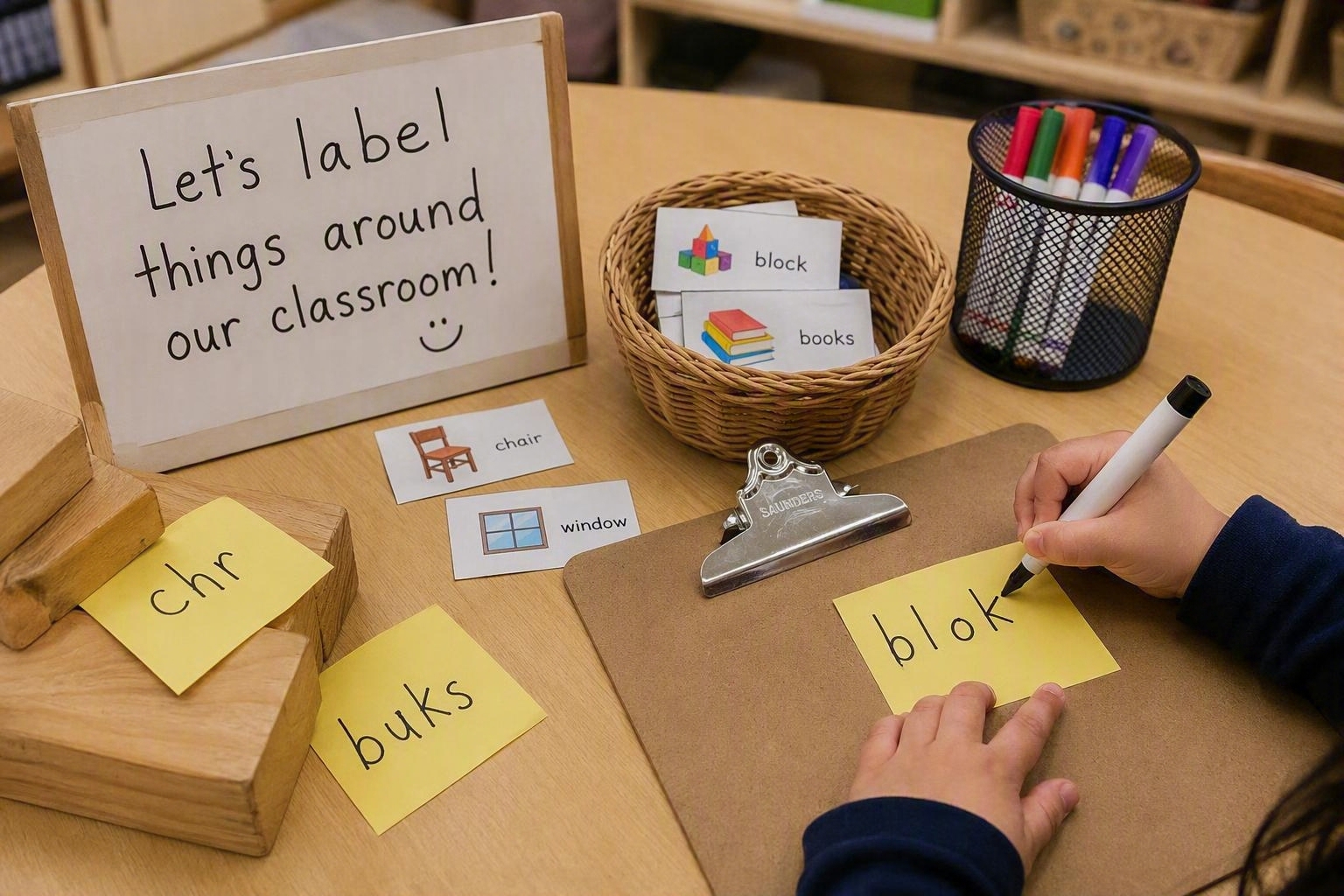
Emergent Writing Invitations - Labelling the room

Labeling invitations help children connect writing to meaning. Provide baskets of environmental print cards, sticky notes, clipboards, and markers. Invite children to label objects around the room — blocks, materials, centres, or their own creations.

Labeling encourages children to attempt letters and sounds in authentic contexts. When they write “block centre,” “house,” or “car,” they begin to understand that writing communicates ideas. This is a key component of emergent writing invitations: writing becomes purposeful.

To support independence, place alphabet cards or simple sound boxes nearby. Children can reference letters as needed, building confidence and autonomy in the writing centre.

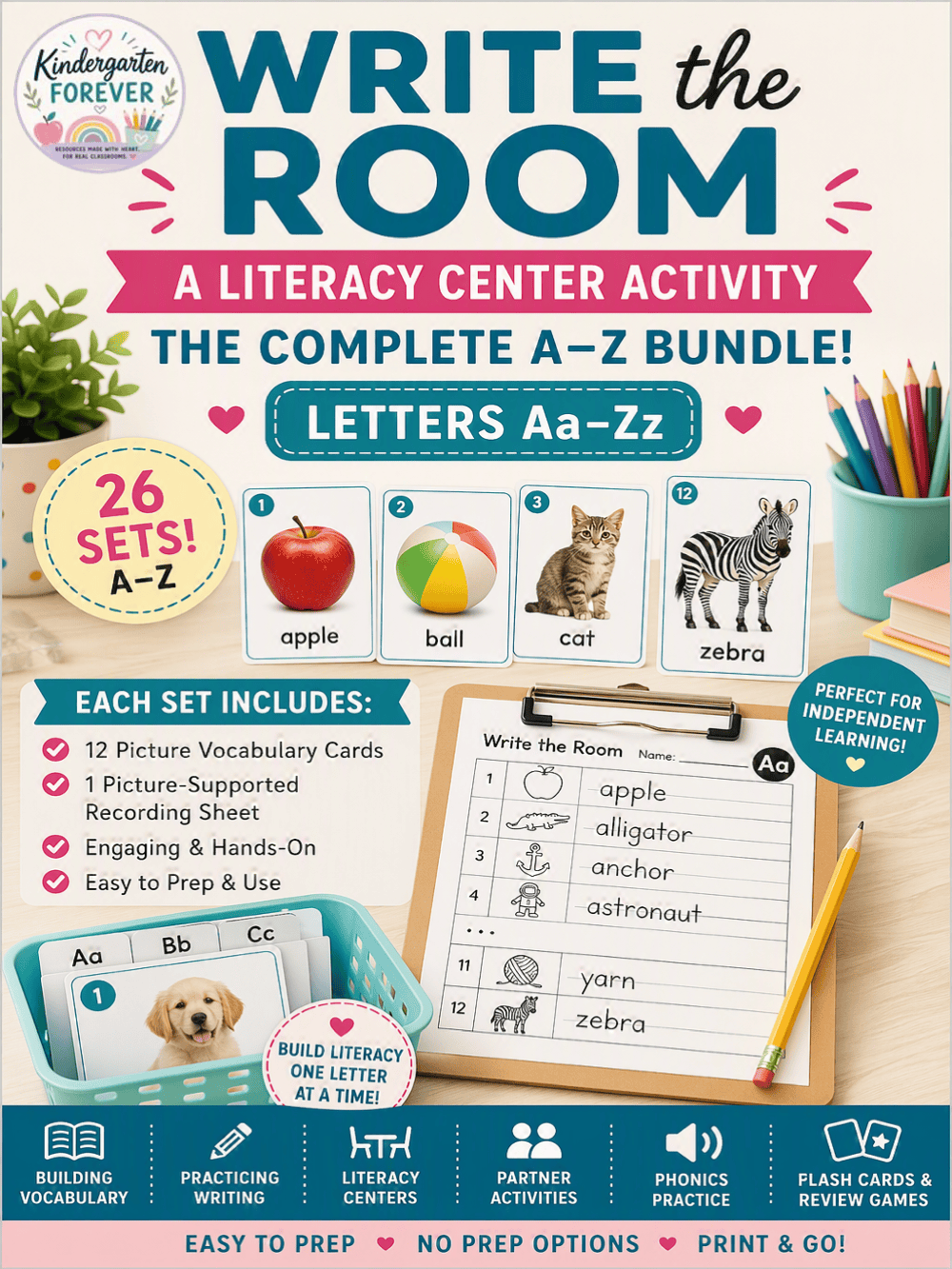
If you want to extend labeling and environmental print into a movement-based literacy experience, you can try a Write the Room activity, where children search for letters, words, or pictures around the classroom and record what they find. This blends emergent writing with exploration, oral language, and print awareness. You can see an example in my Write the Room series, which includes alphabet, number sense, and thematic versions that support early writing skills through play.

3. Loose Parts Storytelling

Emergent Writing Invitations - Loose Parts Storytelling

Loose parts storytelling is a powerful emergent writing invitation because it blends oral language, creativity, and early writing skills. Offer small loose parts — gems, discs, animals, buttons — and pair them with blank story mats or simple beginning/middle/end frames.

Children naturally begin creating scenes, characters, and events. Once their story is built, invite them to write or draw part of the story. This might be a label, a sentence, or a series of marks that represent their ideas.

Loose parts storytelling supports sequencing, vocabulary development, and expressive language. It also encourages children to see writing as part of storytelling, not a separate task. For children who want scaffolding, offer sentence starters such as “This is…” or “First, I…”

Emergent Writint Invitations - Environmental Print Scavenger Hunts

4. Environmental Print Scavenger Hunts

Environmental print is highly motivating for young learners. Children recognize logos, signs, and familiar symbols long before they read conventional text. An environmental print scavenger hunt is an engaging emergent writing invitation that builds confidence and print awareness.

Create a simple scavenger hunt using logos or signs from your classroom or school. Children walk around looking for matching print, then record their findings using drawings, letters, or invented spelling.

This invitation encourages children to write about what they discover. It also supports early reading behaviours, observational skills, and independence. Clipboards make the activity feel purposeful and “official,” which increases engagement.

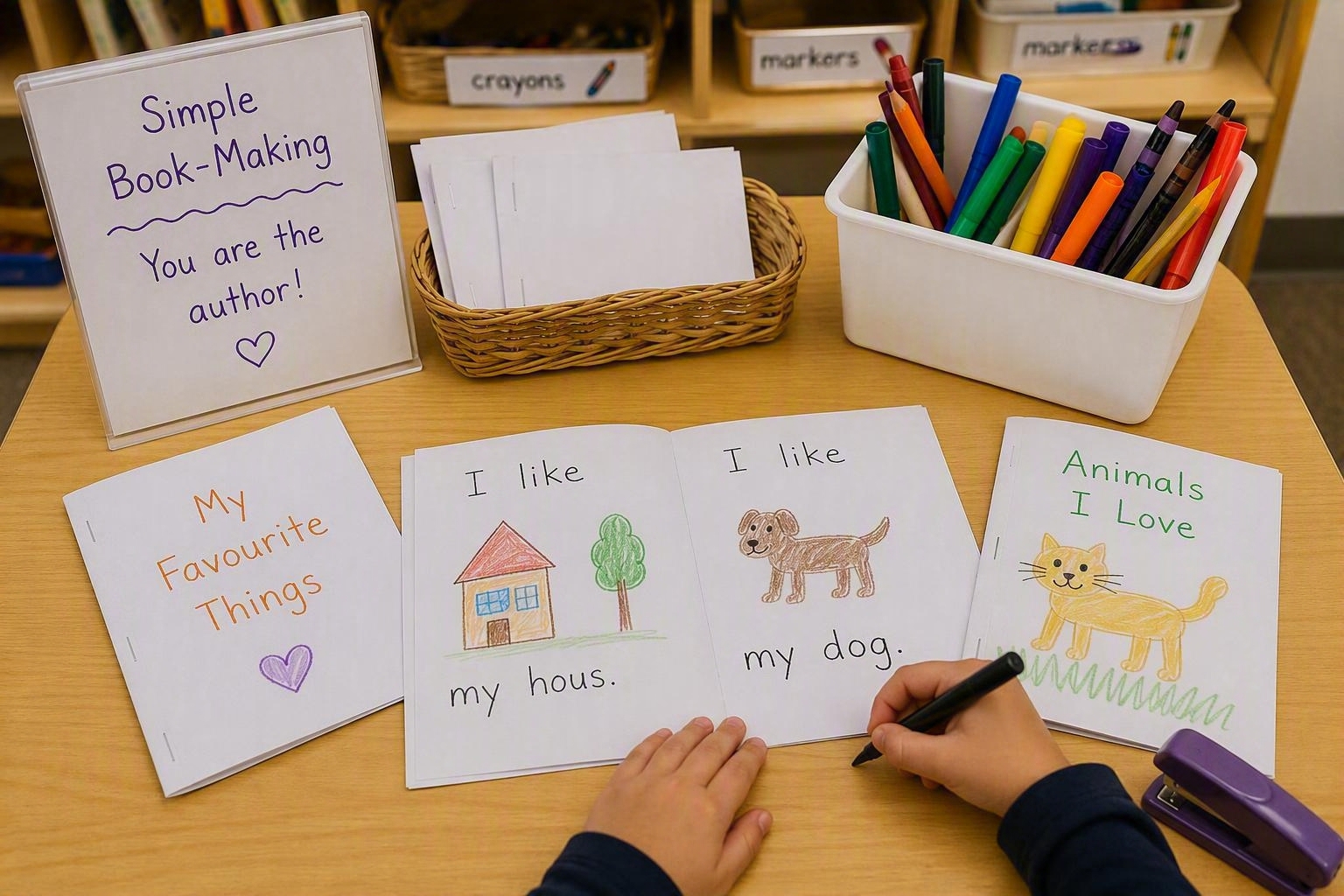
5. Simple Book-Making
Emergent Writing Invitations - Simple Book Making

Book-making is one of the most identity-building emergent writing invitations. Provide folded paper, stapled mini-books, or blank book templates. Children create their own books using drawings, labels, and early writing attempts.

Book-making helps children understand that writing has structure and purpose. They become authors and illustrators, revisiting their books over time and adding new details. This process builds stamina, creativity, and confidence.

Offer themed book prompts such as “My Favourite Things,” “Animals I Love,” or “My Family.” You can also leave the invitation completely open-ended, allowing children to explore their own ideas.

Why Emergent Writing Invitations Matter

Emergent writing invitations help children build confidence, independence, and joy in writing. They remove pressure and replace it with exploration. When children feel safe to take risks, they begin experimenting with letters, symbols, and stories in meaningful ways.

These invitations also align beautifully with the Ontario Kindergarten Program’s emphasis on play-based learning, oral language, and authentic literacy experiences. They support early writing skills while honouring the developmental needs of young learners.

Emergent writing grows through exploration, not correction. When educators create intentional writing invitations, children begin to understand that writing is a powerful tool — one they can use every day.

Handwriting in Kindergarten: 4 Essential Ways to Build Fine Motor Strength

✍️ Handwriting in kindergarten begins long before children pick up a pencil. Strong fine motor skills are the foundation for confident letter formation, and these skills develop through meaningful play, not worksheets. When teachers understand how fine motor development works — and how it connects to gross motor skills, midline crossing, wrist stability, and the pincer grasp — handwriting becomes a natural, joyful part of early learning.

Here are four essential ways to build fine motor strength in kindergarten, backed by developmental research and classroom‑tested practice.

1️⃣ Build Strong Hands Through Play‑Based Fine Motor Activities

Fine motor development refers to the small, controlled movements of the hands and fingers. These skills allow children to grasp, pinch, manipulate tools, and eventually form letters. Before handwriting instruction begins, children need strong hands — and the best way to build that strength is through play.

Activities that support fine motor development include:

Fine Motor practice in Kindergarten - stickers are a great exercise tool
  • Tweezers in sensory bins — perfect for developing the pincer grasp, which is essential for holding a pencil correctly
  • Play‑Doh or clay — strengthens fingers, hands, and wrists
  • Beading and threading — improves finger isolation and hand‑eye coordination
  • Sticker peeling — encourages precision and finger control
  • Cutting with scissors — builds bilateral coordination and strengthens the hand

These activities prepare children for handwriting far more effectively than early tracing sheets. When children explore materials with their hands, they build the strength and coordination needed for confident writing.

2️⃣ Strengthen Gross Motor Skills to Support Handwriting

Handwriting in kindergarten isn’t only about the hands — it’s also about the body. Gross motor skills involve large movements like running, climbing, balancing, and stabilizing the core. These skills help children sit upright, maintain posture, and control their arms while writing.

A child with weak gross motor skills may:

  • slump at the table
  • tire quickly during writing tasks
  • switch hands frequently
  • struggle to stabilize the paper

Gross motor development supports handwriting by giving children the strength and endurance to use their hands effectively. Activities like climbing, crawling, balancing, and outdoor play all contribute to better handwriting readiness.

Fine Motor Development - lying on their belly is a great way for children to strengthen their wrists

One of the most effective strategies is belly‑lying. When children lie on their stomachs to draw or color:

  • their shoulders stabilize
  • their wrists extend naturally
  • their core activates
  • their hands gain strength

This simple position builds the exact muscles needed for handwriting — without any pressure to produce perfect letters.

3️⃣ Support Crossing the Midline for Smooth, Confident Writing

Crossing the midline is a critical developmental skill that directly affects handwriting. It refers to the ability to move one hand across the center of the body to the opposite side. Children need this skill to write smoothly across a page, turn pages in a book, and use tools effectively.

Children who struggle with midline crossing may:

  • switch hands frequently
  • write in short, disconnected strokes
  • avoid tasks that require reaching across their body

Activities that support midline development include:

  • large rainbow‑arc drawing
  • reaching games
  • pretend painting on vertical surfaces
  • belly‑lying coloring (again — it’s a powerhouse skill builder)

When children can comfortably cross the midline, handwriting becomes more fluid and coordinated.

4️⃣ Develop Wrist Stability and the Pincer Grasp

Two of the most important physical skills for handwriting in kindergarten are wrist stability and the pincer grasp.

Wrist Stability

Children need a stable wrist to control a pencil. Activities that strengthen the wrist include:

  • coloring on vertical surfaces
  • painting on easels
  • belly‑lying drawing
  • Play‑Doh rolling and shaping

These movements encourage proper wrist extension and control.

Fine Motor development includes a pincer grasp.

Pincer Grasp

The pincer grasp — using the thumb and index finger together — is essential for holding a pencil with a tripod grip. Tweezers, tongs, beads, and small manipulatives all help children develop this skill naturally.

When wrist stability and the pincer grasp are strong, children are ready for letter formation.

Handwriting in Kindergarten - ABC tracing pages

✏️ When Children Are Ready for Printing

Once children show strong fine motor control, stable gross motor posture, comfort crossing the midline, and a developing pincer grasp, they are ready to begin forming letters and numbers. At this stage, you can introduce printing practice sheets that support proper stroke formation, reinforce letter recognition, and build early writing confidence. Our printing practice sheets for letters and numbers are designed specifically for kindergarten learners — clean layouts, developmentally appropriate strokes, and predictable routines that help children feel successful.

💬 Final Thoughts

Handwriting in kindergarten is not about rushing children into letter formation. It’s about building strong, capable hands through meaningful play and developmentally aligned activities. When fine motor skills, gross motor stability, midline crossing, wrist strength, and the pincer grasp come first, children approach handwriting with confidence — and writing becomes a joyful part of learning.

5 Name Recognition Activities That Build Confidence in Kindergarten

A gentle, joyful start to early literacy.

Name recognition is one of the most powerful early‑literacy skills we introduce in September. A child’s name is their most meaningful word — it’s familiar, personal, and deeply connected to their identity. When children engage in Name Recognition activities, they build confidence, independence, and a strong foundation for future literacy learning. These play‑based Name Recognition routines help children feel seen, valued, and capable from the very first week of school.

1️⃣ Name Cards for Everyday Routines

Name Recognition grows naturally when children see their name throughout the day. Use simple name cards for attendance, centre choices, line‑ups, helper roles, and sign‑in routines. This repeated exposure helps children connect letters, shapes, and patterns in their name without pressure.

2️⃣ Loose‑Parts Name Building

Invite children to build their name using stones, buttons, popsicle sticks, magnetic letters, or wooden letters. This hands‑on Name Recognition activity strengthens letter identification, sequencing, and fine motor development — all through joyful play.

Name Recognition Activities - Perfect for Kindergarten

3️⃣ Name Puzzles

Print each child’s name and cut it into large letter tiles. Children rebuild their name, compare lengths, and notice letter patterns. Name puzzles encourage problem‑solving, visual discrimination, and early reading confidence.

4️⃣ Sensory Name Writing

Offer sensory trays filled with salt, sand, rice, or coloured sprinkles. Children trace the letters of their name using fingers or tools. Sensory Name Recognition supports early letter formation in a calm, low‑pressure way that feels playful and inviting.

5️⃣ Name Hunts Around the Classroom

Hide name cards around the room and invite children to find their own name — or a friend’s. This Name Recognition activity builds excitement, social connection, and familiarity with classmates’ names. It’s a beautiful way to strengthen community.

⭐ Gentle Consolidation After Play — Simple, Universal Name Recognition Practice

After children have built, traced, hunted, and explored their names through play, they’re ready for gentle pencil‑paper Name Recognition consolidation. Worksheets never replace exploration — they simply reinforce what children already understand.

You can create simple, low‑prep Name Recognition practice using materials already in your classroom:

Try:

  • Circle the letters in your name pages
  • Cut‑and‑paste name sequencing strips
  • Trace‑and‑write pages with blank lines for each child’s name
  • Name crowns decorated with letters, stickers, or drawings
  • Highlight‑your‑name sheets where children find their name among classmates’ names

These Name Recognition activities strengthen letter‑sound connections, build confidence with early writing, and support independence — all while staying true to a play‑based philosophy.

🌿 A Gentle Home Base for Early Literacy Learning

If you’re looking for more ways to support early literacy in a developmentally appropriate, play‑based way, our Literacy page is the perfect next stop. The first weeks of Kindergarten are filled with meaningful Name Recognition moments: children discovering the letters in their name, noticing environmental print, exploring sounds, and building confidence as emerging readers.

The Literacy page brings all of these ideas together in one calm, organized space designed to help you feel supported and inspired. You’ll find guidance for Name Recognition, letter learning, beginning sounds, phonemic awareness, environmental print, and early writing routines — all grounded in gentle, practical strategies that honour how young children learn best.

Visit the Literacy page to build a classroom where early reading grows through confidence, curiosity, and connection.

🛒 Shopping Cart — Visit Our Store

If you’re looking for gentle, low‑prep early‑literacy tools to support Name Recognition, letter learning, and beginning‑of‑year routines, visit the Kindergarten Forever store. You’ll find simple, developmentally appropriate resources designed to help children feel confident from day one.

7 Play‑Based Ways to Build Letter Recognition in Kindergarten

A joyful, developmentally appropriate approach to early literacy.

Building letter recognition in Kindergarten is one of the most meaningful early literacy milestones. In a play‑based classroom, children learn letters through exploration, conversation, curiosity, and meaningful interactions with print—not through memorization or drill. When we focus on teaching letter sounds in Kindergarten, strengthening phonemic awareness, and offering gentle opportunities for consolidation, children develop the skills they need to become confident early readers.

Below are 7 play‑based ways to build letter recognition in Kindergarten, blending hands‑on literacy play with intentional sound‑first phonics and gentle worksheet support.

1️⃣ Start With Meaningful Exposure to Letters

The foundation of letter recognition in Kindergarten is exposure—seeing letters in real, meaningful contexts.

Try:

  • Labels around the classroom
  • Daily message boards
  • Shared writing
  • Environmental print
  • Name cards and cubby labels

This natural exposure helps children understand that letters are symbols connected to meaning. It also supports alphabet recognition activities without pressure.

Explore more print-rich classroom setups.

2️⃣ Use Children’s Names as the Anchor for Letter Learning

Names are the most powerful entry point for play‑based letter recognition.

Try:

  • Name puzzles
  • Name tracing
  • Sorting names by first letter
  • Building names with magnetic letters

Names make letters personal and emotionally meaningful, strengthening both letter recognition and phonemic awareness in Kindergarten.

Explore name recognition activities.

Letter Recognition in Kindergarten - Write the room  - Letters A-Z

3️⃣ Teach Letter Sounds First — or Alongside Letter Names

A crucial part of teaching letter recognition in Kindergarten is understanding what children actually need to recall to read: letter sounds, not letter names.

Children don’t need to know the names of letters to decode words. In fact, for some learners, letter names can slow down phonemic awareness because the name often contains a different sound than the one used for reading. For example, W begins with a /d/ sound, and Y begins with a long /ī/ sound—neither helps a child sound out words.

Letters are simply symbols. To read, children must recall the sound the symbol represents.

This is why many educators emphasize:

  • letter sounds before letter names, or
  • teaching both together with a strong focus on sounds

This approach strengthens phonemic awareness in Kindergarten, supports blending and segmenting, and builds early decoding confidence.

Explore sound-first alphabet routines.

4️⃣ Introduce Letters Through Play‑Based Invitations

Hands-on literacy invitations are essential for play‑based letter recognition.

Try:

  • Alphabet loose parts
  • Playdough letters
  • Sensory trays
  • Alphabet construction
  • Alphabet art

These invitations support fine motor development, creativity, and letter sound awareness.

Explore alphabet loose‑parts invitations.

5️⃣ Use Gentle Literacy Talk to Build Understanding

Children learn letters through conversation, not correction.

Try prompts like:

  • “Tell me what you notice about this letter.”
  • “What sound does your name start with?”
  • “Can you find this letter somewhere in our classroom?”

This strengthens phonemic awareness, letter recognition, and confidence.

6️⃣ Embed Letters in Daily Routines

Daily routines are powerful for building letter recognition in Kindergarten.

Use:

  • Morning message
  • Shared reading
  • Shared writing
  • Songs and chants
  • Alphabet books
  • Outdoor literacy walks

The more naturally letters appear in your day, the more confidently children use them.

7️⃣ Use Worksheets as Gentle Consolidation Tools

Letter Recognition in Kindergarten - Alphabet Tracing Pages

Kindergarten letter worksheets are perfect for:

In a play‑based classroom, worksheets are not the teaching method—but they do serve an important role in consolidating letter recognition in Kindergarten.

  • reinforcing letter sounds
  • checking understanding
  • supporting phonemic awareness
  • building confidence
  • offering quiet follow‑up activities

Think of worksheets as the bridge between exploration and formal practice. They support alphabet recognition activities without replacing play.

Explore letter recognition practice pages.

🌟 Celebrate Letter Learning Through Creation

End your letter recognition unit with joyful literacy creations:

  • Alphabet art
  • Letter posters
  • Name books
  • Letter galleries

These celebrations reinforce learning and build pride.

For more play‑based literacy ideas to support letter recognition in Kindergarten, explore our main Literacy page, where early reading, phonemic awareness, and alphabet learning come together.


🛒 If you’re looking for gentle, confidence‑building ways to consolidate letter recognition in Kindergarten, visit the Kindergarten Forever store.

You’ll find play‑aligned alphabet practice pages, phonics‑first activities, and low‑prep literacy worksheets designed to support exploration—not replace it. Every resource is created with intention, clarity, and heart.

⭐ 6 Fun Play‑Based Ways to Teach Beginning Sounds in Kindergarten

🌱 Building Strong Phonics Skills Through Play

Beginning sounds are one of the first phonics skills our Kindergarten learners master — and when we teach them through play, movement, and meaningful routines, students build confidence quickly.

In Ontario’s play‑based Kindergarten program, beginning sounds fit beautifully into:

  • literacy centers
  • morning meeting
  • small‑group instruction
  • inquiry learning
  • whole‑group routines

Today I’m sharing simple, effective, play‑based ways to help your students connect letters to sounds — without worksheets, overwhelm, or pressure.

🔤 1. Start With Sound Awareness Before Letters

Before students match letters to sounds, they need to hear sounds in words.

Try these playful oral language warm‑ups:

  • I Spy With Sounds — “I spy something that starts with /b/.”
  • Sound Stretching — stretch the first sound: “sssssock,” “mmmmilk.”
  • Mystery Bag — pull an item and identify the beginning sound.
  • Name Play — “Whose name starts with /j/?”

These activities build phonological awareness — the foundation of beginning sound mastery.

🧩 2. Use Hands‑On Matching Activities

Hands-on matching is one of the most effective ways to teach beginning sounds because students can touch, move, and sort.

Try:

  • picture → letter matching
  • uppercase → lowercase matching
  • sound sorting mats
  • beginning sound puzzles
  • alphabet card games
Beginning Sounds Cut and Paste Worksheet

If you want a ready‑to‑use set, check out my Beginning Sound Alphabet Literacy Cards in my TPT shop. They are perfect for:

  • literacy centers
  • small‑group instruction
  • partner games
  • morning tubs

🎲 3. Turn Beginning Sounds Into Games

Games make repetition feel fun — and repetition is exactly what beginning sounds need.

Here are easy, low‑prep options:

  • Go Fish — match letters and beginning sound pictures
  • Memory Match — flip cards to find pairs
  • Sound Scavenger Hunt — find items around the room
  • Sound Hop — place letters on the floor and hop to the correct one
  • Spin & Say — spin a spinner and say a word that starts with that sound

Games build confidence and keep students engaged without worksheets.

🧠 4. Integrate Beginning Sounds Into Morning Meeting

Morning meeting is one of the BEST places to reinforce beginning sounds because it’s:

  • predictable
  • social
  • interactive
  • language-rich

Try:

  • “Today’s Sound of the Day”
  • beginning sound chants
  • picture card reveal
  • sound sorting on chart paper
  • beginning sound movement (“Move like something that starts with /r/!”)

This connects phonics to your daily routine — and students LOVE it.

Beginning Sounds - Alphabet handwiting practice worksheets

✏️ 5. Use Beginning Sounds in Writing Invitations

Even emergent writers can begin using beginning sounds in their writing.

Try:

  • labeling pictures
  • writing the first sound of a word
  • sound boxes
  • “What sound do you hear first?” prompts
  • shared writing with sound stretching

Celebrate attempts — even if the letter isn’t perfect. The goal is confidence, not correctness.

Beginning Sounds - Vowel and Digraph Posters

🌈 6. Make Beginning Sounds Visible in Your Classroom

Environmental print helps students make connections all day long.

Add:

  • alphabet posters
  • picture cards
  • sound anchor charts
  • beginning sound word wall
  • student name cards sorted by beginning sound

🎒 Beginning Sound Centers You Can Prep in Minutes

Teachers need low‑prep centers — especially in September.

Try:

  • picture sorting mats
  • clip cards
  • mini puzzles
  • sound jars
  • alphabet manipulatives
  • matching cards

These centers build independence and give you time for small‑group instruction.

❤️ Why Play‑Based Beginning Sound Instruction Works

Because it:

  • builds confidence
  • supports oral language
  • encourages movement
  • reduces pressure
  • increases engagement
  • aligns with the Ontario Kindergarten Program
  • supports diverse learners

Beginning sounds don’t need to be complicated — they need to be meaningful.


If you’re looking for ready‑to‑use beginning sound activities, literacy centers, or alphabet resources that fit perfectly into a play‑based Kindergarten classroom, I’d love for you to visit my Kindergarten Forever store on Teachers Pay Teachers. You’ll find classroom‑tested materials designed to make early literacy joyful and meaningful.

✨ 6 Reasons Write the Room Activities Are a Kindergarten Literacy Favorite

Have you heard of Write the Room?

If you’re looking for engaging, low-prep Write the Room activities that get children moving while building essential reading and writing skills, this classroom favorite is perfect for kindergarten and first grade literacy centers. 🌈

Unlike traditional seatwork, Write the Room combines movement, hands-on learning, vocabulary development, visual discrimination, and handwriting practice into one highly motivating activity. Even better? Students often see it as a game rather than work. These Write the Room activities for kindergarten are ideal for literacy centers, morning tubs, early finisher work, small groups, and independent practice.

In this post, we’re sharing 6 powerful reasons why Write the Room works so well in kindergarten and first grade classrooms—and why students get excited every time you pull out the clipboards. ✏️

📚 What Are Write the Room Activities?

Write the Room is an interactive literacy center where students search the classroom for vocabulary cards, words, pictures, or learning targets posted around the room. Once they find each card, they record the matching word or response on a recording sheet.

The activity can be adapted for:

  • Letter identification
  • Beginning sounds
  • CVC words
  • Sight words
  • Seasonal vocabulary
  • Science and social studies themes
  • Phonics skills
  • Sentence building
  • Vocabulary development

Because it is so flexible, Write the Room can be used throughout the entire school year while targeting specific learning goals.

🚶 Reason #1: Write the Room Activities Get Kids Moving

Children are not designed to sit still for long periods of time. Young learners naturally learn through movement, exploration, and interaction.

Write the Room gives students a purposeful reason to move around the classroom. As they travel from card to card, students remain actively engaged in the learning process.

Benefits of movement-based learning include:

  • Increased student engagement
  • Improved focus and attention
  • Greater motivation to participate
  • Opportunities to release energy in productive ways
  • Support for kinesthetic learners

Instead of asking students to stay seated while practicing literacy skills, Write the Room allows them to learn while moving, which often leads to higher levels of participation and excitement.

🧩 Reason #2: Hands-On Learning Creates Stronger Connections

Children learn best when they actively participate in their learning.

With Write the Room, students are not simply looking at a worksheet. They are:

  1. Searching for information.
  2. Matching visuals and words.
  3. Recording responses independently.
  4. Reviewing vocabulary multiple times.

This active involvement helps students make stronger connections to the content and encourages independent learning habits.

✏️ Reason #3: Write the Room Activities Build Handwriting Practice

Writing still matters.

While digital tools have their place, young learners need frequent opportunities to practice forming letters and words correctly.

Every Write the Room activity includes meaningful writing practice. Students repeatedly record letters, words, or vocabulary terms, helping them build:

  • Letter formation skills
  • Fine motor development
  • Pencil control
  • Proper handwriting habits
  • Writing stamina

Best of all, students are often so focused on the scavenger-hunt aspect of the activity that they don’t even realize they’re getting extra writing practice.

🔍 Reason #4: Visual Discrimination Skills Matter

Visual discrimination is the ability to notice similarities and differences between letters, words, symbols, and images.

This skill plays an important role in early literacy development.

During a Write the Room activity, students must carefully examine cards and distinguish between similar letters, words, and pictures.

💬 Reason #5: Write the Room Activities Strengthen Vocabulary

One of the greatest advantages of Write the Room is its ability to focus on specific vocabulary.

Whether you are teaching alphabet words, seasonal themes, science concepts, community helpers, or phonics patterns, Write the Room allows students to repeatedly interact with important vocabulary in meaningful ways.

Benefits of targeted vocabulary instruction include:

  • Increased word recognition
  • Better comprehension
  • Improved oral language development
  • Stronger reading readiness skills
  • Greater confidence when encountering new words

Repeated exposure through movement and writing helps students retain vocabulary more effectively than simply memorizing a word list.

🌟 Reason #6: Students Love Feeling Like Big Kids

Let’s be honest. Part of the magic of Write the Room has nothing to do with literacy standards.

Children love carrying a clipboard.

Hand a student a clipboard, recording sheet, and pencil, and suddenly they feel important. They feel responsible. They feel grown up.

For many students, this simple change transforms a literacy task into an exciting mission.

And really, what kiddo doesn’t love feeling grown up with a clipboard and pencil? 😊

❤️ Why Teachers Love Write the Room

Teachers appreciate Write the Room because it combines multiple learning objectives into a single activity.

With one center, students can practice reading, writing, vocabulary, letter recognition, visual discrimination, fine motor skills, and independent work habits—all while having fun.

It’s a win for everyone.

🛍️ Our Favorite Write the Room Resources

If you’re ready to bring engaging movement-based literacy activities into your classroom, these teacher favorites make it easy.

Write the Room A-Z - Full alphabet bundle Write the Room Activities

🔤 A-Z Write the Room Bundle

Build alphabet knowledge and early literacy skills with an engaging collection of alphabet-focused Write the Room activities. With a set for letters A-Z, it doesn’t matter which order you teach the letters to your class. The images focus on the beginning sounds for each letter – except X, where we use endings too 😉 With realistic pictures, your little learners will love this set; it will make your classroom feel modern and connected.

Write the Room Year-long Bundle - Celebrate the year

📅 Year-Long Write the Room Bundle

Keep literacy centers fresh all year long with seasonal and thematic Write the Room activities designed to support vocabulary growth, reading development, and independent learning throughout the school year. What’s included? Themed sets for the whole year: Back to School, Fall, Hallowe’en, Thanksgiving (appropriate for both the US and Canada), Winter, Christmas, New Year’s, Valentine’s Day, St. Patrick’s Day, Easter, Spring, and Summer.

🎉 Final Thoughts

Write the Room is more than just a literacy center. It is a purposeful learning experience that combines movement, hands-on practice, visual discrimination, vocabulary development, and handwriting skills in a way that students genuinely enjoy.

When children are engaged, moving, and actively participating, learning becomes meaningful.

That’s exactly why Write the Room continues to be one of the most effective and beloved literacy activities for kindergarten and first grade classrooms.

❓ Write the Room Activities FAQ

What are Write the Room activities?

Write the Room activities are interactive literacy center activities where students move around the classroom, find cards, and record words, letters, or answers on a recording sheet.

Are Write the Room activities good for kindergarten?

Yes! Write the Room activities for kindergarten are great for building letter recognition, beginning sounds, vocabulary, handwriting, visual discrimination, and independent work habits.

How do you use Write the Room in literacy centers?

Add the cards around the room, give students a recording sheet, clipboard, and pencil, and let them search, read, write, and record their answers independently.

What skills do Write the Room activities practice?

Write the Room can support alphabet practice, phonics skills, sight words, vocabulary development, handwriting, visual discrimination, and fine motor skills.

Freezing in February!

I know, I live in Canada.  I’m supposed to be used to this weather, but this is truly crazy!!!  Today, the temperature with the wind feels like -40C.  For those of you in the USA, that also means -40F.  The point at which our thermometers meet.  The sun is shining with deception.  It is no match for the wind.  Skin will freeze in minutes.

So, I decided to ditch the winter and think spring!  I made a bundle of 6 spring products and that didn’t warm me up enough, so I am making some summer items!  I don’t know if they will sell, but they make me feel better on this cold day.

How do you stay warm?

✓✓✓✓✓✓✓✓Links to the Spring Series ✓✓✓✓✓✓✓

Slide01
Slide01
Slide01
Slide01
Slide01
Slide01
Slide1

Alphabet Learning

I remember when my daughter came home from her first day of Kindergarten.  She was so excited because her teacher had made a song using all the letters she knew!  Of course it was the ABC song, but in our house we had never sung it.

My daughter learned her letters phonetically.  I did not stress the “names” of the letters, just the sounds they made.  This approach was reinforced in her Montessori school.  Consequently, she was reading when she was 3 years old and could sound out almost any word we threw at her.

My school board doesn’t teach phonetically, but I still try to throw it in with my students.  How were you taught the alphabet?  How are you teaching your children?

Here is an activity that can be used either way.  🙂

https://www.teacherspayteachers.com/Product/Alphabet-Card-Game-Letter-and-Phonemic-Awareness-for-Beginning-Sounds-1558815