
➕ Building Strong Mathematical Thinkers Through Play and Exploration
Kindergarten is where children begin developing the mathematical foundations they will use for the rest of their lives. Long before students solve equations or memorize facts, they are learning to recognize patterns, compare quantities, sort objects, explore shapes, and make sense of the world around them.
The best kindergarten math experiences are hands-on, engaging, and meaningful. Through play, exploration, and purposeful learning activities, children develop confidence as problem-solvers while building a positive relationship with mathematics.
🌟 Why Kindergarten Math Matters
Early math skills are about much more than counting.
A strong kindergarten math program helps children:
- 🔢 Develop number sense
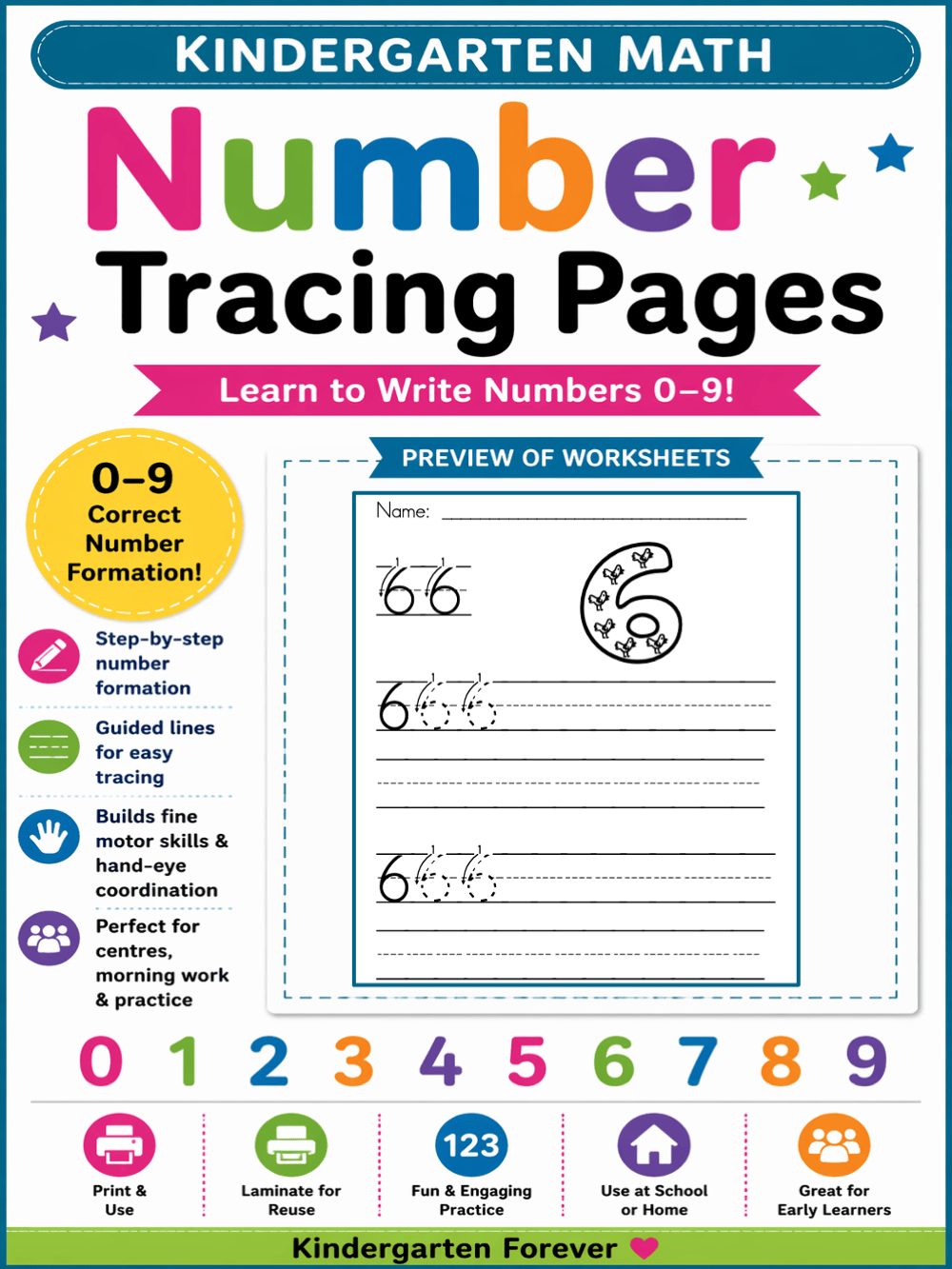
- ✏️ Recognize and write numbers
- ⚖️ Compare quantities
- 🔄 Explore patterns and relationships
- 🧩 Build problem-solving skills
- 📏 Understand measurement concepts
- 🔷 Investigate shapes and spatial reasoning
- 💡 Develop logical and critical thinking skills
These foundational concepts create the building blocks for future success in mathematics.
🌈 Learning Math Through Play
Young children learn best when they can touch, move, build, sort, and explore.
Play-based math experiences encourage children to develop mathematical understanding in ways that feel natural and engaging. Whether students are building with blocks, sorting objects, measuring classroom items, or participating in math centers, they are developing important mathematical thinking skills.
Play-based math helps children:
- 👐 Explore concepts through hands-on experiences
- ⭐ Build confidence when solving problems
- 🚀 Develop perseverance and flexible thinking
- 🌍 Make real-world connections
- 💬 Strengthen communication and reasoning skills
- 🌱 Foster curiosity and a growth mindset
When math is interactive and enjoyable, children become more willing to take risks and explore new ideas.
🎯 Developing Mathematical Thinking in Kindergarten
Strong mathematical thinking begins with opportunities to investigate, question, compare, and explore. High-quality kindergarten math activities encourage children to explain their thinking, test ideas, recognize patterns, and make connections between mathematical concepts.
Through hands-on experiences, children learn that mathematics is not simply about finding the correct answer. It involves reasoning, problem-solving, communication, and understanding how numbers and relationships work together. These early experiences build confidence while helping students develop skills they will use throughout their education.
🔢 Key Kindergarten Math Skills

Number Sense
Children learn to:
- Recognize and identify numbers
- Count objects accurately
- Compare quantities
- Understand more, less, and equal
- Build an understanding of number relationships
🔄 Patterning
Patterning skills help children recognize order and predict what comes next. These early experiences support future algebraic thinking and problem-solving.
🔷 Geometry and Shapes
Children explore:
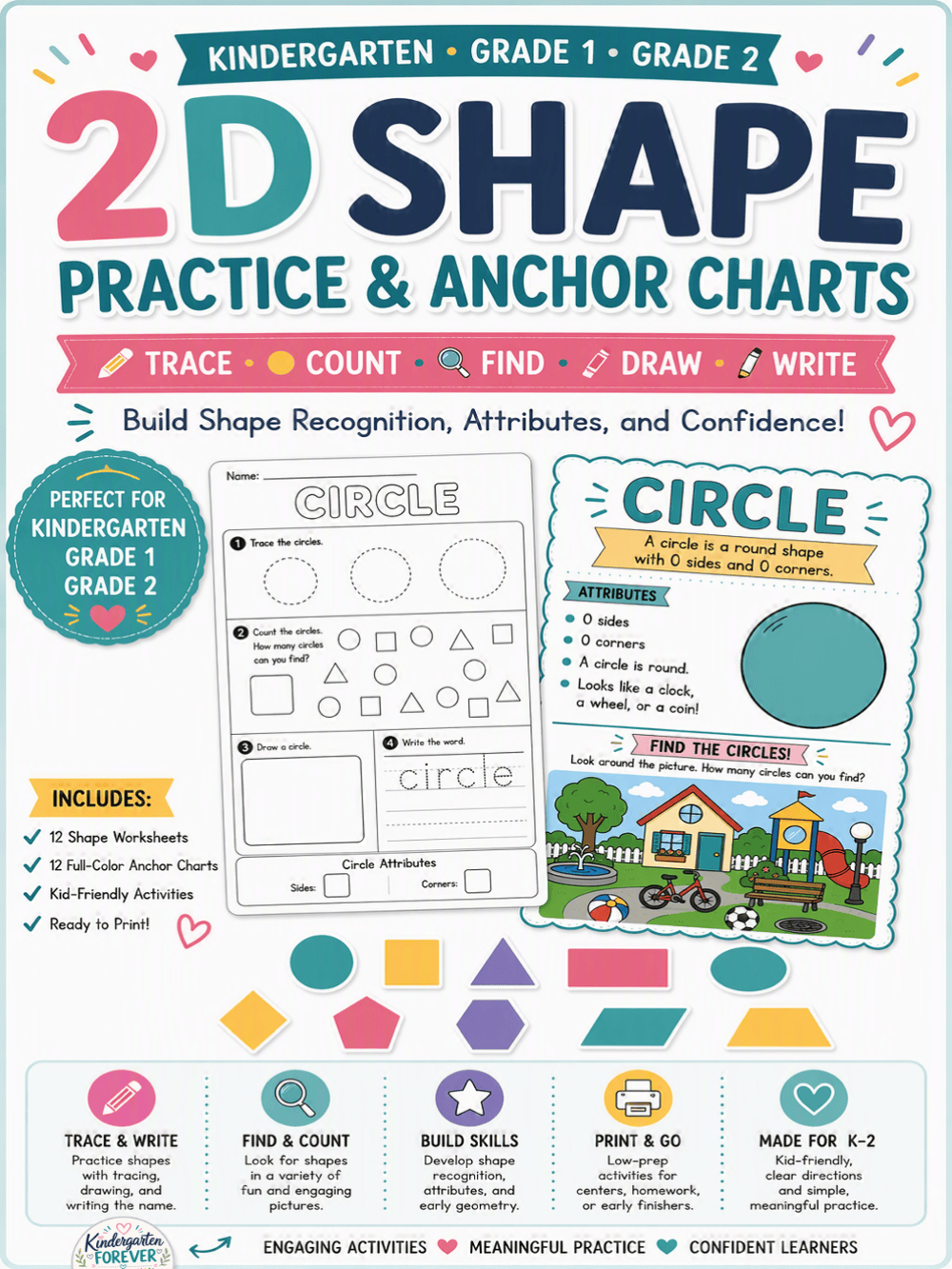
- 2D shapes
- 3D figures
- Spatial awareness
- Position and location concepts
- Shape attributes and properties
📏 Measurement
Through hands-on activities, students compare and describe:
- Length
- Height
- Weight
- Capacity
- Time-related concepts
📊 Data and Sorting
Children collect, organize, classify, and interpret information through sorting and simple graphing activities.
🍁 Ontario Kindergarten Math Curriculum
The revised Ontario Kindergarten Curriculum continues to support hands-on, play-based mathematics while providing clearer expectations for foundational mathematical understanding.
The curriculum places increased emphasis on helping children develop strong number sense, mathematical reasoning, and problem-solving abilities from the earliest years of school.
Rather than focusing solely on procedural skills, children are encouraged to think mathematically, explain their thinking, and apply their learning in meaningful situations.
🏡 Supporting Math Learning at Home
Math learning happens everywhere.
Families can support mathematical development through simple everyday activities such as:
- 🔢 Counting objects during daily routines
- 🛒 Comparing quantities while cooking or shopping
- 🧺 Sorting toys, buttons, or household items
- 🏗️ Building with blocks and construction materials
- 🍃 Looking for patterns in nature
- 🎲 Playing board games and card games
- 📏 Talking about shapes and measurements in everyday life
These meaningful experiences help children see that math is useful, interesting, and all around them.
🍎 Resources for Kindergarten Math Success
Whether you’re a classroom teacher, parent, or homeschool educator, engaging kindergarten math resources can help young learners develop confidence and a strong mathematical foundation.
Our kindergarten math activities are designed to support hands-on learning, problem-solving, and mathematical thinking through developmentally appropriate experiences that children enjoy.
Explore printable centers, games, worksheets, and interactive activities designed to make kindergarten math meaningful, engaging, and fun for every learner.


🛒 Explore More Kindergarten Math Resources
Looking for even more kindergarten math activities, games, centers, and hands-on learning resources? Visit my Teachers Pay Teachers store to browse classroom-tested materials designed to help young learners develop number sense, problem-solving skills, and mathematical confidence through meaningful learning experiences.
👉 Visit My Teachers Pay Teachers Store:
https://www.teacherspayteachers.com/kindergarten-forever
6 thoughts on “Kindergarten Math Activities, Games & Resources for Teachers”