Ontario Report Card Comments: A Better Way to Save Time During Report Card Season

Kindergarten Forever Report Card System

If you’ve ever found yourself staring at a blank report card wondering how to phrase a student’s strengths, next steps, or progress, you’re not alone.

Every reporting period, teachers across Ontario spend countless hours searching for Ontario report card comments, reviewing old report cards, and trying to find the right words to reflect student learning accurately and professionally. Whether you’re writing Initial Observations, Communication of Learning reports, Progress Reports, or Provincial Report Cards, the process can be time-consuming and mentally exhausting.

The challenge isn’t just writing comments. It’s writing meaningful comments that reflect student achievement, align with curriculum expectations, communicate clearly with families, and remain individualized for every learner.

After years of teaching and writing reports, I realized teachers don’t just need a collection of comments. They need a system.

🎥 Watch the Ontario Report Card Comment System in Action

Report Card Season Doesn’t Have to Be This Hard!

Why Teachers Search for Ontario Report Card Comments

There is a reason “Ontario report card comments” is one of the most searched reporting topics during the school year.

Teachers are looking for ways to:

  • Save time during reporting periods
  • Avoid repetitive wording
  • Communicate student progress clearly
  • Align comments with curriculum expectations
  • Differentiate comments for various achievement levels
  • Create meaningful next steps
  • Reduce the stress of report card season

Many teachers begin each reporting cycle with good intentions, only to find themselves spending evenings and weekends revising comments and searching for better wording.

The reality is that report card writing is one of the most important and time-intensive professional responsibilities teachers undertake each year.

The Problem With Traditional Comment Banks

Many Ontario report card comment resources provide long lists of comments organized into a basic document or PDF.

While helpful, these resources often create new challenges.

Teachers may still need to:

  • Sort through hundreds of unrelated comments
  • Adapt comments to different achievement levels
  • Modify wording to reflect specific curriculum expectations
  • Find appropriate comments for individual strands
  • Rewrite portions to match student performance better

In many cases, the time spent searching through a comment bank can start to add up.

That’s why a more organized approach can make such a significant difference.

Beyond Comment Banks: Using a Comment Writing System

When teachers search for Ontario report card comments, they are usually trying to solve a larger problem.

They want to write high-quality report cards in less time.

A comment writing system provides a structured approach to reporting by organizing comments in a way that reflects how teachers actually write report cards.

Instead of starting from scratch each reporting period, teachers can use curriculum-aligned comments already categorized by subject, strand, and achievement level.

This approach lets teachers focus on personalizing comments rather than writing every sentence from scratch.

The goal is not to replace professional judgment.

The goal is to streamline the writing process while maintaining meaningful and individualized reporting.

Ontario Report Card Comments for Kindergarten

Ontario Kindergarten Report Card Comment Writing Systemng

Kindergarten reporting has unique requirements that differ from the report cards used in Grades 1 through 8.

Teachers prepare both Initial Observations and Communication of Learning reports. Effective comments need to capture student strengths, development, learning experiences, and next steps while reflecting the Kindergarten Program.

Writing these reports can be particularly challenging because comments often need to communicate complex observations in family-friendly language.

Having access to organized Ontario report card comments for Kindergarten can help teachers maintain consistency while still reflecting each child’s unique learning journey.

Ontario Report Card Comments for Grades 1-3

Ontario report card comments

As students move into Grades 1, 2, and 3, reporting becomes increasingly detailed.

Teachers must consider multiple subjects and strands while ensuring comments accurately represent individual student achievement.

Effective Ontario report card comments may be needed for:

Language

Comments related to reading, writing, oral communication, and media literacy.

Mathematics

Comments addressing number sense, algebra, data, measurement, geometry, and financial literacy expectations.

Science and Technology

Comments focused on inquiry, investigation, problem-solving, and scientific understanding.

Social Studies

Comments that demonstrate student understanding of communities, citizenship, identity, and connections to the world around them.

The Arts

Comments reflecting growth in music, drama, dance, and visual arts.

Health and Physical Education

Comments describing participation, movement skills, healthy choices, and overall well-being.

French Immersion

Comments highlighting language acquisition, communication skills, reading, writing, and oral language development.

Organizing Ontario report card comments by subject and strand can make the reporting process much more efficient.

The Importance of Differentiated Report Card Comments

One of the biggest concerns teachers have about using pre-written comments is whether report cards will sound repetitive or generic.

Meaningful differentiation matters.

Students performing at different levels should not receive essentially identical with a few words changed.

Strong Ontario report card comments reflect:

  • Varying levels of independence
  • Different degrees of understanding
  • Growth over time
  • Individual learning needs
  • Specific strengths
  • Appropriate next steps

Well-designed comment systems provide enough variation to allow teachers to select comments that genuinely reflect individual student achievement.

Saving Time Without Sacrificing Quality

Teachers should not have to choose between efficiency and quality.

The most effective reporting tools allow teachers to save time while still producing thoughtful, professional report cards that accurately communicate learning.

By using organized Ontario report card comments as a starting point, teachers can:

  • Reduce report writing time
  • Improve consistency across reporting periods
  • Minimize writer’s block
  • Focus on personalization
  • Communicate more effectively with families

Report card season will always require professional reflection and careful consideration. However, it doesn’t have to start from a blank page every time.

Final Thoughts

If you’ve been searching for Ontario report card comments to help simplify report card season, consider looking beyond traditional comment banks.

A structured comment-writing system can provide the organization, differentiation, and efficiency teachers need while still allowing meaningful personalization.

Whether you’re preparing Kindergarten Initial Observations, Communication of Learning reports, Progress Reports, or Provincial Report Cards for Grades 1-3, having a reliable system in place can help transform report writing from a stressful task into a more manageable process.

When report card deadlines arrive, every hour counts. The right Ontario report card comments can help you spend less time searching for the perfect wording and more time focusing on what matters most: supporting student learning.

See the System in Action

If you’re looking for Ontario report card comments that go beyond a traditional comment bank, watch the video above to see how the system works. From Kindergarten Communication of Learning reports to Grade 1-3 report cards, the system is designed to help teachers save time while creating meaningful, personalized comments.

👉 Browse the complete collection here.

TPT 20th Anniversary Sale Gift Card Giveaway!

TPT 20th Anniversary Sale

Congratulations AF!

You have won the Gift Card for the 20th Anniversary Sale

Welcome, educators! To celebrate the 20th Anniversary of Teachers Pay Teachers, and the accompanying one-day mega sale, I’m giving away one $10 Teachers Pay Teachers gift card.


🏆 What You Can Win

One winners will each receive:

  • One $10 TPT gift card delivered directly to your email.

Gift cards can be used on any TPT product from any seller.


📝 How to Enter

Fill out the short entry form below. That’s it!

Required:

  • Your name
  • Your email address (so I can send the gift card if you win)

Optional:

  • Grade(s) you teach
  • Your favourite classroom theme

Only one entry per person.


📅 Giveaway Timeline

  • Opens: September 26, 2026
  • Closes: September 28, 2026 at 8:00 PM EST
  • Winners Announced: September 28, 2026

The winner will be contacted directly by email. I will also post the first name + last initial of the winner on this page once confirmed.


📌 Rules & Eligibility

  • No purchase necessary.
  • Open to educators in Canada and the United States.
  • Must be 18 years or older to enter.
  • One entry per person.
  • Winnerw will be selected at random.
  • If a winner does not respond within 72 hours, a new winner will be drawn.

🔒 Privacy

Your information is used only for this giveaway. We will not share, sell, or add it to any mailing list.


Thank you for participating, and good luck!

🎉 Gift Card Entry Form!

← Back

Thank you for your response. ✨

Five Emergent Writing Invitations That Build Confidence in Kindergarten

Emergent writing invitations are one of the most powerful ways to help young children see themselves as writers. In Kindergarten, writing (and pre-writing) does not have to rely on a worksheet or a formal lesson. It is a play-based exploration where children experiment with marks, symbols, letters, and stories in meaningful ways. When educators create intentional emergent writing invitations, children begin to see writing as a tool for communication, creativity, and self-expression.

These invitations are simple to set up, low-prep, and deeply aligned with the Ontario Kindergarten Program. They support oral language, fine-motor development, storytelling, and early print awareness — all through play. Below are five emergent writing invitations you can introduce in your classroom this week.

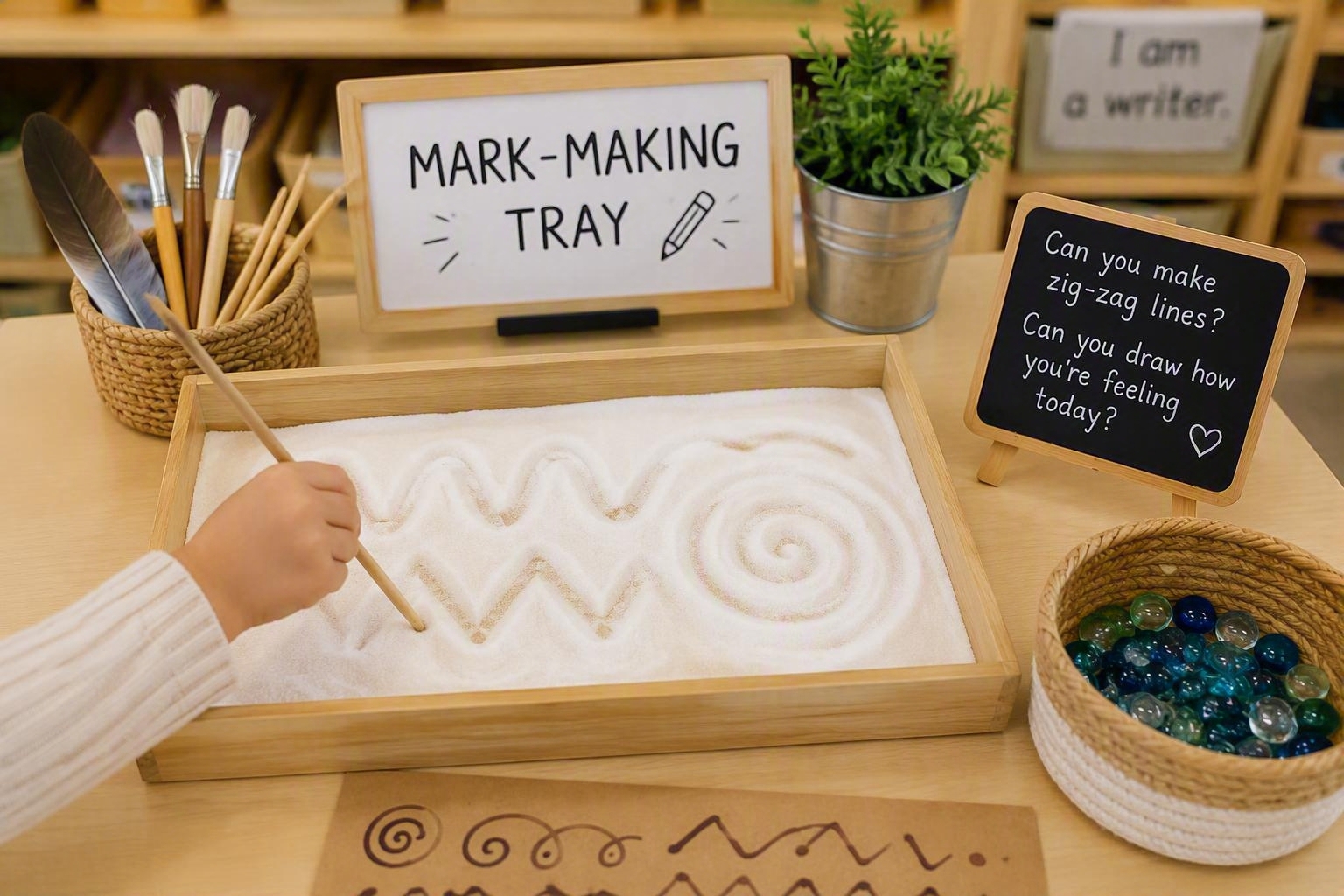
Emergen Writing Invitations - Mark-Making Trays

1. Mark-Making Trays

Mark-making is the foundation of emergent writing. Before children form letters, they explore lines, curves, shapes, and patterns. A mark-making tray can be filled with salt, sand, coloured rice, or kinetic sand. Add tools such as paintbrushes, dowels, feathers, or simply fingers.

Mark-making trays allow children to experiment freely without the pressure of permanence. They can erase, redo, and explore again. This freedom builds confidence and encourages risk-taking — two essential components of emergent writing.

To extend the invitation, offer prompts like “Can you make zig-zag lines?” or “Can you draw how you’re feeling today?” These prompts support emotional expression and fine-motor development while keeping the experience open-ended.

2. Labeling Invitations

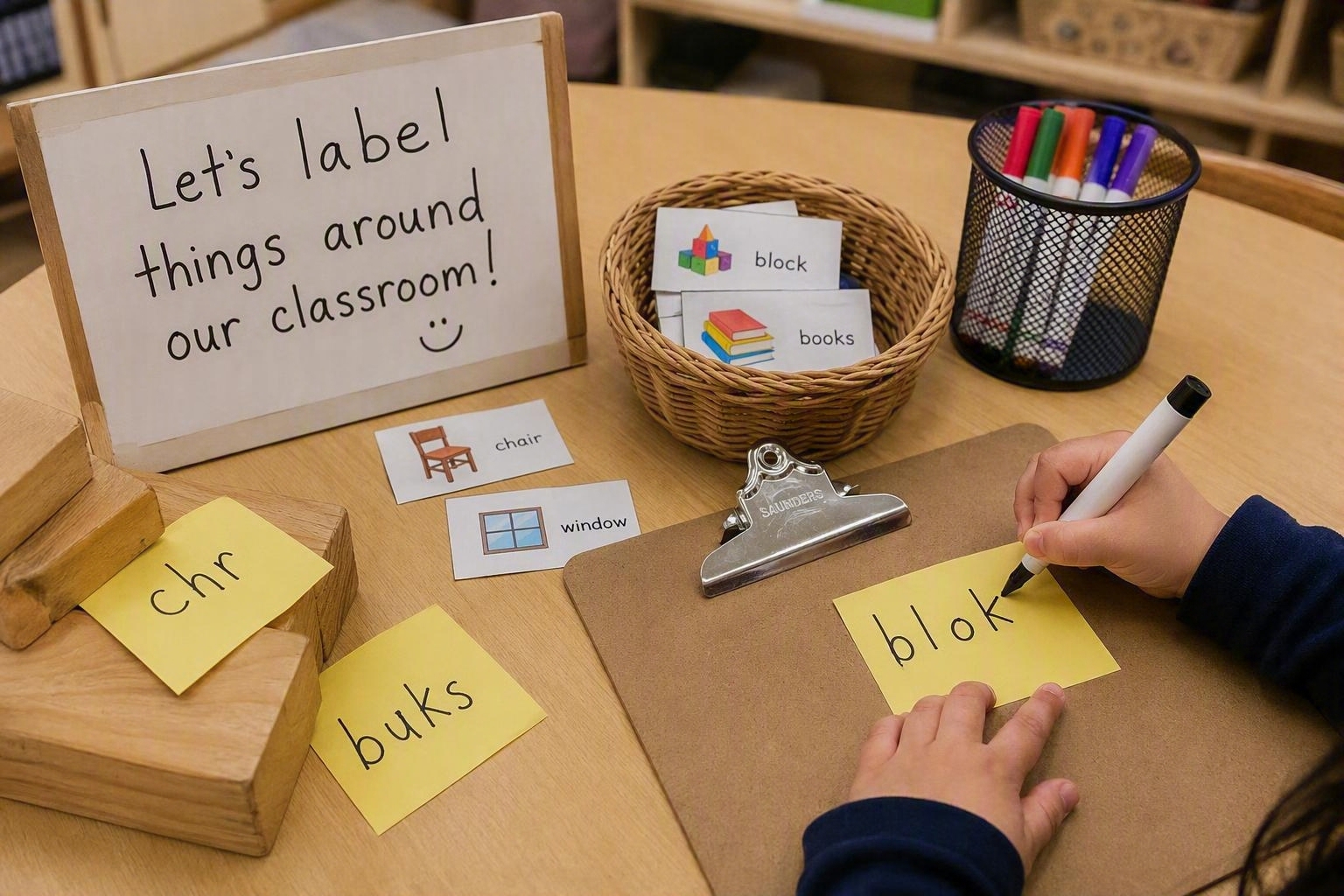
Emergent Writing Invitations - Labelling the room

Labeling invitations help children connect writing to meaning. Provide baskets of environmental print cards, sticky notes, clipboards, and markers. Invite children to label objects around the room — blocks, materials, centres, or their own creations.

Labeling encourages children to attempt letters and sounds in authentic contexts. When they write “block centre,” “house,” or “car,” they begin to understand that writing communicates ideas. This is a key component of emergent writing invitations: writing becomes purposeful.

To support independence, place alphabet cards or simple sound boxes nearby. Children can reference letters as needed, building confidence and autonomy in the writing centre.

If you want to extend labeling and environmental print into a movement-based literacy experience, you can try a Write the Room activity, where children search for letters, words, or pictures around the classroom and record what they find. This blends emergent writing with exploration, oral language, and print awareness. You can see an example in my Write the Room series, which includes alphabet, number sense, and thematic versions that support early writing skills through play.

3. Loose Parts Storytelling

Emergent Writing Invitations - Loose Parts Storytelling

Loose parts storytelling is a powerful emergent writing invitation because it blends oral language, creativity, and early writing skills. Offer small loose parts — gems, discs, animals, buttons — and pair them with blank story mats or simple beginning/middle/end frames.

Children naturally begin creating scenes, characters, and events. Once their story is built, invite them to write or draw part of the story. This might be a label, a sentence, or a series of marks that represent their ideas.

Loose parts storytelling supports sequencing, vocabulary development, and expressive language. It also encourages children to see writing as part of storytelling, not a separate task. For children who want scaffolding, offer sentence starters such as “This is…” or “First, I…”

Emergent Writint Invitations - Environmental Print Scavenger Hunts

4. Environmental Print Scavenger Hunts

Environmental print is highly motivating for young learners. Children recognize logos, signs, and familiar symbols long before they read conventional text. An environmental print scavenger hunt is an engaging emergent writing invitation that builds confidence and print awareness.

Create a simple scavenger hunt using logos or signs from your classroom or school. Children walk around looking for matching print, then record their findings using drawings, letters, or invented spelling.

This invitation encourages children to write about what they discover. It also supports early reading behaviours, observational skills, and independence. Clipboards make the activity feel purposeful and “official,” which increases engagement.

5. Simple Book-Making

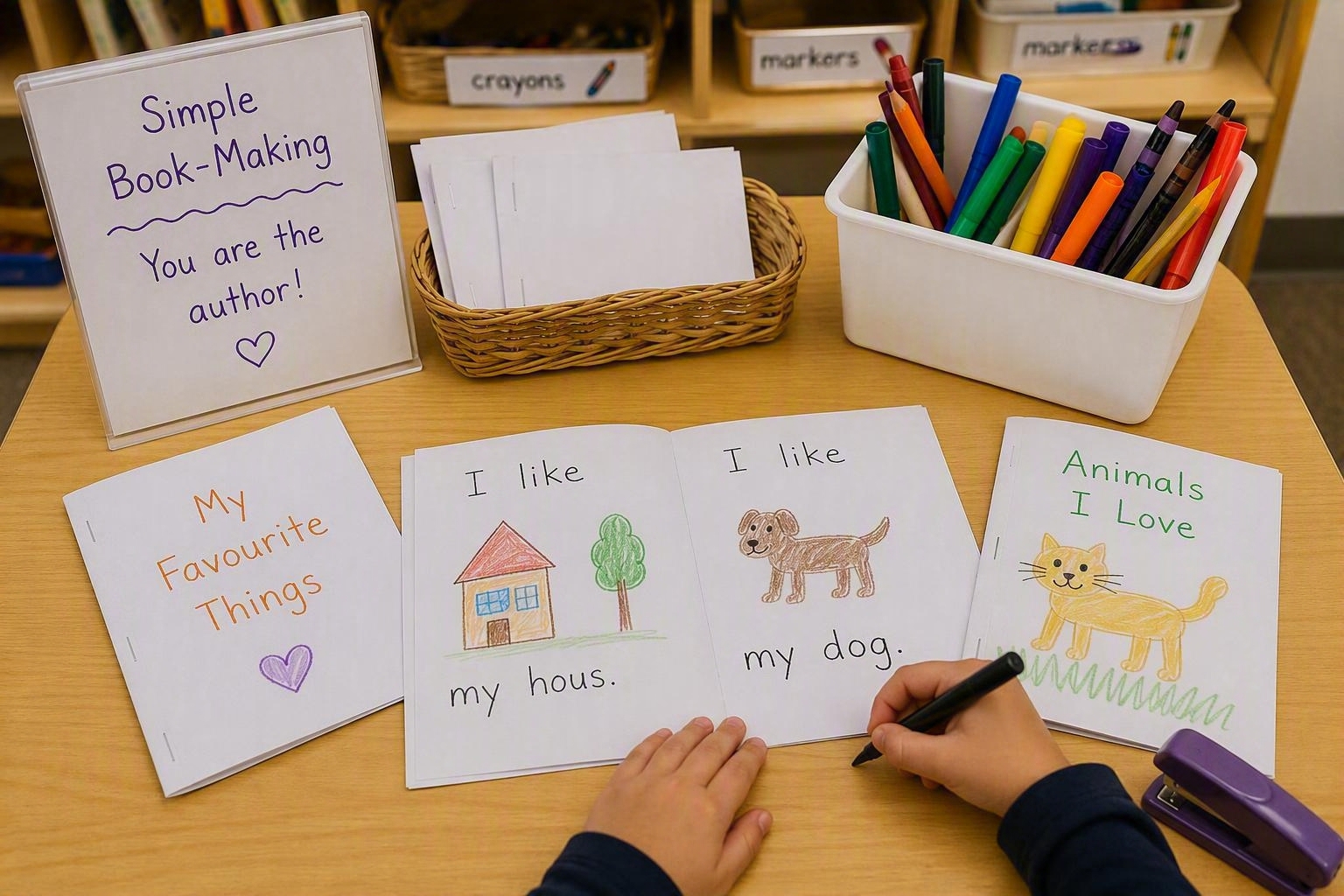
Emergent Writing Invitations - Simple Book Making

Book-making is one of the most identity-building emergent writing invitations. Provide folded paper, stapled mini-books, or blank book templates. Children create their own books using drawings, labels, and early writing attempts.

Book-making helps children understand that writing has structure and purpose. They become authors and illustrators, revisiting their books over time and adding new details. This process builds stamina, creativity, and confidence.

Offer themed book prompts such as “My Favourite Things,” “Animals I Love,” or “My Family.” You can also leave the invitation completely open-ended, allowing children to explore their own ideas.

Why Emergent Writing Invitations Matter

Emergent writing invitations help children build confidence, independence, and joy in writing. They remove pressure and replace it with exploration. When children feel safe to take risks, they begin experimenting with letters, symbols, and stories in meaningful ways.

These invitations also align beautifully with the Ontario Kindergarten Program’s emphasis on play-based learning, oral language, and authentic literacy experiences. They support early writing skills while honouring the developmental needs of young learners.

Emergent writing grows through exploration, not correction. When educators create intentional writing invitations, children begin to understand that writing is a powerful tool — one they can use every day.

🎉 TPT Gift Card Giveaway!

Welcome, educators! To celebrate the upcoming back‑to‑school season, I’m giving away two $10 Teachers Pay Teachers gift cards.


🏆 What You Can Win

Two winners will each receive:

  • One $10 TPT gift card delivered directly to your email.

Gift cards can be used on any TPT product from any seller.


📝 How to Enter

Fill out the short entry form below. That’s it!

Required:

  • Your name
  • Your email address (so I can send the gift card if you win)

Optional:

  • Grade(s) you teach
  • Your favourite classroom theme

Only one entry per person.


📅 Giveaway Timeline

  • Opens: August 22, 2026
  • Closes: August 24, 2026 at 8:00 PM EST
  • Winners Announced: August 24, 2026

Winners will be contacted directly by email. I will also post the first name + last initial of each winner on this page once confirmed.


📌 Rules & Eligibility

  • No purchase necessary.
  • Open to educators in Canada and the United States.
  • Must be 18 years or older to enter.
  • One entry per person.
  • Winners will be selected at random.
  • If a winner does not respond within 72 hours, a new winner will be drawn.

🔒 Privacy

Your information is used only for this giveaway. We will not share, sell, or add it to any mailing list.


✉️ Winners

Congratulations to MM and MS! Your TPT gift cards are waiting for you in your email inbox. Have fun during the sale!


Thank you for participating, and good luck!

🎉 Gift Card Entry Form!

← Back

Thank you for your response. ✨

Kindergarten Skills for Primary Success: How Early Learning Supports the Primary Grades

The transition from Kindergarten into the Primary grades is a major milestone for young learners, and the foundation for that success begins long before Grade 1. Kindergarten Skills for Primary Success include social‑emotional development, early literacy and numeracy foundations, independence, and the ability to work with peers. These early abilities shape how confidently students enter the Primary years and how smoothly they adapt to new routines, expectations, and academic challenges.

While Grade 1 introduces more formal academic expectations, the foundation for success is built long before students walk into their new classroom. The skills children develop in Kindergarten—social, emotional, academic, and self‑management—directly influence how confidently they step into the Primary years.

Understanding how Kindergarten skills support success in Grades 1–3 helps teachers, families, and administrators see the full picture of early learning. It also reinforces the value of intentional, play‑based instruction and the developmental work that happens long before formal academics begin.

This guide explores the essential Kindergarten skills that set students up for success in the Primary grades and how these early abilities continue to grow as expectations increase.

Kindergarten Skills for Primary Success

The Foundation: Why Kindergarten Skills Matter

Kindergarten is more than early literacy and numeracy. It is a carefully designed environment where children learn how to be part of a community, manage their emotions, solve problems, and communicate their needs. These skills become the backbone of their success in the Primary grades.

When students enter Grade 1 with strong Kindergarten foundations, they are better prepared to handle new routines, academic challenges, and increased independence. Teachers often notice that students with solid Kindergarten skills transition more smoothly, participate more confidently, and adapt more quickly to the structure of the Primary curriculum.

Key Kindergarten Skills That Support Primary Success

1. Self‑Regulation and Emotional Awareness

One of the most important Kindergarten skills for Primary success is self‑regulation. Students learn to:

  • manage frustration
  • wait their turn
  • follow routines
  • transition between activities
  • express emotions appropriately

These abilities help Grade 1 students handle longer work periods, more structured lessons, and multi‑step tasks. By Grade 3, self‑regulation supports independent work, group collaboration, and problem‑solving.

2. Social Skills and Collaboration

Kindergarten is where children learn how to:

  • share materials
  • negotiate during play
  • listen to peers
  • work in small groups
  • resolve conflicts

These social skills become essential in the Primary grades, where group work, partner tasks, and collaborative learning are part of daily instruction. Students who have practiced cooperation in Kindergarten often thrive in Primary classrooms.

3. Early Literacy Foundations

While formal reading instruction begins in Grade 1, Kindergarten lays the groundwork through:

  • phonological awareness
  • letter recognition
  • vocabulary development
  • storytelling
  • print awareness

These early literacy skills make the transition into Grade 1 reading smoother and more successful. Students who enter Primary with strong Kindergarten literacy foundations often progress more quickly and confidently.

4. Early Numeracy Concepts

Kindergarten numeracy is playful, hands‑on, and exploratory. Students learn:

  • counting
  • comparing quantities
  • recognizing patterns
  • sorting
  • building spatial awareness

These concepts directly support the Primary math curriculum, where students begin formal addition, subtraction, measurement, and problem‑solving.

5. Independence and Responsibility

Kindergarten students learn to:

  • manage personal belongings
  • follow classroom routines
  • clean up materials
  • make choices
  • take responsibility for tasks

These independence skills are essential in Grade 1, where students are expected to manage work materials, complete assignments, and navigate the school day with less adult support.

6. Curiosity and Inquiry

Inquiry is at the heart of Kindergarten learning. Students explore, ask questions, test ideas, and make discoveries. This curiosity becomes a powerful asset in the Primary grades, especially in science, literacy discussions, and problem‑solving tasks.

How Kindergarten Skills Grow in the Primary Grades

The skills developed in Kindergarten don’t disappear—they evolve.

  • Self‑regulation becomes stamina for independent work.
  • Social skills become collaboration and teamwork.
  • Early literacy becomes fluent reading and structured writing.
  • Early numeracy becomes multi‑step problem‑solving.
  • Independence becomes responsibility and organization.
  • Curiosity becomes inquiry‑based learning and critical thinking.

The Primary grades build directly on the developmental work of Kindergarten, making early learning essential for long‑term academic success.

Supporting the Transition from Kindergarten to Primary

Teachers can support this transition by:

  • reinforcing familiar routines
  • offering predictable structure
  • providing visual supports
  • building on play‑based learning
  • connecting new skills to familiar Kindergarten experiences
  • celebrating independence and growth

Families can support the transition by encouraging responsibility, reading together, practicing routines, and talking positively about the new school year.

Explore More Kindergarten and Primary Resources

If you’re planning for the upcoming school year, you can explore a full collection of Kindergarten and Primary teaching resources—including long‑range plans, tracking documents, literacy supports, math tools, and French Immersion materials—on our Primary Resources page or our TPT page.

👉 Visit the full resource collection: https://kindergartenforever.com/primary-resources/

Final Thoughts

Kindergarten is the foundation of everything that follows. When students develop strong early skills—social, emotional, academic, and independent—they enter the Primary grades ready to thrive. By understanding how Kindergarten skills support Primary success, teachers can create smoother transitions, stronger learning pathways, and more confident students.

Ontario Primary Curriculum: A Complete Guide for Confident, Connected Teaching

The Ontario Primary Curriculum is designed to build strong, confident learners from Grades 1–3. These early primary years form the bridge between play‑based kindergarten and the more formal academic expectations of junior grades. Understanding how the curriculum progresses—and how each subject deepens year over year—helps teachers plan intentionally, differentiate effectively, and feel grounded in what truly matters.

In this post, you’ll find a clear, teacher‑friendly breakdown of how the Ontario Primary Curriculum grows across Grades 1–3, how English and French Immersion expectations align, and how to plan your year using long‑range plans and tracking documents. This is evergreen guidance you can return to every September.

📘 How the Ontario Primary Curriculum Progresses from Grade 1 to Grade 3

The Ontario Primary Curriculum is structured to gradually increase independence, complexity, and skill mastery. While each grade has its own expectations, the progression is intentionally smooth.

Ontario Primary Curriculum - Progression
Ontario Curriculum - Grade 1 Language

Language (English Program)

Across Grades 1–3, students move from foundational literacy skills toward more sophisticated reading, writing, and oral communication.

  • Grade 1 focuses on decoding, phonemic awareness, high‑frequency words, simple sentence writing, and listening comprehension.
  • Grade 2 strengthens fluency, expands vocabulary, introduces paragraph writing, and builds confidence in expressing ideas orally.
  • Grade 3 transitions students toward reading for meaning, writing with structure and purpose, and engaging in deeper discussions.

The Ontario Primary Curriculum emphasizes explicit instruction, daily reading and writing opportunities, and ongoing assessment to support literacy growth.

Ontario Grade 2 French Immersion Curriculum

French Immersion Language

In French Immersion, the curriculum follows the same developmental arc—but with language acquisition layered on top.

  • Grade 1 FI introduces foundational oral language, basic vocabulary, phonological awareness, and simple written structures.
  • Grade 2 FI expands reading fluency, comprehension strategies, and structured writing.
  • Grade 3 FI moves toward more complex texts, multi‑paragraph writing, and confident oral communication.

The Ontario Primary Curriculum ensures that French Immersion students develop literacy skills that parallel the English program while building strong bilingual foundations.

Ontario Grade 3 Math Curriculum Bundle

Mathematics

Math expectations progress in predictable, manageable steps across the primary grades.

  • Grade 1 builds number sense to 100, early addition/subtraction, patterning, measurement basics, and simple data collection.
  • Grade 2 extends number sense to 200, introduces multiplication concepts, strengthens problem‑solving, and deepens geometry and measurement.
  • Grade 3 moves into multiplication/division facts, fractions, more complex problem‑solving, and expanded data management.

The Ontario Primary Curriculum encourages hands‑on learning, math talk, and real‑world problem‑solving.

Science & Technology

Science grows from exploration to structured inquiry.

  • Grade 1 focuses on living things, materials, energy, and movement.
  • Grade 2 explores growth and changes, properties of liquids/solids, movement, and air/water.
  • Grade 3 introduces forces, strong/ stable structures, plants, and soils.

The Ontario Primary Curriculum supports curiosity, experimentation, and inquiry‑based learning.

The Arts

Visual arts, drama, dance, and music progress in complexity and creativity.

  • Grade 1 emphasizes exploration and expression.
  • Grade 2 builds technique and intentionality.
  • Grade 3 encourages students to create with purpose, reflect, and refine.

Health & Physical Education

Across Grades 1–3, students develop physical literacy, healthy living skills, and social‑emotional awareness.

The Ontario Primary Curriculum ensures students build confidence, cooperation, and lifelong wellness habits.

🗂️ How to Plan for Your Grade Using Long‑Range Plans

A strong long‑range plan is the backbone of a calm, organized year. Whether you teach Grade 1, Grade 2, or Grade 3, your planning should reflect the natural progression of the Ontario Primary Curriculum.

A high‑quality LRP helps you:

  • Map out curriculum expectations month‑by‑month
  • Ensure balanced coverage across subjects
  • Build predictable routines
  • Reduce last‑minute planning stress
  • Align assessment with instruction

If you teach Grade 1 or Grade 2, you can use our fully built long‑range plans to guide your year. If you teach Grade 3, completing your LRP ensures your planning is just as streamlined and intentional.

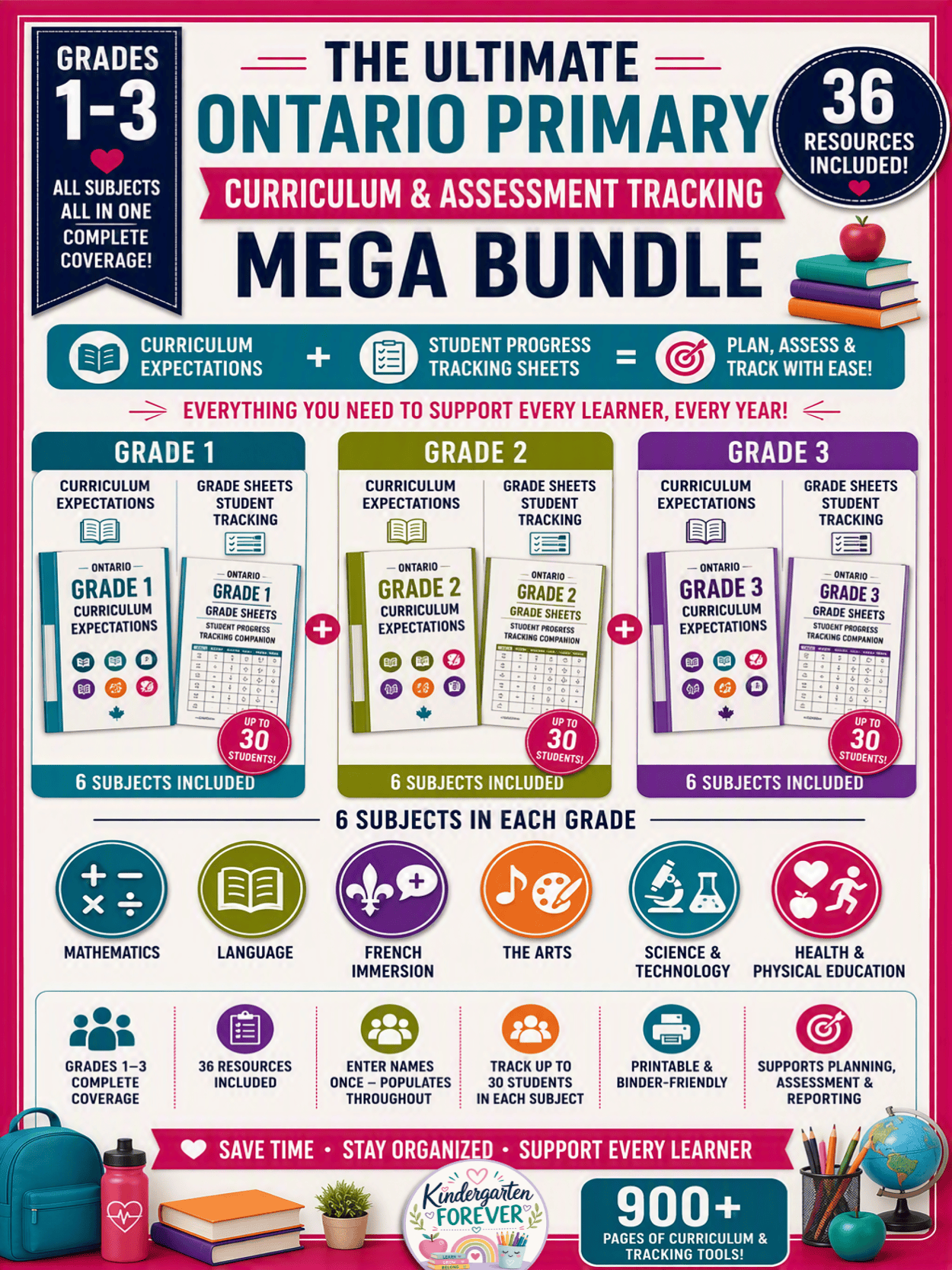
Ultimate Ontario Primary Curriculum mega bundle

📊 Using Tracking Documents to Stay Organized All Year

Tracking documents are essential for staying aligned with the Ontario Primary Curriculum. They help you monitor expectation coverage, assessment data, and student progress.

A strong tracking system allows you to:

  • See exactly which expectations you’ve taught
  • Identify gaps before reporting periods
  • Track accommodations and modifications
  • Keep assessment evidence organized
  • Support differentiated instruction

Our tracking documents are designed to pair seamlessly with your long‑range plans, giving you a complete planning and assessment ecosystem.

🔗 Explore More Primary Teaching Resources

If you’re building out your year, you can explore a full collection of primary teaching tools, printables, and curriculum‑aligned resources on our Primary Resources page. You’ll find materials designed to support the Ontario Primary Curriculum across Grades 1–3, including literacy, math, French Immersion, science, arts, and classroom management essentials.

🌟 Final Thoughts

Teaching Grades 1–3 is a rewarding journey. When you understand how the Ontario Primary Curriculum progresses—and when you have strong long‑range plans and tracking documents—you can teach with clarity, confidence, and purpose. Your students feel that stability, and your classroom becomes a place where learning flows naturally.

10 Essential Classroom Zones: How to Design Spaces That Support Independence, Self‑Regulation, Community, and Purposeful Learning

Classroom Zones - Intentional classroom setup for support independence, self-regulation, community and purposeful learning.

After you’ve set up the foundational elements of your classroom — flow, core systems, lighting, and organization — the next step is designing intentional classroom zones. Zones help children understand how to move through the room, where materials belong, and how each space supports their learning. In Kindergarten, zones honour play‑based learning and self‑regulation. As children move toward the more academic expectations of primary grades, zones help them transition into purposeful, structured learning without losing independence or joy.

Classroom zones make your teaching more intentional, your routines more predictable, and your environment more supportive of children’s bodies, brains, and social needs. Below is a practical guide to designing classroom zones that work in both play‑based and academic contexts.

🌿 Self‑Regulation Zone (Calming Corner)

A self‑regulation zone is a predictable space where children can pause, breathe, and reconnect with their emotions. In Kindergarten, this supports the play‑based requirement of helping children understand and manage feelings. In primary grades, it becomes a tool for independence and emotional literacy.

A mirror is one of the most powerful tools in this zone. When children can see their breathing, facial expressions, and body language, they begin to build self‑awareness. Add soft seating, breathing visuals, emotion cards, and a sand timer. Soft lighting — lamps instead of overhead fluorescents — helps reduce sensory overload.

This zone supports independence, self‑regulation, and community, because children learn that emotions are normal and manageable.

🧘 Flexible Seating Zones

Flexible seating acknowledges that children regulate and learn differently. In Kindergarten, this supports play‑based exploration. In primary grades, it becomes a tool for stamina, focus, and choice.

The floor is one of the most overlooked seating options. Provide bins with clipboards so students can write while lying on their bellies — this strengthens wrists, builds core stability, and supports early writing stamina. Add cushions, wobble stools, low tables, or soft mats. Clear expectations visuals help students choose seating responsibly.

This zone supports independence and gives children ownership over their learning environment.

Amazon has a lot of options that you may find helpful

💡 Lighting Zones (Environmental Regulation)

Lighting affects mood, focus, and overstimulation. Bright overhead fluorescent lights can be overwhelming for young learners. Lamps, natural light, and soft light sources create a calm environment that supports both play‑based exploration and academic focus.

If overhead lights must be used, fluorescent light covers help diffuse harsh glare. Calm lighting supports calm bodies — and calm bodies support calm classrooms. Amazon has options for every classroom decor.

Classroom Zones - Add a Word wall to your literacy zone

🔤 Literacy Zone

A literacy zone should be predictable, accessible, and connected to your word wall. In Kindergarten, this supports emergent literacy through exploration. In primary grades, it becomes a structured space for reading, writing, and phonics.

Include alphabet tools, name cards, writing materials, and forward‑facing books. Cozy seating encourages sustained reading. Clear bins help children return materials independently.

This zone supports independence and builds community through shared literacy experiences.

🔢 Math Zone

A math zone invites exploration, hands‑on learning, and problem‑solving. In Kindergarten, this supports play‑based numeracy. In primary grades, it becomes a space for purposeful math practice and small‑group instruction.

Provide easy access to manipulatives like counters, shapes, number lines, and measuring tools. Ensure there is room to spread out — many math activities require floor space or a large table. Clear labels help children return materials independently.

This zone supports independence and purposeful teaching by making math tools accessible and predictable.

🔬 Science / Maker Zone

A science or maker zone encourages creativity, inquiry, and collaboration. In Kindergarten, this supports exploration and curiosity. In primary grades, it becomes a space for STEM challenges, building, and problem‑solving.

Include recyclables, loose parts, tape, scissors, cardboard, and simple building tools. This area should feel open‑ended and flexible. Children learn engineering, teamwork, and perseverance through tinkering and building.

This zone supports community, independence, and purposeful learning.

📚 Independent Reading Zone

An independent reading zone should feel calm, cozy, and inviting. In Kindergarten, this supports emergent reading behaviours. In primary grades, it becomes a space for stamina, fluency, and comprehension.

Use pillows, carpets, or soft seating. Keep the book selection manageable — too many choices can overwhelm young readers. Soft lighting helps children settle into reading, and forward‑facing books encourage independence.

This zone supports literacy, self‑regulation, and quiet community moments.

👥 Small Group Zone

A small group zone is essential for targeted instruction and quiet conversations. In Kindergarten, this supports guided play, early literacy, and math talks. In primary grades, it becomes a structured space for guided reading, conferencing, and intervention.

Place it away from the main play area to reduce distractions. Include a small table or carpet space and keep materials organized and accessible.

This zone supports purposeful teaching and helps children engage in focused learning with peers or educators.

🧩 Collaboration & Solo Work Zones

Children need spaces for both collaboration and independent work. In Kindergarten, this supports social play and self‑directed exploration. In primary grades, it becomes a tool for project work, partner tasks, and independent practice.

Provide tables for group activities and small nooks or corners for solo tasks. Visual expectations help students choose the right space for their needs.

These zones support independence, community, and self‑awareness.

🧑‍🏫 Whole‑Group Lesson Zone

Classroom Zone - Use Classroom Decor for intentional teaching

Every classroom needs a clearly defined space for whole‑group learning. This zone anchors your day and builds classroom community.

Key elements:

  • An easel or board for modeling
  • A carpet large enough for your group
  • Wiggle cushions or preferred seating options
  • Clear sightlines so all children can see and participate

In Kindergarten, this supports shared learning and community building. In primary grades, it becomes the foundation for explicit instruction, read‑alouds, and mini‑lessons.

This zone supports community, purposeful teaching, and predictable routines.

⭐ Why Classroom Zones Matter

Classroom zones support independence, self‑regulation, community, and purposeful teaching. They honour the play‑based requirements of Kindergarten while gently preparing children for the more academic expectations of primary grades. When children understand how to use each space, the classroom becomes predictable, calm, and easy to navigate. Zones reduce behaviour challenges, strengthen routines, and help students make confident choices throughout the day.

When your space works well, your day works well.

Visit our Classroom Routines for more idea to help plan your zones, routines, and support your teaching.

Ready, Set, Go!

If you’re looking for ready‑to‑use classroom tools that support independence, self‑regulation, and purposeful learning, I’d love for you to visit my Teachers Pay Teachers store. You’ll find visual schedules, classroom labels, job charts, and decor designed to make your space calm, predictable, and easy for children to navigate. Everything is created with real classrooms in mind, so you can set up zones, routines, and learning spaces that truly work for your students.

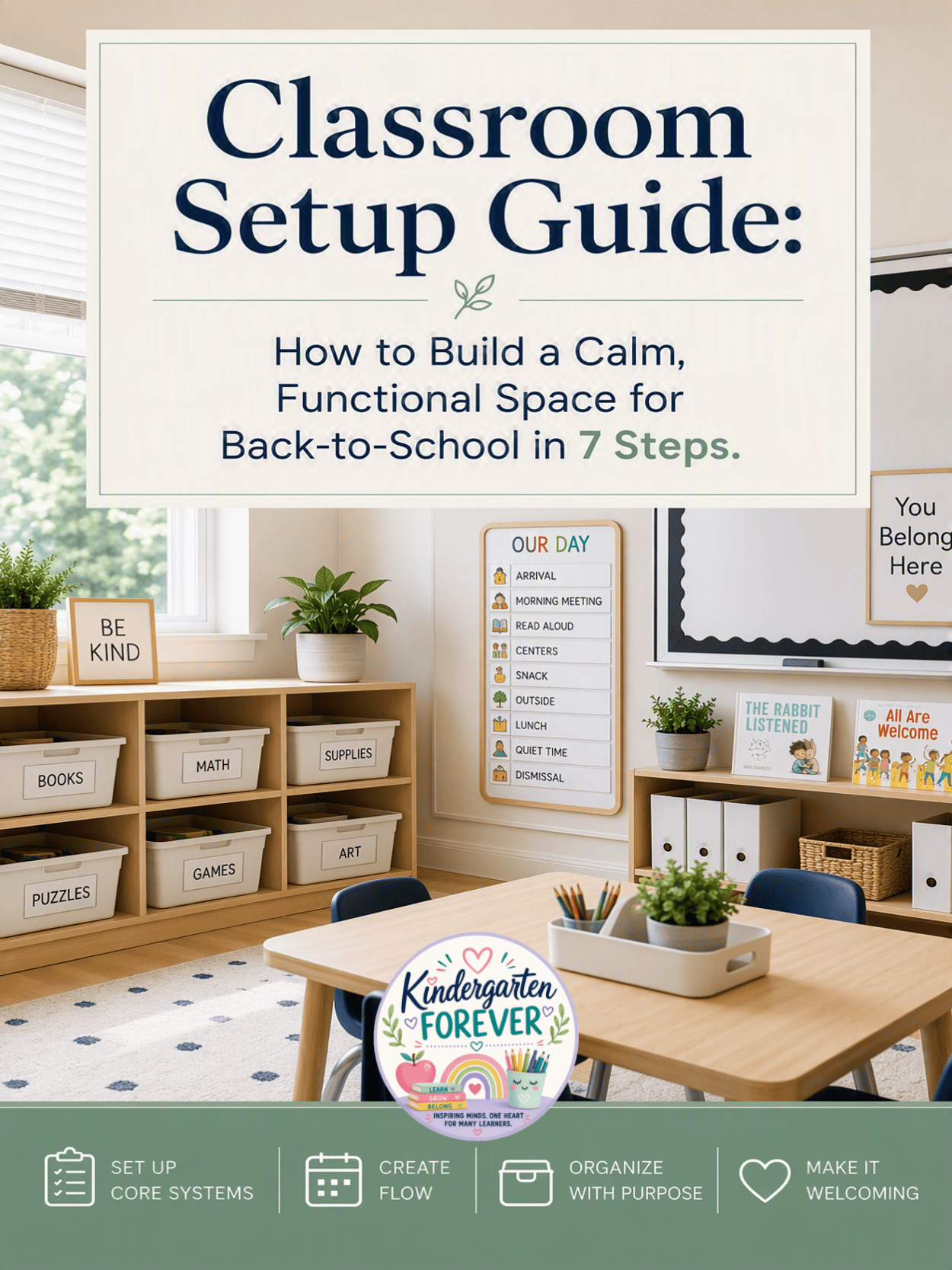
Classroom Setup Guide: How to Build a Calm, Functional Space for Back-to-School in 7 Steps

Classroom Setup Guide:  how to build a calm, functional space for back-to-school in 7 steps

Setting up your classroom for Back‑to‑School is one of the most important parts of preparing for a successful year. A calm, functional classroom supports learning, reduces behaviour challenges, and helps children feel confident from the moment they walk in. Whether you teach Kindergarten or early primary, these 7 steps will help you create a classroom that feels organized, predictable, and developmentally appropriate — without the overwhelm.

1. Start With Classroom Flow, Not Decor

Before you hang anything on the walls, begin with classroom flow. The way students move through your space determines how smoothly your day runs and how independently children can navigate routines.

Think about:

  • Traffic flow — where students enter, store belongings, and transition
  • High‑use zones — materials, books, manipulatives, tech
  • Calm corners — a predictable space for regulation

When flow comes first, your classroom becomes a supportive environment instead of a chaotic one. This foundation makes every other setup decision easier.

2. Build Your Core Systems First

Core systems are the backbone of classroom organization. They reduce teacher stress, increase student independence, and create predictable routines that help children feel safe.

Why core systems matter

When children know what is coming next, they relax. Predictability builds independence, confidence, and emotional security — especially for children who are slow to warm up or need extra time to adjust. Clear systems reduce the cognitive load of the day, allowing students to focus on learning instead of guessing what happens next.

Classroom Setup Guide - Classroom Jobs are a key to building responsibility and community

Systems to set up before decor:

  • Visual Schedule — supports transitions and reduces anxiety
  • Classroom Jobs — builds responsibility and community
  • Table Group Labels — help students navigate the room independently
  • Behaviour Visuals — clear expectations without constant verbal reminders
  • Morning Routine Board — students know exactly what to do when they arrive

These systems save your voice, your time, and your sanity — and they make your classroom feel calm from Day 1.

3. Choose Decor That Supports Learning

Classroom decor should be functional, intentional, and developmentally appropriate. The goal is a space that feels warm and organized — not overstimulating.

Focus on:

  • Consistent colour palette
  • Clear, readable fonts
  • Purposeful visuals that support instruction

Avoid overly busy backgrounds, tiny fonts, or decor that competes with learning. A calm classroom helps children regulate and stay focused, especially during the first weeks of school.

4. Set Up High‑Impact Classroom Zones

Classroom Setup Guide - Ocean Themed High-Impact Classroom Zones - Word Wall, Calendar, Classroom Jobs

These areas do the heavy lifting all year long and should be established early in your setup process.

Word Wall

Make it accessible, readable, and interactive. Use clear fonts and consistent colours.

Calendar Area

A daily anchor that supports routines, number sense, and community.

Materials Station

Clear bins + clear labels = independent students. When children can find what they need, transitions become smoother and behaviour improves.

Inquiry / Learning Wall

A flexible space that grows with student thinking and documentation.

5. Prep Your First‑Week Essentials

The first week of school sets the tone for the entire year. Having these items ready will make your classroom feel calm and organized:

  • Student labels
  • Table group cards
  • Welcome posters
  • Visual schedule pieces
  • Behaviour expectations
  • Parent communication forms
  • First‑week routines checklist

These essentials help students feel secure and help you stay organized during the busiest week of the year.

6. Add Warm, Welcoming Touches Last

Once your systems and zones are in place, add the elements that make your classroom feel inviting:

  • Plants (real or faux)
  • Soft lighting
  • Cozy reading corner
  • A few personal touches
  • A simple, clean welcome sign

Warmth comes from intentional choices, not from filling every wall.

7. Remember: Your Classroom Is a Living Space

It doesn’t need to be perfect on Day 1. It needs to be functional, calm, and ready for students. The rest will grow with you as you learn more about your group.

A well‑designed classroom isn’t about perfection — it’s about purpose, predictability, and supporting children as they learn, explore, and build confidence.

🛒 Your Classroom Setup Zone

If you’re looking for ready‑to‑use classroom organization tools, visual schedules, labels, or decor that support a calm and functional Back‑to‑School setup, I’d love for you to visit my Kindergarten Forever Teachers Pay Teachers store. You’ll find classroom‑tested resources designed to help you build predictable routines, support independence, and create a space that feels good for both you and your students.

The Beauty and the Beast of Back to School

A Fresh Start for your classroom, even if summer isn’t ready to say goodbye

Back to School season always feels a little like Beauty and the Beast. There’s the beauty of a fresh start — new students, new routines, new energy — and then there’s the beast of Back to School… the part where summer ends, your sandals get traded for sensible shoes, and your brain shifts from “patio mode” to “planning mode.” Back to School brings excitement and chaos in equal measure, and teachers everywhere feel that familiar mix of anticipation and overwhelm.

Whether you teach Kindergarten, Grade 3, or middle school, Back to School has a way of pulling you in two directions at once. You’re excited to set up your classroom, meet your students, and start fresh — but you’re also saying goodbye to slow mornings, sunshine, and the luxury of not packing a lunch.

And honestly? It’s the perfect moment for a Fresh Start.

B is for the Beauty of Back to School

🌟 The Beauty: A Fresh Start for Your Back to School Classroom

One of the most beautiful parts of Back to School is the chance to reset your classroom environment. This summer, I completed a full store refresh, updating every coordinated classroom decor set to match a warm, practical, teacher‑friendly aesthetic that works across grades. Back to School is the ideal time to create a space that feels calm, cohesive, and intentional — no matter what or where you teach.

Back to School - The prefect time for a Fresh Start

If you’re preparing your room for Back to School, you’ll find:

  • Editable calendars in 12 coordinated themes
  • Editable classroom labels for every area of your room
  • Student labels for cubbies, bins, and personal items
  • Word wall cards designed for early literacy and primary grades
  • Classroom jobs that support independence
  • A fully coordinated decor ecosystem that keeps your room visually consistent

Everything matches. Everything is editable. Everything is designed to support the flow of a school day — from Kindergarten to upper elementary.

🍎 A Quick Note for Ontario Teachers

If you’re teaching in Ontario, you already know that the 2026 Kindergarten curriculum refresh is on the horizon. While this update is specific to Kindergarten, many Ontario teachers across grades are using Back to School as a chance to rethink their spaces, routines, and documentation systems. It’s a small part of the bigger Back to School picture — but worth mentioning as you plan your September setup.

B is for Beast - and back to school!

😬 The Beast: The End of Summer and the Back to School Rush

Of course, Back to School also brings the beastly side of teaching. The calendar flips. The emails start. The staff meetings appear out of nowhere. Your iced coffees turn back into hot ones. Back to School can feel like a whirlwind, especially when you’re trying to set up a classroom that meets both your needs and your students’ needs.

But here’s the good news: You don’t have to tackle the Back to School beast alone.

Back to School - start at TPT with up to 25% off everything in the Kindergarten Forever collection

The annual TPT Back to School Sale is happening on August 4–5, and it’s the perfect time to grab the decor pieces you’ve been planning to use for your September setup. Everything in my store will be up to 25% off with the TPT promo code — including all the newly refreshed decor sets.

And for my followers, every day is a sale day — you always receive an extra 5% off just for being part of my little corner of TPT. Back to School savings don’t have to end when the sale does.

If you’ve been eyeing a theme, a bundle, or a coordinated set, Back to School is the best time to grab it.

✨ Why This Back to School Season Matters

Between:

  • the beauty of a new school year,
  • the beast of summer ending,
  • the FreshStart energy of a newly refreshed store, and
  • the Back to School Sale giving you a chance to save…

This Back to School season feels different — in a good way.

Back to School is your chance to reset your space, simplify your routines, and build a classroom environment that supports the kind of learning your students need: calm, organized, intentional, and beautifully coordinated. Back to School is more than a date on the calendar — it’s a mindset shift.

If you’re planning your September setup, Back to School is the moment to gather the tools that will make your classroom feel ready for the year ahead.

💛 Wishing You a Beautiful Fresh Start This Back to School Season

Whether you’re deep in planning mode or still clinging to the last few days of summer sunshine, I hope this Back to School season brings you more beauty than beast — and a classroom that feels like a true FreshStart.

If you’re shopping the Back to School Sale, I hope you find exactly what you need for your September setup. And if you’re already a follower, enjoy your everyday 5% discount — it’s my way of saying thank you for being here.