There’s a growing debate about whether calendar time in kindergarten is developmentally appropriate. The truth is simple: traditional, sit‑and‑listen calendar routines aren’t meaningful. But intentional, movement‑based, community‑focused kindergarten calendar activities absolutely are. When calendar time becomes part of a coordinated classroom setup, it supports connection, regulation, and learning.
Below are five ways to make calendar time meaningful in kindergarten, grounded in real early‑learning practice.
🌿 1. Calendar Time Builds Classroom Community
A meaningful calendar routine starts with connection. Daily shared rituals help children feel seen, valued, and part of something bigger. When the class gathers to talk about the day, upcoming events, birthdays, or special moments, they build a sense of belonging.
Calendar time becomes a predictable anchor that strengthens relationships and sets a positive tone for the day. classroom community
🔢 2. Calendar Time Strengthens Emerging Math Skills
Calendar time in kindergarten naturally reinforces early math concepts through hands‑on, interactive routines. Children practice:
Counting forward and backward
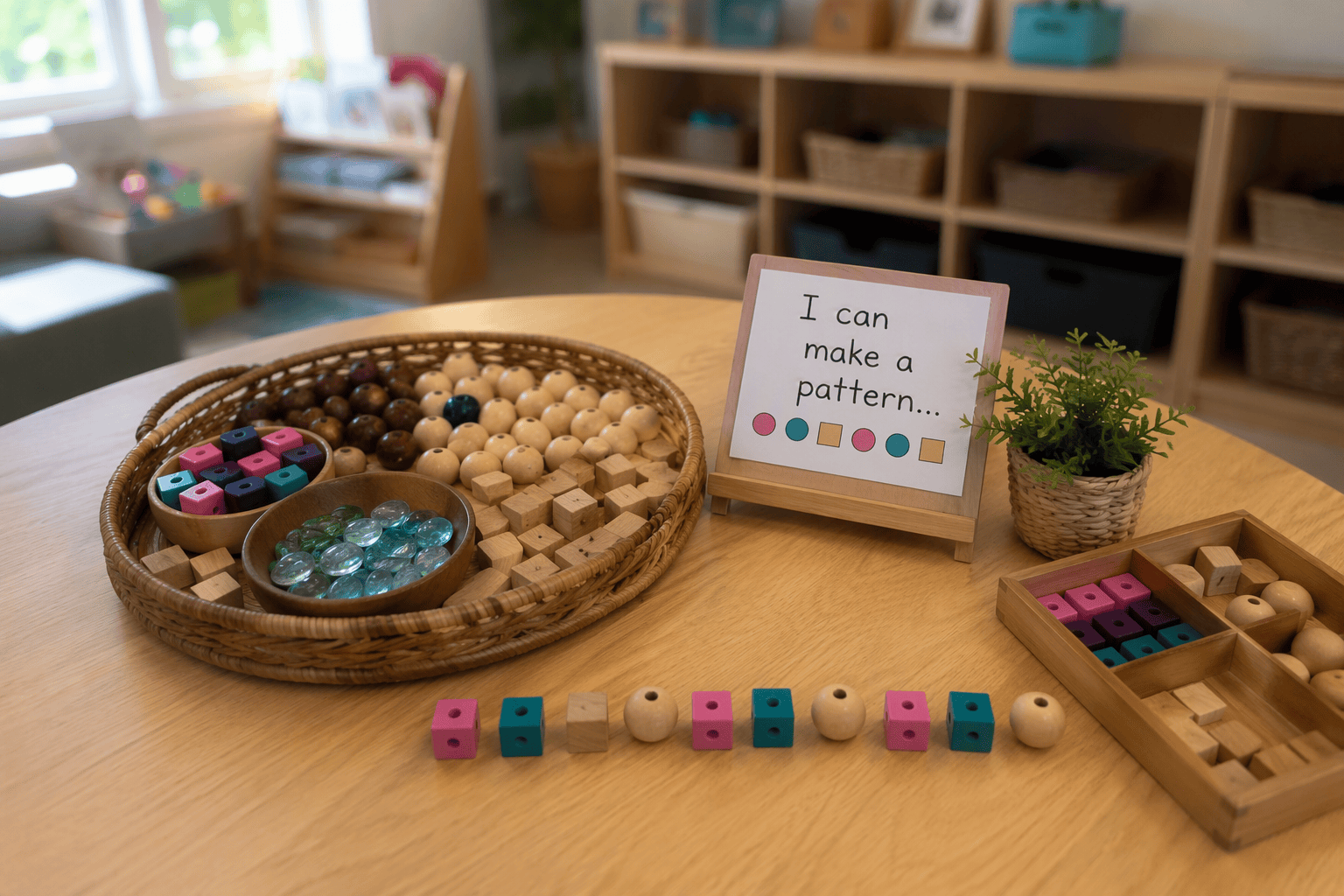
Recognizing number patterns
Building number sense
Comparing quantities
Understanding teen numbers
Seeing math in real‑life contexts
When children move number cards, clap patterns, or count days until an event, they engage in authentic math learning that feels purposeful. emerging math skills
🔁 3. Calendar Time Creates Predictability and Supports Routines
Predictability is essential in kindergarten. A meaningful calendar routine helps children understand the flow of the day, anticipate transitions, and feel emotionally regulated. When calendar time includes movement, songs, and transition cues, it becomes a powerful regulation tool.
Children learn:
What’s happening today
What’s coming next
How to move confidently between activities
How to participate in shared routines
This is the foundation of strong kindergarten routines. kindergarten routines
🗣️ 4. Calendar Time Builds Language and Communication Skills
Calendar time is one of the richest oral language opportunities in the kindergarten day. Children practice:
Listening
Speaking
Asking questions
Sharing ideas
Using new vocabulary
Understanding time‑related language (yesterday, today, tomorrow)
Predictable phrasing (“Today is…”, “Tomorrow will be…”) supports syntax, comprehension, and expressive language. oral language development
🧠 5. Calendar Time Supports Executive Function and Self‑Regulation
A meaningful calendar time in kindergarten builds executive function skills that children use all day long.
Calendar routines strengthen:
Planning
Anticipation
Working memory
Emotional regulation
Transition readiness
Patience (counting down to events)
When children see the day visually represented, they feel calmer, more prepared, and more in control. executive function
🌿 Make Calendar Time Meaningful With a Coordinated Classroom Setup
A meaningful calendar routine works best when the visuals are clear, consistent, and coordinated. A calm, predictable visual system reduces cognitive load and supports independence — exactly what kindergarten learners need.
A beautifully coordinated classroom isn’t just “Pinterest‑pretty” — it’s a powerful tool for building self‑regulation, independence, and predictability for young learners. 🌈✨
When everything in your room has a clear place, a clear purpose, and a consistent visual style, children learn to navigate their day with confidence. They know where materials belong, how to find what they need, and where to look for information. This reduces stress, supports smoother transitions, and helps them feel capable and secure.
And for teachers? A coordinated classroom means peace of mind, fewer daily decisions, and a space that feels calm, organized, and ready for learning.
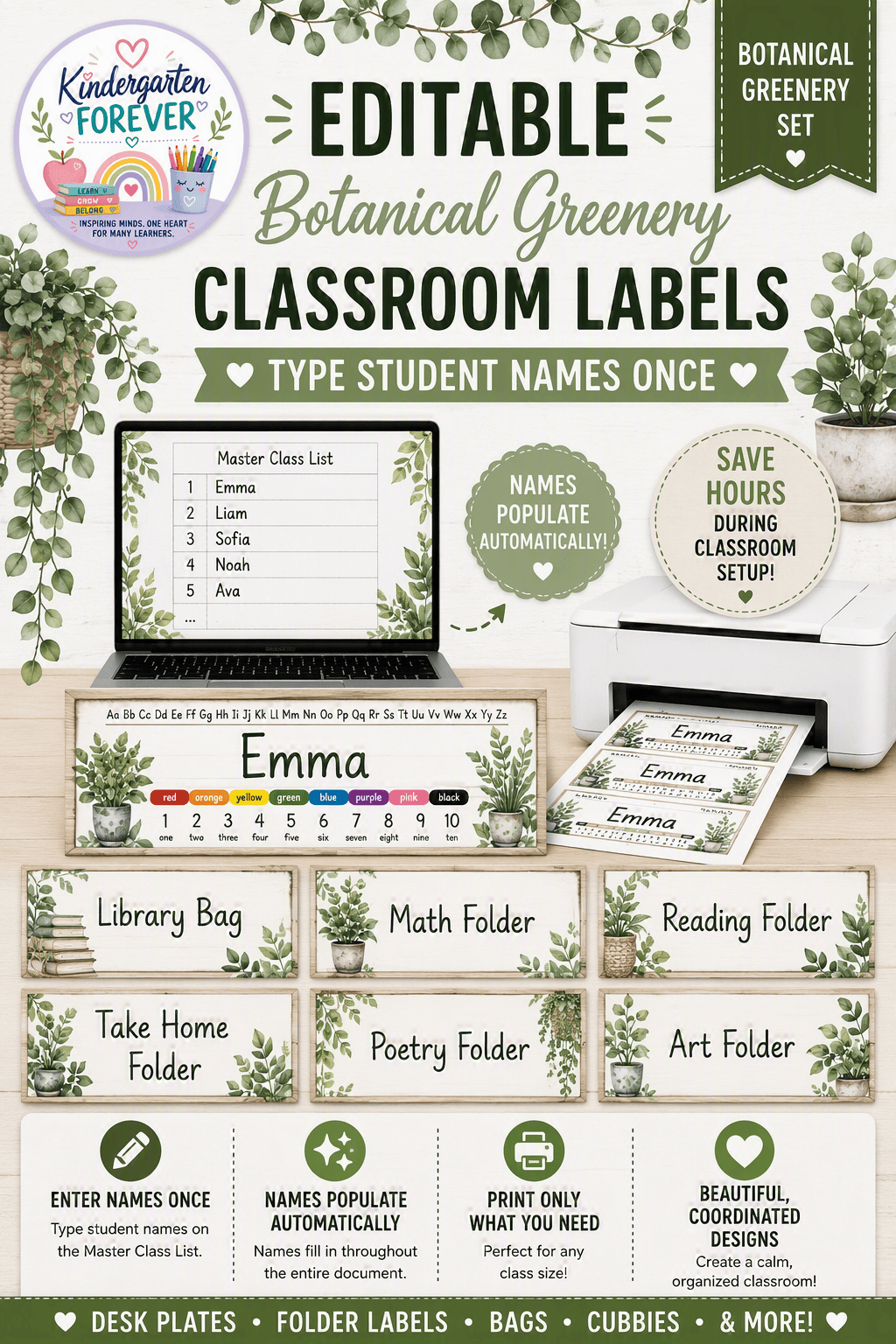
That’s exactly why I created the Complete Classroom Setup System — a fully editable, fully coordinated collection designed to make Back‑to‑School easier, brighter, and beautifully consistent.
🌟 Why Coordination Matters in Kindergarten
A cohesive classroom supports essential early‑learning skills:
Self‑regulation — predictable visuals help children understand routines
Independence — clear labels and consistent layouts reduce reliance on the teacher
Executive functioning — children learn to organize materials and follow multi‑step tasks
Literacy development — matching word wall cards and environmental print strengthen recognition
Emotional security — a calm, organized space helps children feel safe and ready to learn
When your classroom visuals match, children don’t have to work as hard to interpret their environment. Everything feels intentional — and that matters.
🌈 The 12 Coordinated Classroom Themes
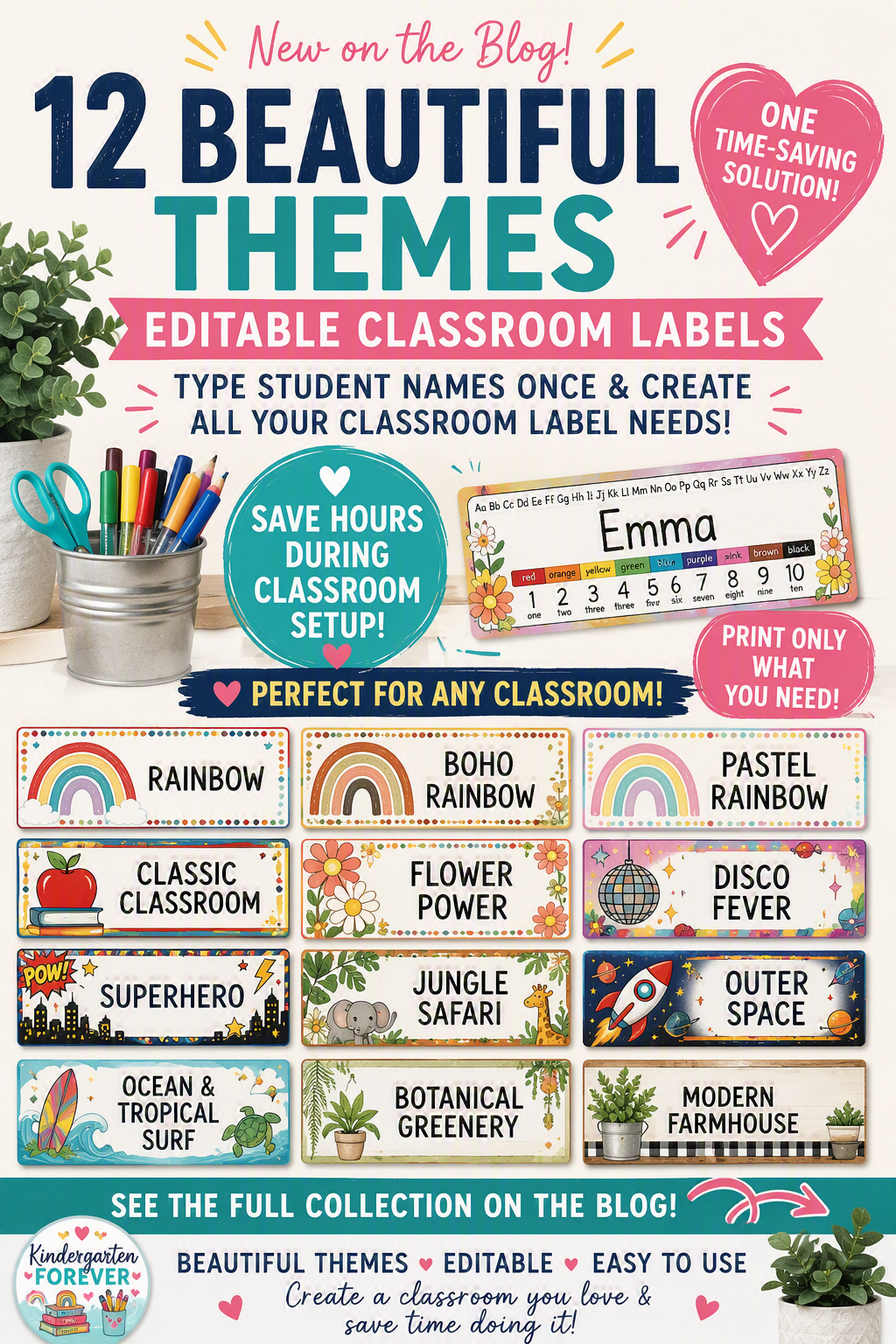
Every resource in the system is available in 12 fully coordinated themes, so your entire room can match from your bulletin boards to your literacy wall to your student materials.
Rainbow
Boho Rainbow
Pastel Rainbow
Classic
Flower Power
Disco Fever
Superhero
Jungle Safari
Dreamy Outer Space
Ocean & Tropical Surf
Botanical Greenery
Modern Farmhouse
Each theme includes editable calendars, word wall cards, classroom labels, and student labels — all designed to work together seamlessly.
📅 Editable Classroom Calendars
Your classroom calendar is one of the most important daily tools in Kindergarten. It anchors routines, builds number sense, and helps children understand time in a concrete way.
A strong word wall supports early literacy, environmental print, and phonemic awareness. These themed word wall cards keep your literacy space cohesive and visually clear.
When you’re creating student labels, always print 3–5 extra sets. There will always be late additions — new students, moved students, or updated information. Having extras ready saves time and keeps your classroom looking polished.
In kindergarten, organization isn’t just about aesthetics — it’s about creating a learning environment where children feel confident, capable, and independent. When everything has a place, routines run smoothly, transitions are calmer, and students know exactly where to find what they need. That’s why kindergarten classroom labels are one of the most powerful tools teachers can use to build structure, predictability, and belonging.
And today, I’m thrilled to officially launch the Kindergarten Forever Classroom Label Collection — a growing, beautifully coordinated system designed to help teachers achieve that “Pinterest Classroom” look without the cost, stress, or hours of design work.
🌈 Why Kindergarten Classroom Labels Matter
Kindergarten students thrive when their environment is predictable. Clear, consistent classroom labels help children understand routines, navigate the classroom independently, and build confidence in their ability to manage materials.
Here’s why labels matter so much:
They reduce anxiety. Children know where things belong and where to find them.
They support independence. Students can access materials without relying on adults.
They strengthen routines. Clean‑up, transitions, and centers run more smoothly.
They build literacy. Labels expose children to environmental print all day long.
They create a sense of belonging. A clearly organized classroom feels safe and welcoming.
When your classroom is labeled well, students don’t have to guess — they know.
✨ The Pinterest Classroom… Without the Pinterest Price Tag
Let’s be honest: those dreamy Pinterest classrooms are gorgeous, but they often require expensive décor, custom printing, and hours of design work.
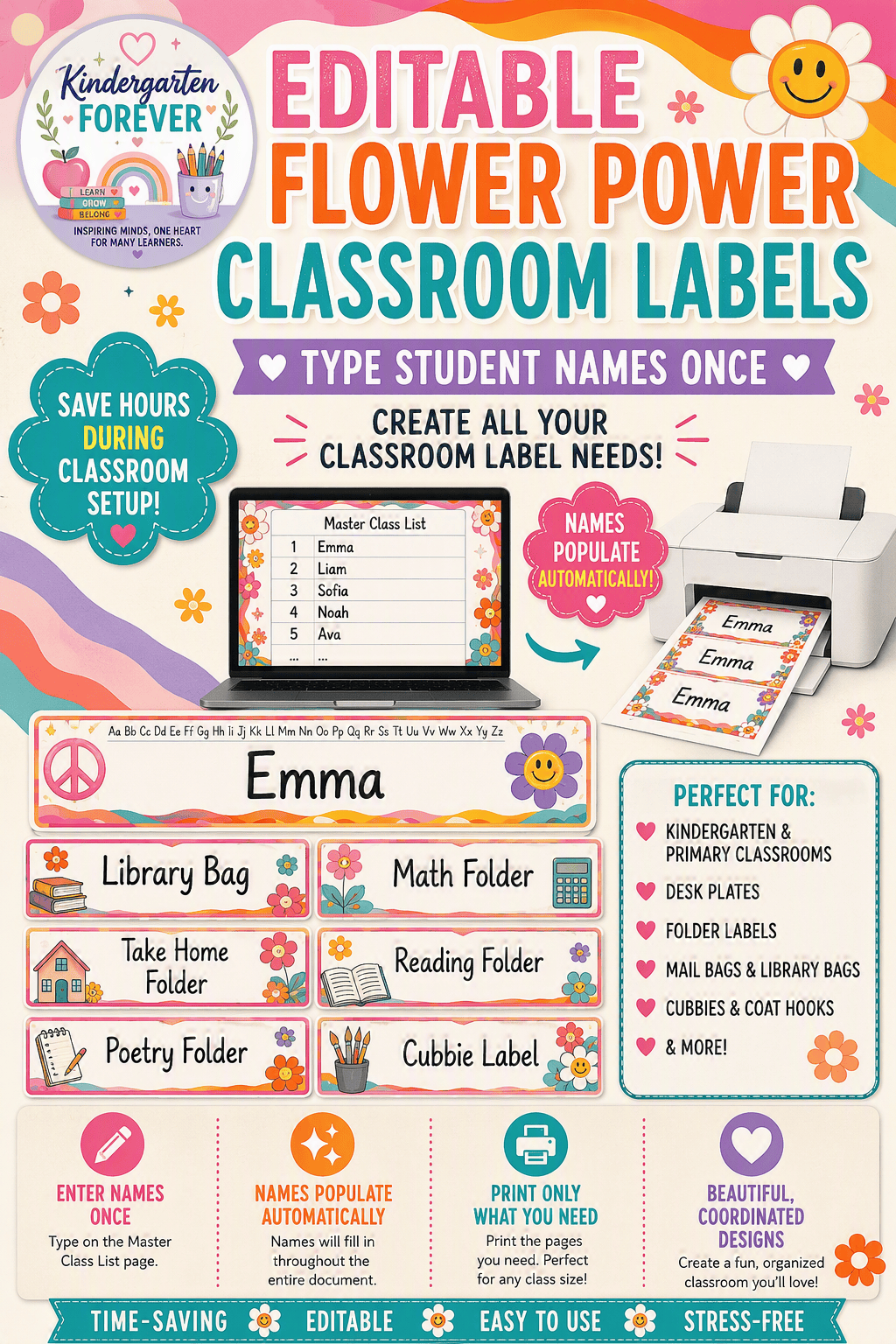
You simply type your list once, and the system generates every label you need in your chosen theme. No formatting. No resizing. No hunting for matching fonts. No Canva rabbit holes.
Just:
type
print
stick
done
This is classroom setup made simple, sustainable, and beautiful.
Bright, cheerful, and full of energy, the Rainbow Classroom Theme creates an inviting learning environment that celebrates color and creativity. Vibrant rainbow accents, bold colors, and playful classroom elements help foster a positive atmosphere while keeping your classroom beautifully organized. This timeless theme is perfect for teachers who love a fun, welcoming space that students immediately feel excited to enter.
The Boho Rainbow Classroom Theme combines soft rainbow colors with earthy tones to create a calm, modern classroom aesthetic. Featuring muted rainbows, warm neutrals, and natural accents, this theme offers a relaxed and stylish learning environment that feels both peaceful and organized. It is a beautiful blend of contemporary classroom design and timeless charm.
Soft, dreamy, and full of warmth, the Pastel Rainbow Classroom Theme uses delicate rainbow hues to create a soothing classroom atmosphere. Gentle pinks, lavenders, aquas, and soft yellows provide a cheerful yet calming backdrop that helps students feel comfortable, focused, and ready to learn.
Inspired by traditional schoolhouse colors and timeless educational elements, the Classic Classroom Theme never goes out of style. Bright primary colors, apples, books, pencils, and stars create a familiar and welcoming environment that feels both educational and fun. It is the perfect choice for teachers who love a traditional classroom look with modern organization.
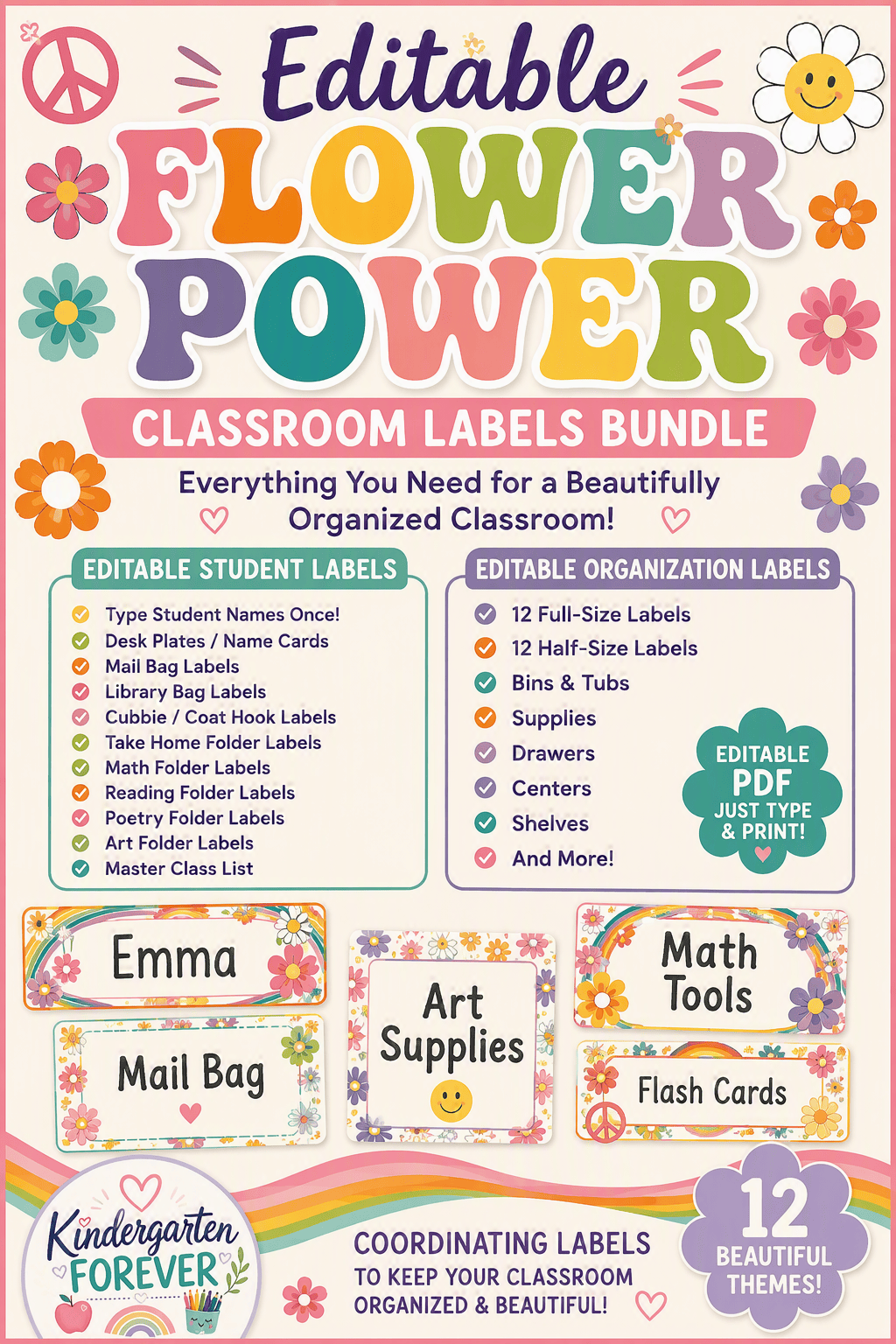
Bursting with retro charm and happy energy, the Flower Power Classroom Theme brings colorful flowers, groovy patterns, and feel-good vibes into your classroom. Inspired by the playful designs of the 1970s, this theme creates a bright and joyful space where creativity and positivity can flourish.
The Disco Fever Classroom Theme mixes retro style with modern classroom fun. Featuring disco balls, groovy colors, smiley accents, and playful vintage details, this theme creates a lively learning environment that encourages creativity while helping your classroom feel coordinated and unique.
Power up your classroom with the exciting energy of the Superhero Classroom Theme. Bold colors, action-inspired graphics, shields, stars, and comic-style elements help create an engaging environment where students feel empowered to be classroom heroes every day. This theme inspires confidence, teamwork, and a love of learning.
Bring the adventure of the wild into your classroom with the Jungle Safari Classroom Theme. Realistic safari animals, lush greenery, natural textures, and animal-print accents create an exciting yet sophisticated learning environment. Students will love exploring a classroom filled with adventure while teachers enjoy a beautifully coordinated space.
Blast off into learning with the Dreamy Outer Space Classroom Theme. Soft galaxies, colorful planets, twinkling stars, and adventurous rockets inspire curiosity and imagination while creating a stunning classroom atmosphere. Perfect for young explorers, this theme encourages students to dream big and reach for the stars.
Calm, refreshing, and inspired by the coast, the Ocean & Tropical Surf Classroom Theme combines sea turtles, coral reefs, tropical elements, and soothing ocean colors to create a serene learning environment. The relaxing palette helps students feel grounded and focused while bringing the beauty of the ocean into the classroom.
The Botanical Greenery Classroom Theme brings the calming beauty of nature indoors. Featuring potted plants, hanging vines, succulents, and soft sage green accents, this theme creates a peaceful and refreshing learning space. Its natural aesthetic encourages focus, organization, and a sense of calm throughout the school day.
Warm, welcoming, and effortlessly organized, the Modern Farmhouse Classroom Theme blends shiplap textures, woodgrain accents, black-and-white gingham, and touches of greenery to create a cozy classroom environment. Inspired by the comfort of home, this theme offers a clean, structured look that feels both timeless and inviting.
Editable, clean, and theme‑coordinated — perfect for tables, desks, cubbies, or center rotations.
⭐ Folder & Mail Bag Labels
Keep communication organized and ensure everything gets home (and back!) with ease.
⭐ Library Bag Labels
Matching labels that help students track their book bags independently.
These pieces alone create a cohesive, professional look across your classroom — but this is only the beginning.
🚀 Coming Soon: A Fully Coordinated Classroom System
This label line is designed to grow — and grow fast. Here’s what’s coming next:
Word Wall Cards
Visual Schedule Cards
Calendar Cards
Bin & Basket Labels
Center Labels
Supply Labels
Binder Spines
Classroom Posters
Routine Cards
And much more
Every new addition will match your chosen theme, giving you a fully unified classroom aesthetic.
This is the start of a complete Kindergarten Forever Classroom Organization System — one that evolves with your needs and keeps your classroom looking polished all year long.
🧠 Why Organization Builds Confidence in Kindergarten
When children walk into a classroom where everything is clearly labeled, visually consistent, and easy to navigate, they feel safe. They know what to expect. They know where things belong. They know how to participate.
This is how independence grows.
Predictability reduces behaviour challenges. Clear labels reduce transition time. Visual organization helps children regulate themselves because the environment supports them instead of confusing them.
Your classroom becomes a place where children feel capable — and that confidence spills into every part of their learning.
This is the perfect time of year to refresh your classroom, simplify your routines, and give your students the gift of clarity and confidence.
⭐ Final Thoughts
A beautifully organized classroom isn’t about perfection — it’s about creating a space where children feel secure, independent, and ready to learn. With the Kindergarten Forever Classroom Label Collection, you can build that environment quickly, affordably, and in a way that grows with you.
⭐ In kindergarten, math should feel like discovery — not drill.
When children explore numbers through hands‑on play, they build the deep, flexible understanding that worksheets simply cannot provide. Worksheets may look tidy, but they often reduce math to memorization and isolated tasks. Play, on the other hand, invites children to think, reason, compare, estimate, and problem‑solve — all the skills that form true number sense.
Number sense is more than counting from 1 to 10. It’s the ability to understand what numbers mean, how they relate to each other, and how they behave in real situations. When children develop number sense, they can subitize, compose and decompose numbers, recognize patterns, and explain their thinking. These are the foundations of future math success — and they grow strongest through play‑based experiences.
🎲 Why Worksheets Fall Short
Worksheets often focus on:
rote counting
tracing numbers
matching numerals to pictures
filling in blanks
These tasks may look productive, but they rarely build conceptual understanding. A child can trace the number 5 perfectly and still have no idea what “five” means. They can circle the correct answer without understanding why it’s correct.
Worksheets also limit movement, creativity, and exploration — all essential for early math development. When children are confined to paper, they lose opportunities to manipulate objects, compare quantities, build sets, and test ideas. Play allows children to make mistakes, try again, and learn through meaningful action.
🌈 What Play‑Based Math Looks Like
Play‑based math is active, hands‑on, and joyful. It includes:
Counting Collections
Children gather objects — buttons, blocks, pom‑poms — and count them in different ways. They learn that the last number said tells “how many,” and they begin grouping items into sets to make counting easier.
Subitizing Games
Quick‑glance dot patterns help children recognize quantities without counting. This builds mental math and prepares them for addition and subtraction.
Ten‑Frames
Ten‑frames help children visualize numbers, compare quantities, and understand how numbers relate to ten — a critical early math milestone.
Math Talks
Short conversations about “how you know” encourage reasoning, flexible thinking, and vocabulary development.
Real‑World Problem Solving
Children explore math through snack time, block building, dramatic play, and outdoor exploration. Math becomes meaningful because it connects to their world.
🧠 Play Builds the Math Skills Worksheets Can’t
Through play, children learn to:
compare quantities
estimate
sort and classify
recognize patterns
compose and decompose numbers
explain their thinking
make connections
These skills form the backbone of number sense — and they grow naturally when children are given time, materials, and freedom to explore.
🃏 Add Hands‑On Math Tools to Strengthen Learning
Your classroom already thrives on play, and adding intentional math tools can deepen learning even further. Here are three resources that fit seamlessly into play‑based math centers:
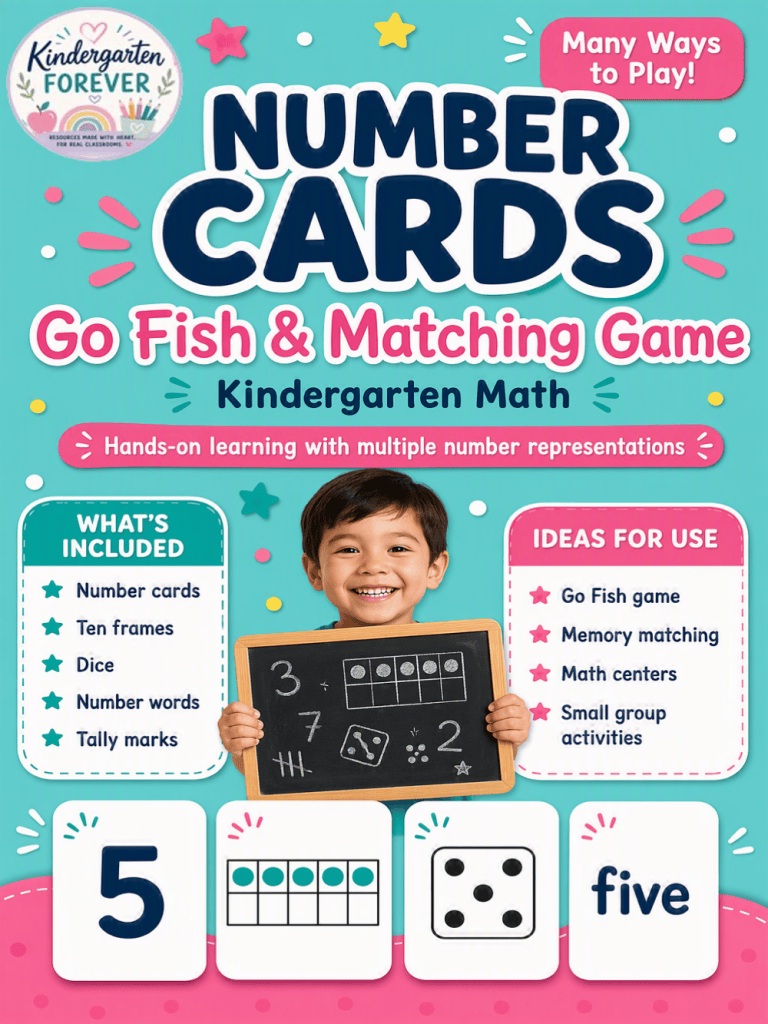
⭐ Go‑Fish Number Sense Card Games (English & French)
These card games build number recognition, matching, comparing quantities, and early math fluency — all through play. Children practice essential skills while laughing, taking turns, and engaging socially. They’re perfect for math centers, small groups, or early‑finisher bins.
🦋 Number‑Matching Butterflies (English & French)
These butterflies strengthen visual discrimination, sorting, and matching — foundational cognitive skills that support math development. Children naturally begin grouping, comparing, and organizing as they match numerals with number words, tallies, dice, and ten frames.
💯 Hundreds Chart Activity (for advanced learners)
For students ready to stretch their thinking, your hundreds chart activity introduces patterns, skip counting, and early place value. It’s an excellent extension for children who need challenge beyond typical kindergarten expectations.
These tools keep learning playful while reinforcing the math concepts children need most.
❤️ The Goal: Confident, Flexible Thinkers
When math is playful, children develop confidence. They learn that numbers are not scary — they are tools they can use to solve problems, explore ideas, and understand their world. Worksheets may check boxes, but play builds thinkers.
Your kindergarten classroom is already rich with curiosity, movement, and joy. By choosing play‑based math experiences, you’re giving children the strongest possible foundation for future learning.
Building number sense doesn’t happen in isolation — it grows through consistent, predictable math experiences woven into your daily routines. If you’re looking to deepen your understanding of how play supports early numeracy, our Kindergarten Math page brings all of these ideas together in one place. It explores hands‑on math centers, subitizing, counting collections, ten‑frames, problem‑solving, and the developmental progression of number sense from emergent to advanced learners.
✍️ Handwriting in kindergarten begins long before children pick up a pencil. Strong fine motor skills are the foundation for confident letter formation, and these skills develop through meaningful play, not worksheets. When teachers understand how fine motor development works — and how it connects to gross motor skills, midline crossing, wrist stability, and the pincer grasp — handwriting becomes a natural, joyful part of early learning.
Here are four essential ways to build fine motor strength in kindergarten, backed by developmental research and classroom‑tested practice.
1️⃣ Build Strong Hands Through Play‑Based Fine Motor Activities
Fine motor development refers to the small, controlled movements of the hands and fingers. These skills allow children to grasp, pinch, manipulate tools, and eventually form letters. Before handwriting instruction begins, children need strong hands — and the best way to build that strength is through play.
Activities that support fine motor development include:
Tweezers in sensory bins — perfect for developing the pincer grasp, which is essential for holding a pencil correctly
Play‑Doh or clay — strengthens fingers, hands, and wrists
Beading and threading — improves finger isolation and hand‑eye coordination
Sticker peeling — encourages precision and finger control
Cutting with scissors — builds bilateral coordination and strengthens the hand
These activities prepare children for handwriting far more effectively than early tracing sheets. When children explore materials with their hands, they build the strength and coordination needed for confident writing.
2️⃣ Strengthen Gross Motor Skills to Support Handwriting
Handwriting in kindergarten isn’t only about the hands — it’s also about the body. Gross motor skills involve large movements like running, climbing, balancing, and stabilizing the core. These skills help children sit upright, maintain posture, and control their arms while writing.
A child with weak gross motor skills may:
slump at the table
tire quickly during writing tasks
switch hands frequently
struggle to stabilize the paper
Gross motor development supports handwriting by giving children the strength and endurance to use their hands effectively. Activities like climbing, crawling, balancing, and outdoor play all contribute to better handwriting readiness.
One of the most effective strategies is belly‑lying. When children lie on their stomachs to draw or color:
their shoulders stabilize
their wrists extend naturally
their core activates
their hands gain strength
This simple position builds the exact muscles needed for handwriting — without any pressure to produce perfect letters.
3️⃣ Support Crossing the Midline for Smooth, Confident Writing
Crossing the midline is a critical developmental skill that directly affects handwriting. It refers to the ability to move one hand across the center of the body to the opposite side. Children need this skill to write smoothly across a page, turn pages in a book, and use tools effectively.
Children who struggle with midline crossing may:
switch hands frequently
write in short, disconnected strokes
avoid tasks that require reaching across their body
Activities that support midline development include:
large rainbow‑arc drawing
reaching games
pretend painting on vertical surfaces
belly‑lying coloring (again — it’s a powerhouse skill builder)
When children can comfortably cross the midline, handwriting becomes more fluid and coordinated.
4️⃣ Develop Wrist Stability and the Pincer Grasp
Two of the most important physical skills for handwriting in kindergarten are wrist stability and the pincer grasp.
Wrist Stability
Children need a stable wrist to control a pencil. Activities that strengthen the wrist include:
coloring on vertical surfaces
painting on easels
belly‑lying drawing
Play‑Doh rolling and shaping
These movements encourage proper wrist extension and control.
Pincer Grasp
The pincer grasp — using the thumb and index finger together — is essential for holding a pencil with a tripod grip. Tweezers, tongs, beads, and small manipulatives all help children develop this skill naturally.
When wrist stability and the pincer grasp are strong, children are ready for letter formation.
✏️ When Children Are Ready for Printing
Once children show strong fine motor control, stable gross motor posture, comfort crossing the midline, and a developing pincer grasp, they are ready to begin forming letters and numbers. At this stage, you can introduce printing practice sheets that support proper stroke formation, reinforce letter recognition, and build early writing confidence. Our printing practice sheets for letters and numbers are designed specifically for kindergarten learners — clean layouts, developmentally appropriate strokes, and predictable routines that help children feel successful.
💬 Final Thoughts
Handwriting in kindergarten is not about rushing children into letter formation. It’s about building strong, capable hands through meaningful play and developmentally aligned activities. When fine motor skills, gross motor stability, midline crossing, wrist strength, and the pincer grasp come first, children approach handwriting with confidence — and writing becomes a joyful part of learning.
✨ Smooth Transitions in Kindergarten: Why Predictable Routines Build Calm, Independence, and Classroom Success
The first weeks of school make it clear why smooth transitions in kindergarten matter so much. Children are stepping into an environment that feels completely different from anything they’ve experienced before. They’re not preschoolers anymore — but they’re still learning how to be students.
Suddenly, there are bells 🔔, lineups 🚶♀️🚶♂️, shared materials 🎨, and expectations that feel brand‑new. Even children with preschool experience must adjust to larger groups, multi‑step directions, and a faster pace. This is exactly why smooth transitions in kindergarten are essential: they help children understand what’s happening, what’s expected, and what comes next.
When transitions are predictable, children feel secure enough to participate, explore, and learn.
🔁 Why Predictability Supports Smooth Transitions in Kindergarten
Predictable routines are the foundation of smooth transitions in kindergarten. When children know what’s coming next, they can focus on learning instead of worrying. This sense of safety is essential for emotional regulation — a concept explored in Gentle Parenting & School Readiness (link to Sunday’s post).
Teachers who model calm 😌, use consistent cues, and keep transitions short and clear help children build independence. Predictability also reduces cognitive load. Instead of wondering what to do, children can focus on how to do it.
Smooth transitions in kindergarten support:
🧠 Emotional regulation
🚀 Task initiation
🌟 Independence
💛 Positive classroom climate
These skills shape the entire school year.
🖼️ Visual Cues Make Smooth Transitions in Kindergarten Easier
Visual cues are one of the most effective tools for achieving smooth transitions in kindergarten. Children entering school may not yet be reading, but they can absolutely interpret pictures, colors, and symbols. Visual organization helps them understand expectations without relying solely on verbal instructions.
Picture labels 🏷️, color‑coded bins 🟦🟧, and illustrated schedules 📅 allow children to see what comes next. These cues reduce repeated reminders, support independence, and help students navigate the classroom confidently.
Pro Tip: A cohesive classroom gives children confidence that they know where they should be putting away materials, mail bags, folders, etc. Try our Editable labels to help make smooth transitions in kindergarten easier, reduce transition time, and help children feel ownership over their learning environment. They also save teachers HOURS ⏳ — a huge win during back‑to‑school season.
🎯 Setting Realistic Expectations for Smooth Transitions in Kindergarten
Kindergarteners arrive with preschool experience, but this environment is different. They are learning to navigate shared spaces, follow multi‑step directions, and manage emotions in a larger group. Setting realistic expectations helps children feel capable rather than overwhelmed — and supports smooth transitions in kindergarten.
Start with small, gentle transitions:
🗣️ Use clear, simple language during transitions.
🖼️ Offer visual reminders for cleanup, lining up, and centers.
💬 Reinforce routines with positive language and predictable timing.
⏱️ Keep transitions short and consistent.
😌 Model calm behavior — children borrow your regulation.
These strategies bridge the gap between preschool familiarity and kindergarten structure. They also align beautifully with gentle parenting principles, where connection and boundaries work together to support emotional growth.
🏡 Families Can Support Smooth Transitions in Kindergarten
Smooth transitions don’t start or stop at the classroom door. Families can mirror these routines at home — using gentle parenting strategies to support consistency. When home and school routines align, children feel more secure and confident.
If you are looking for ways to support your preschooler in their smooth transition to kindergarten, you may want to strt with our Gentle Parenting & School Readinessarticle for ideas on how connection, predictability, and emotional safety support school success.
🌟 Key Takeaway
Smooth transitions in kindergarten aren’t just about moving from one activity to another — they’re about helping children feel safe, capable, and connected. When routines are predictable and visually supported, both teachers and students thrive.
Gentle parenting has reshaped early childhood over the past decade. Its emphasis on connection, emotional validation, and respectful communication has offered families a compassionate alternative to punitive discipline. Many of these ideas are deeply supportive and developmentally sound.
But as more children raised with gentle parenting enter Kindergarten, teachers are noticing a shift. A growing number of students arrive at school expecting negotiation, choice, and extended dialogue around every request. This isn’t because gentle parenting is “wrong.” It’s because gentle parenting in the classroom functions very differently than gentle parenting at home.
This post explores why the mismatch is happening, what teachers are seeing, and how both parents and educators can work together to support children through the transition.
💛 What Gentle Parenting Intends to Do
At its best, gentle parenting mirrors authoritative parenting—warm, responsive, and structured. Research consistently shows that this combination leads to stronger emotional regulation, better academic outcomes, and healthier peer relationships.
When gentle parenting includes clear limits, predictable routines, and consistent follow‑through, children thrive.
📱 Where Gentle Parenting Drifts on Social Media
The challenge isn’t the philosophy—it’s the trend. On TikTok, Instagram, and parenting blogs, gentle parenting is often presented as endless empathy, negotiation, and calm conversation. Boundaries are softened or removed entirely.
This drift can unintentionally resemble permissive parenting, a style linked to:
When boundaries are inconsistent or negotiable, children may struggle in environments where expectations are shared, predictable, and non‑negotiable.
🚸 What Teachers Are Seeing
Teachers across North America report similar patterns among children raised with the trend version of gentle parenting:
Negotiating every request (“I don’t want to,” “Can I do it later?”)
Difficulty accepting ‘no,’ ‘stop,’ or ‘it’s time to…’
Assuming all tasks have choices
Emotional dysregulation during transitions
Low tolerance for adult‑led routines
High verbal debate during simple instructions
In a home with one or two children, these negotiations can be manageable—even relationship‑building. In a classroom of 30+ students, they quickly become overwhelming.
This is the heart of the issue: gentle parenting in the classroom requires a different balance than gentle parenting at home.
🌱 Why This Matters for School Readiness
School readiness isn’t about knowing letters or numbers — it’s about being able to participate in a group learning environment. When children arrive expecting negotiation, extended dialogue, or individualized pacing, they struggle with the core skills Kindergarten requires:
stopping a preferred activity
following shared routines
transitioning with the group
tolerating limits
managing frustration without one‑on‑one adult coaching
Gentle parenting builds emotional awareness, but school readiness requires emotional flexibility — the ability to shift, adapt, and follow expectations even when it’s not preferred.
This is where the mismatch becomes most visible.
🧠 Why This Happens: What Research Shows
Two well‑established findings help explain why the gentle‑to‑permissive drift shows up so strongly in classrooms:
1. Attention During Misbehavior Reinforces the Behavior
Long conversations during tantrums or refusals provide high levels of attention. Behavioral science shows that attention—even calm, empathetic attention—can reinforce the behaviour.
Children thrive on predictable limits. When boundaries shift based on adult energy or emotional bandwidth, children struggle to understand when expectations apply.
These patterns don’t make children “bad.” They simply mean children are practicing one set of norms at home and encountering a very different set at school.
🏫 Why Gentle Parenting in the Classroom Feels Different
A Kindergarten classroom is a micro‑community. It relies on:
shared materials
predictable routines
time‑bound transitions
safety protocols
collective cooperation
Teachers cannot negotiate every request. Teachers cannot offer endless choices. Teachers cannot pause instruction for extended emotional processing.
Even the gentlest, most play‑based classroom requires:
This is not authoritarian. It’s functional—and developmentally appropriate.
💛 What Gentle Parenting Gets Right
It’s important to acknowledge that gentle parenting has tremendous strengths. Children raised with connection‑based parenting often enter Kindergarten with:
strong emotional vocabulary
comfort seeking help from adults
healthy attachment patterns
empathy for peers
the ability to name feelings
These are powerful foundations. The challenge isn’t the philosophy — it’s the implementation drift that happens when boundaries fade.
This balanced framing helps avoid parent defensiveness and positions you as a thoughtful, research‑aligned educator.
🌱 How Teachers Can Support Children Raised with Gentle Parenting
These strategies help bridge home norms and classroom expectations while maintaining warmth and connection.
1. Use predictable, consistent routines
Children who are used to negotiation thrive when transitions follow a clear pattern.
2. Offer structured choices
Instead of open‑ended negotiation, provide two teacher‑approved options.
3. Use calm, brief language during dysregulation
Avoid long explanations during refusal or upset; save conversation for after regulation.
4. Model firm + warm boundaries
“I hear you. It’s still time to clean up.” This mirrors authoritative parenting and supports emotional safety.
5. Teach group‑based expectations explicitly
Many children simply haven’t practiced these skills at home.
For more strategies that support routines, boundaries, and co‑regulation in early learning, visit the Classroom Management page.
🌼 How Parents Can Support the Transition to School
Parents can maintain gentle parenting values while preparing children for the realities of group learning.
1. Practice non‑negotiable routines at home
Choose one or two daily tasks that are consistent and predictable.
2. Use short, clear directions
Children benefit from hearing simple instructions without extended reasoning.
3. Introduce “school‑like” transitions
Timers, cleanup routines, and shared responsibilities build readiness.
4. Teach frustration tolerance
Small moments of “waiting,” “trying again,” or “not getting your way” build resilience.
5. Explain the difference between home and school
Children do better when they understand that classrooms have shared rules.
🚦 Why Transitions Are the Breaking Point
If there’s one place where gentle‑parenting drift shows up most clearly, it’s transitions.
Transitions require children to:
stop a preferred activity
shift attention
follow a multi‑step direction
regulate emotions
move with a group
Children who are used to extended negotiation or individualized pacing often find transitions overwhelming. This is why teachers see the most dysregulation during:
cleanup
moving to carpet
lining up
switching centres
coming inside from recess
💬 A Gentle Closing Thought
Most parents are doing the best they can with the information they have. Most teachers are doing the best they can with the children in front of them. The tension between gentle parenting and classroom expectations isn’t a failure — it’s a signal.
Children need both compassion and boundaries. Both validation and limits. Both negotiation and non‑negotiable expectations.
When home and school work together, children develop the resilience, flexibility, and self‑regulation they need to thrive — not just at home, but in every community they join.
A calm beginning that honours exploration, independence, and wonder.
Play-based invitations are the under-rated heros in a kindergarten classroom.
There is a quiet kind of magic in the first moments of the Kindergarten day. The room is still waking up, sunlight settles across the tables, and children arrive carrying stories, feelings, and energy from home. How they enter the classroom matters. It shapes the emotional tone, the rhythm, and the sense of safety that allows learning to unfold.
This is where play‑based invitations shine. Invitations to Play are simple, open‑ended setups that spark curiosity and gently welcome children into the day. They are not tasks, centres, or assignments. They are soft beginnings — a whisper of possibility. They say, “Come explore. See what happens.” And because they are open‑ended, children can enter them in whatever way feels right.
Invitations to Play are intentionally imperfect. They don’t require elaborate materials or a picture‑perfect display. In fact, the most meaningful invitations often come from what is already in your classroom: a book you’ve recently read together, a basket of natural materials, familiar math manipulatives, a sensory bin, or a handful of literacy tools. The goal is not to direct learning, but to invite it.
🌿 Why Play‑Based Invitations Matter
Play‑based invitations honour how young children learn — through curiosity, exploration, and meaningful interaction with materials. When children approach an invitation, they bring their own ideas, questions, and interpretations. They decide how to begin, what to try, and when to shift. This autonomy builds confidence, independence, and a sense of ownership over their learning.
A play‑based invitation might begin with a simple tray of stones and pinecones. One child may sort them. Another may build a tower. A third may create a story about forest animals. The same materials, the same setup — yet each child experiences something different. This is the beauty of Invitations to Play: they expand to meet the child where they are.
And because invitations are open‑ended, they naturally support early literacy and math thinking. A child building with natural materials may begin to notice shapes, patterns, or quantities — visit our Math page for more ideas. Another child exploring magnetic letters may begin forming their name or matching sounds — visit our Literacy page for more ideas.
Invitations to Play don’t replace instruction. They enrich it.
🌱 What Play‑Based Invitations Can Look Like
The beauty of Invitations to Play is that they can be created from anything already in your classroom. They don’t require special materials or elaborate planning. They simply require intention — and a willingness to let children take the lead.
Here are narrative glimpses of what play‑based invitations might feel like in a real Kindergarten room:
A Book‑Inspired Invitation
Yesterday you read a story together — maybe about building, imagining, or exploring. Today, the book rests on a table beside a few loose parts. You don’t explain anything. You simply let the materials sit quietly. One child flips through the pages again. Another begins building something “just like in the story.” A third retells the book aloud while arranging materials. The invitation becomes a bridge between literacy and play.
A Natural Materials Invitation
A basket of pinecones, stones, leaves, and sticks sits on a table. Children approach it with curiosity. One begins sorting by size. Another creates a pattern. Another builds a tiny forest. You didn’t plan any of this — but the learning unfolds anyway. Natural materials invite storytelling, math thinking, sensory exploration, and collaboration.
A Sensory Invitation
A small bin of rice with scoops and cups invites calm exploration. Children pour, sift, bury, and discover. Someone adds a few letters or numbers from the shelf. Suddenly, the sensory bin becomes a literacy or math invitation without you ever directing it. Sensory play supports regulation, focus, and gentle transitions into the day.
A Hands‑On Literacy Invitation
Magnetic letters, alphabet stones, or name cards rest on a tray. Children begin building their names, matching letters, or creating letter “pictures.” Some may explore sounds. Some may simply enjoy the feel of the materials. All of it is meaningful. All of it is literacy.
⭐ Follow the Child’s Lead
The most important part of Invitations to Play is not the setup — it’s the response. You can begin with a loose idea, but the real learning happens when you follow the child’s lead. Their curiosity may take the invitation in a direction you didn’t expect. They may turn a math invitation into a story, a sensory bin into a science experiment, or a literacy tray into a collaborative art project.
Their learning may surprise you. It may delight you. It may open doors you didn’t plan to walk through.
That’s the gift of play‑based invitations: they honour the child’s voice.
🛒 Shopping Cart — Visit Our Store
If you’re looking for gentle, developmentally appropriate tools to support early literacy, early math, and calm September routines, visit the Kindergarten Forever store. You’ll find simple, low‑prep resources designed to help children feel confident from day one.
Name recognition is one of the most powerful early‑literacy skills we introduce in September. A child’s name is their most meaningful word — it’s familiar, personal, and deeply connected to their identity. When children engage in Name Recognition activities, they build confidence, independence, and a strong foundation for future literacy learning. These play‑based Name Recognition routines help children feel seen, valued, and capable from the very first week of school.
1️⃣ Name Cards for Everyday Routines
Name Recognition grows naturally when children see their name throughout the day. Use simple name cards for attendance, centre choices, line‑ups, helper roles, and sign‑in routines. This repeated exposure helps children connect letters, shapes, and patterns in their name without pressure.
2️⃣ Loose‑Parts Name Building
Invite children to build their name using stones, buttons, popsicle sticks, magnetic letters, or wooden letters. This hands‑on Name Recognition activity strengthens letter identification, sequencing, and fine motor development — all through joyful play.
3️⃣ Name Puzzles
Print each child’s name and cut it into large letter tiles. Children rebuild their name, compare lengths, and notice letter patterns. Name puzzles encourage problem‑solving, visual discrimination, and early reading confidence.
4️⃣ Sensory Name Writing
Offer sensory trays filled with salt, sand, rice, or coloured sprinkles. Children trace the letters of their name using fingers or tools. Sensory Name Recognition supports early letter formation in a calm, low‑pressure way that feels playful and inviting.
5️⃣ Name Hunts Around the Classroom
Hide name cards around the room and invite children to find their own name — or a friend’s. This Name Recognition activity builds excitement, social connection, and familiarity with classmates’ names. It’s a beautiful way to strengthen community.
⭐ Gentle Consolidation After Play — Simple, Universal Name Recognition Practice
After children have built, traced, hunted, and explored their names through play, they’re ready for gentle pencil‑paper Name Recognition consolidation. Worksheets never replace exploration — they simply reinforce what children already understand.
You can create simple, low‑prep Name Recognition practice using materials already in your classroom:
Try:
Circle the letters in your name pages
Cut‑and‑paste name sequencing strips
Trace‑and‑write pages with blank lines for each child’s name
Name crowns decorated with letters, stickers, or drawings
Highlight‑your‑name sheets where children find their name among classmates’ names
These Name Recognition activities strengthen letter‑sound connections, build confidence with early writing, and support independence — all while staying true to a play‑based philosophy.
🌿 A Gentle Home Base for Early Literacy Learning
If you’re looking for more ways to support early literacy in a developmentally appropriate, play‑based way, our Literacy pageis the perfect next stop. The first weeks of Kindergarten are filled with meaningful Name Recognition moments: children discovering the letters in their name, noticing environmental print, exploring sounds, and building confidence as emerging readers.
The Literacy page brings all of these ideas together in one calm, organized space designed to help you feel supported and inspired. You’ll find guidance for Name Recognition, letter learning, beginning sounds, phonemic awareness, environmental print, and early writing routines — all grounded in gentle, practical strategies that honour how young children learn best.
Visit the Literacy page to build a classroom where early reading grows through confidence, curiosity, and connection.
🛒 Shopping Cart — Visit Our Store
If you’re looking for gentle, low‑prep early‑literacy tools to support Name Recognition, letter learning, and beginning‑of‑year routines, visit the Kindergarten Forever store. You’ll find simple, developmentally appropriate resources designed to help children feel confident from day one.