
A calm beginning that honours exploration, independence, and wonder.
Play-based invitations are the under-rated heros in a kindergarten classroom.
There is a quiet kind of magic in the first moments of the Kindergarten day. The room is still waking up, sunlight settles across the tables, and children arrive carrying stories, feelings, and energy from home. How they enter the classroom matters. It shapes the emotional tone, the rhythm, and the sense of safety that allows learning to unfold.
This is where play‑based invitations shine. Invitations to Play are simple, open‑ended setups that spark curiosity and gently welcome children into the day. They are not tasks, centres, or assignments. They are soft beginnings — a whisper of possibility. They say, “Come explore. See what happens.” And because they are open‑ended, children can enter them in whatever way feels right.
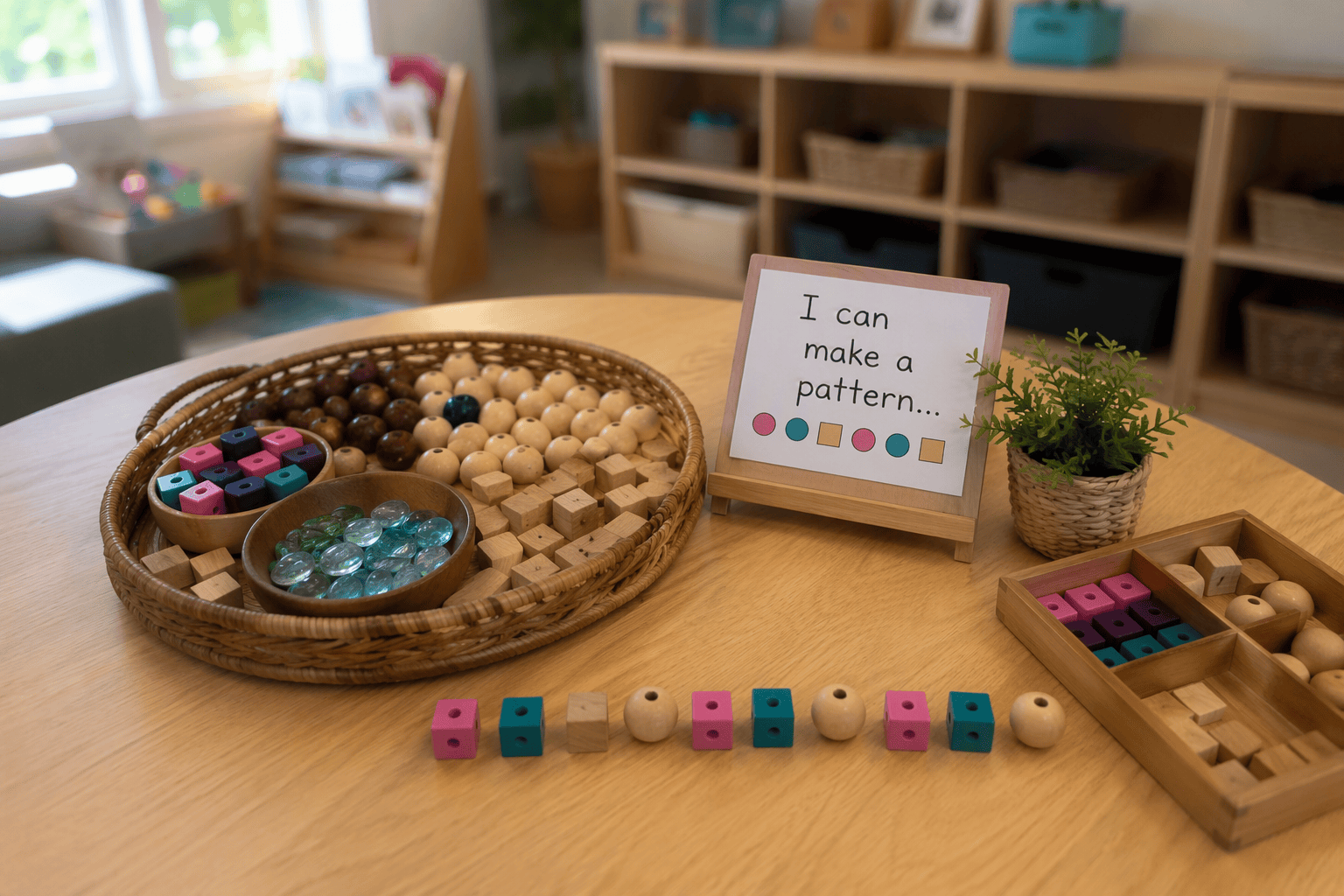
Invitations to Play are intentionally imperfect. They don’t require elaborate materials or a picture‑perfect display. In fact, the most meaningful invitations often come from what is already in your classroom: a book you’ve recently read together, a basket of natural materials, familiar math manipulatives, a sensory bin, or a handful of literacy tools. The goal is not to direct learning, but to invite it.
🌿 Why Play‑Based Invitations Matter
Play‑based invitations honour how young children learn — through curiosity, exploration, and meaningful interaction with materials. When children approach an invitation, they bring their own ideas, questions, and interpretations. They decide how to begin, what to try, and when to shift. This autonomy builds confidence, independence, and a sense of ownership over their learning.
A play‑based invitation might begin with a simple tray of stones and pinecones. One child may sort them. Another may build a tower. A third may create a story about forest animals. The same materials, the same setup — yet each child experiences something different. This is the beauty of Invitations to Play: they expand to meet the child where they are.
And because invitations are open‑ended, they naturally support early literacy and math thinking. A child building with natural materials may begin to notice shapes, patterns, or quantities — visit our Math page for more ideas. Another child exploring magnetic letters may begin forming their name or matching sounds — visit our Literacy page for more ideas.
Invitations to Play don’t replace instruction. They enrich it.
🌱 What Play‑Based Invitations Can Look Like
The beauty of Invitations to Play is that they can be created from anything already in your classroom. They don’t require special materials or elaborate planning. They simply require intention — and a willingness to let children take the lead.
Here are narrative glimpses of what play‑based invitations might feel like in a real Kindergarten room:
A Book‑Inspired Invitation
Yesterday you read a story together — maybe about building, imagining, or exploring. Today, the book rests on a table beside a few loose parts. You don’t explain anything. You simply let the materials sit quietly. One child flips through the pages again. Another begins building something “just like in the story.” A third retells the book aloud while arranging materials. The invitation becomes a bridge between literacy and play.
A Natural Materials Invitation
A basket of pinecones, stones, leaves, and sticks sits on a table. Children approach it with curiosity. One begins sorting by size. Another creates a pattern. Another builds a tiny forest. You didn’t plan any of this — but the learning unfolds anyway. Natural materials invite storytelling, math thinking, sensory exploration, and collaboration.
A Sensory Invitation
A small bin of rice with scoops and cups invites calm exploration. Children pour, sift, bury, and discover. Someone adds a few letters or numbers from the shelf. Suddenly, the sensory bin becomes a literacy or math invitation without you ever directing it. Sensory play supports regulation, focus, and gentle transitions into the day.
A Hands‑On Literacy Invitation
Magnetic letters, alphabet stones, or name cards rest on a tray. Children begin building their names, matching letters, or creating letter “pictures.” Some may explore sounds. Some may simply enjoy the feel of the materials. All of it is meaningful. All of it is literacy.
⭐ Follow the Child’s Lead
The most important part of Invitations to Play is not the setup — it’s the response. You can begin with a loose idea, but the real learning happens when you follow the child’s lead. Their curiosity may take the invitation in a direction you didn’t expect. They may turn a math invitation into a story, a sensory bin into a science experiment, or a literacy tray into a collaborative art project.
Their learning may surprise you. It may delight you. It may open doors you didn’t plan to walk through.
That’s the gift of play‑based invitations: they honour the child’s voice.
🛒 Shopping Cart — Visit Our Store
If you’re looking for gentle, developmentally appropriate tools to support early literacy, early math, and calm September routines, visit the Kindergarten Forever store. You’ll find simple, low‑prep resources designed to help children feel confident from day one.