Smooth Transitions in Kindergarten

The first weeks of school make it clear why smooth transitions in kindergarten matter so much. Children are stepping into an environment that feels completely different from anything they’ve experienced before. They’re not preschoolers anymore — but they’re still learning how to be students.

Suddenly, there are bells 🔔, lineups 🚶‍♀️🚶‍♂️, shared materials 🎨, and expectations that feel brand‑new. Even children with preschool experience must adjust to larger groups, multi‑step directions, and a faster pace. This is exactly why smooth transitions in kindergarten are essential: they help children understand what’s happening, what’s expected, and what comes next.

When transitions are predictable, children feel secure enough to participate, explore, and learn.

🔁 Why Predictability Supports Smooth Transitions in Kindergarten

Predictable routines are the foundation of smooth transitions in kindergarten. When children know what’s coming next, they can focus on learning instead of worrying. This sense of safety is essential for emotional regulation — a concept explored in Gentle Parenting & School Readiness (link to Sunday’s post).

Teachers who model calm 😌, use consistent cues, and keep transitions short and clear help children build independence. Predictability also reduces cognitive load. Instead of wondering what to do, children can focus on how to do it.

Smooth transitions in kindergarten support:

  • 🧠 Emotional regulation
  • 🚀 Task initiation
  • 🌟 Independence
  • 💛 Positive classroom climate

These skills shape the entire school year.

🖼️ Visual Cues Make Smooth Transitions in Kindergarten Easier

Visual cues are one of the most effective tools for achieving smooth transitions in kindergarten. Children entering school may not yet be reading, but they can absolutely interpret pictures, colors, and symbols. Visual organization helps them understand expectations without relying solely on verbal instructions.

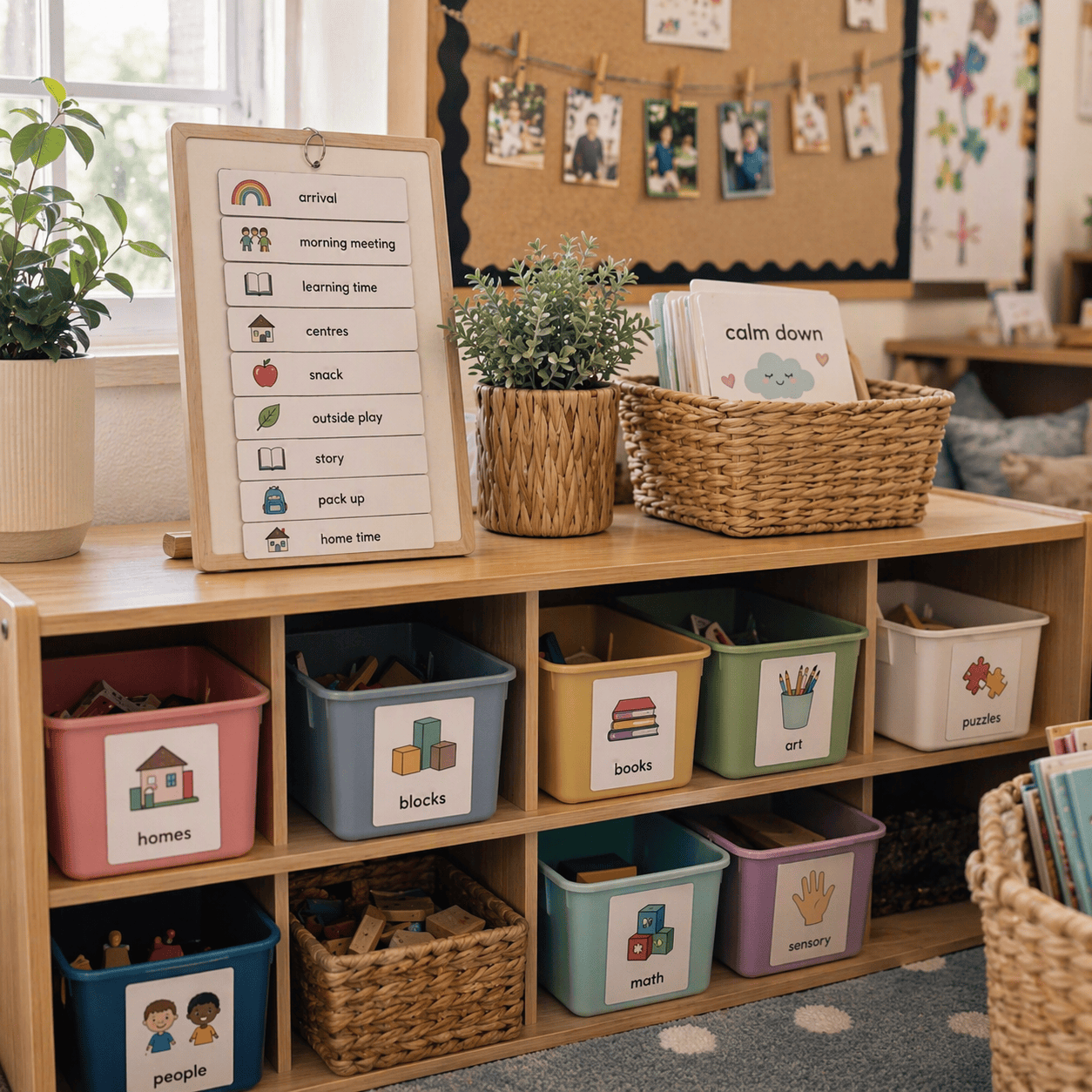
Editable labels help teachers to foster smooth transitions

Picture labels 🏷️, color‑coded bins 🟦🟧, and illustrated schedules 📅 allow children to see what comes next. These cues reduce repeated reminders, support independence, and help students navigate the classroom confidently.

Pro Tip: A cohesive classroom gives children confidence that they know where they should be putting away materials, mail bags, folders, etc. Try our Editable labels to help make smooth transitions in kindergarten easier, reduce transition time, and help children feel ownership over their learning environment. They also save teachers HOURS ⏳ — a huge win during back‑to‑school season.

🎯 Setting Realistic Expectations for Smooth Transitions in Kindergarten

Kindergarteners arrive with preschool experience, but this environment is different. They are learning to navigate shared spaces, follow multi‑step directions, and manage emotions in a larger group. Setting realistic expectations helps children feel capable rather than overwhelmed — and supports smooth transitions in kindergarten.

Start with small, gentle transitions:

  • 🗣️ Use clear, simple language during transitions.
  • 🖼️ Offer visual reminders for cleanup, lining up, and centers.
  • 💬 Reinforce routines with positive language and predictable timing.
  • ⏱️ Keep transitions short and consistent.
  • 😌 Model calm behavior — children borrow your regulation.

These strategies bridge the gap between preschool familiarity and kindergarten structure. They also align beautifully with gentle parenting principles, where connection and boundaries work together to support emotional growth.

🏡 Families Can Support Smooth Transitions in Kindergarten

Smooth transitions don’t start or stop at the classroom door. Families can mirror these routines at home — using gentle parenting strategies to support consistency. When home and school routines align, children feel more secure and confident.

If you are looking for ways to support your preschooler in their smooth transition to kindergarten, you may want to strt with our Gentle Parenting & School Readiness article for ideas on how connection, predictability, and emotional safety support school success.

🌟 Key Takeaway

Smooth transitions in kindergarten aren’t just about moving from one activity to another — they’re about helping children feel safe, capable, and connected. When routines are predictable and visually supported, both teachers and students thrive.

Play-Based Invitations: Gentle, Curious Starts to the Kindergarten Day

A calm beginning that honours exploration, independence, and wonder.

Play-based invitations are the under-rated heros in a kindergarten classroom.

There is a quiet kind of magic in the first moments of the Kindergarten day. The room is still waking up, sunlight settles across the tables, and children arrive carrying stories, feelings, and energy from home. How they enter the classroom matters. It shapes the emotional tone, the rhythm, and the sense of safety that allows learning to unfold.

This is where play‑based invitations shine. Invitations to Play are simple, open‑ended setups that spark curiosity and gently welcome children into the day. They are not tasks, centres, or assignments. They are soft beginnings — a whisper of possibility. They say, “Come explore. See what happens.” And because they are open‑ended, children can enter them in whatever way feels right.

Invitations to Play are intentionally imperfect. They don’t require elaborate materials or a picture‑perfect display. In fact, the most meaningful invitations often come from what is already in your classroom: a book you’ve recently read together, a basket of natural materials, familiar math manipulatives, a sensory bin, or a handful of literacy tools. The goal is not to direct learning, but to invite it.

🌿 Why Play‑Based Invitations Matter

Play‑based invitations honour how young children learn — through curiosity, exploration, and meaningful interaction with materials. When children approach an invitation, they bring their own ideas, questions, and interpretations. They decide how to begin, what to try, and when to shift. This autonomy builds confidence, independence, and a sense of ownership over their learning.

A play‑based invitation might begin with a simple tray of stones and pinecones. One child may sort them. Another may build a tower. A third may create a story about forest animals. The same materials, the same setup — yet each child experiences something different. This is the beauty of Invitations to Play: they expand to meet the child where they are.

And because invitations are open‑ended, they naturally support early literacy and math thinking. A child building with natural materials may begin to notice shapes, patterns, or quantities — visit our Math page for more ideas. Another child exploring magnetic letters may begin forming their name or matching sounds — visit our Literacy page for more ideas.

Invitations to Play don’t replace instruction. They enrich it.

🌱 What Play‑Based Invitations Can Look Like

The beauty of Invitations to Play is that they can be created from anything already in your classroom. They don’t require special materials or elaborate planning. They simply require intention — and a willingness to let children take the lead.

Here are narrative glimpses of what play‑based invitations might feel like in a real Kindergarten room:

A Book‑Inspired Invitation

Yesterday you read a story together — maybe about building, imagining, or exploring. Today, the book rests on a table beside a few loose parts. You don’t explain anything. You simply let the materials sit quietly. One child flips through the pages again. Another begins building something “just like in the story.” A third retells the book aloud while arranging materials. The invitation becomes a bridge between literacy and play.

A Natural Materials Invitation

A basket of pinecones, stones, leaves, and sticks sits on a table. Children approach it with curiosity. One begins sorting by size. Another creates a pattern. Another builds a tiny forest. You didn’t plan any of this — but the learning unfolds anyway. Natural materials invite storytelling, math thinking, sensory exploration, and collaboration.

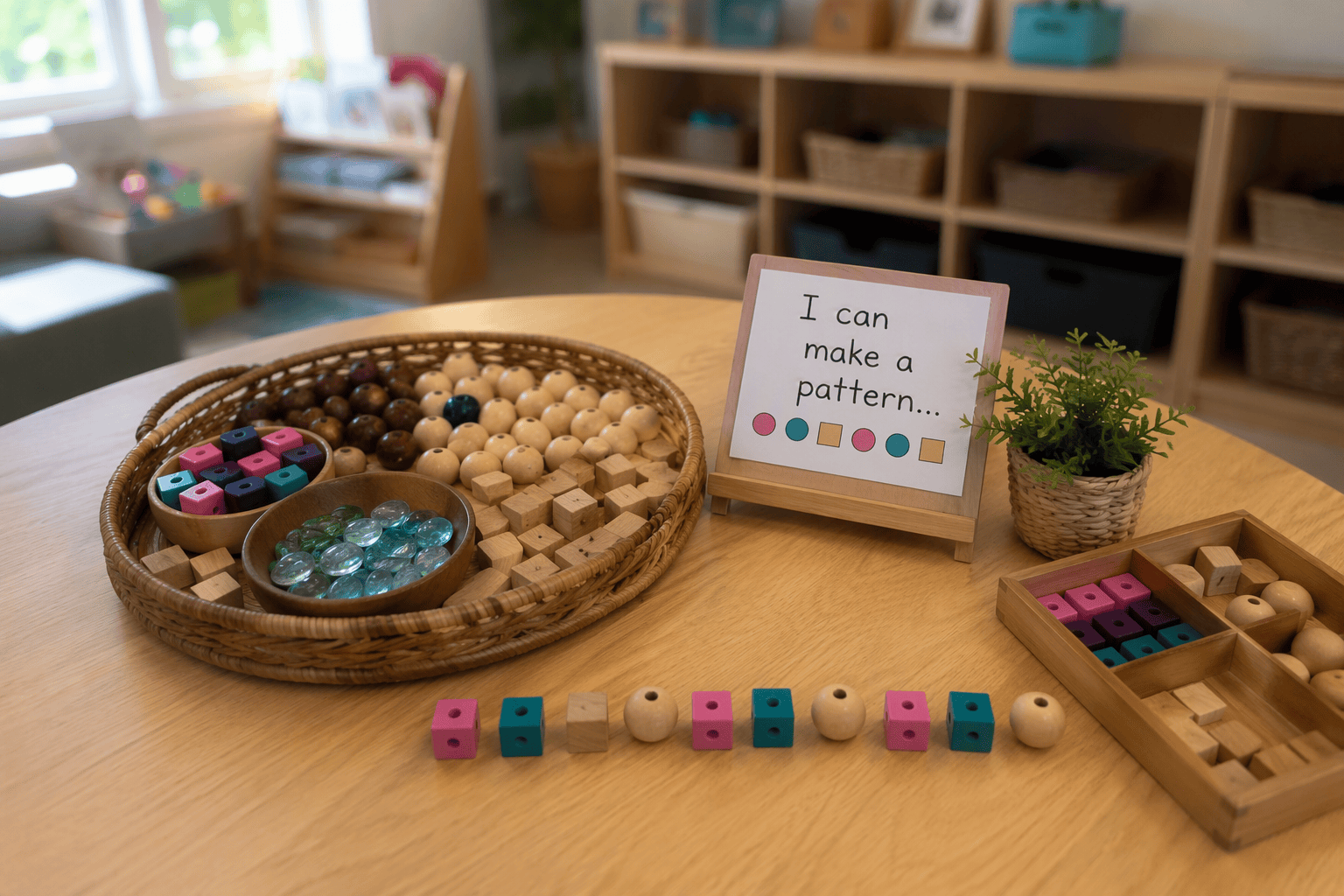
Play-based Invitations - Math invitation with natural materials

A Sensory Invitation

A small bin of rice with scoops and cups invites calm exploration. Children pour, sift, bury, and discover. Someone adds a few letters or numbers from the shelf. Suddenly, the sensory bin becomes a literacy or math invitation without you ever directing it. Sensory play supports regulation, focus, and gentle transitions into the day.

A Hands‑On Literacy Invitation

Magnetic letters, alphabet stones, or name cards rest on a tray. Children begin building their names, matching letters, or creating letter “pictures.” Some may explore sounds. Some may simply enjoy the feel of the materials. All of it is meaningful. All of it is literacy.

⭐ Follow the Child’s Lead

The most important part of Invitations to Play is not the setup — it’s the response. You can begin with a loose idea, but the real learning happens when you follow the child’s lead. Their curiosity may take the invitation in a direction you didn’t expect. They may turn a math invitation into a story, a sensory bin into a science experiment, or a literacy tray into a collaborative art project.

Their learning may surprise you. It may delight you. It may open doors you didn’t plan to walk through.

That’s the gift of play‑based invitations: they honour the child’s voice.

🛒 Shopping Cart — Visit Our Store

If you’re looking for gentle, developmentally appropriate tools to support early literacy, early math, and calm September routines, visit the Kindergarten Forever store. You’ll find simple, low‑prep resources designed to help children feel confident from day one.

5 Gentle Classroom Management Strategies for the First Month of Kindergarten

A calm, connected, developmentally appropriate start to the year.

The first month of Kindergarten is a beautiful mix of excitement, curiosity, and big emotions. Children are learning how school works, how to be part of a community, and how to navigate routines that are brand new to them. Classroom management in Kindergarten isn’t about control — it’s about connection, clarity, and creating an environment where children feel safe, seen, and supported.

Here are 5 gentle classroom management strategies that help you build a calm, predictable, and joyful start to the year.

1️⃣ Prioritize Connection Before Correction

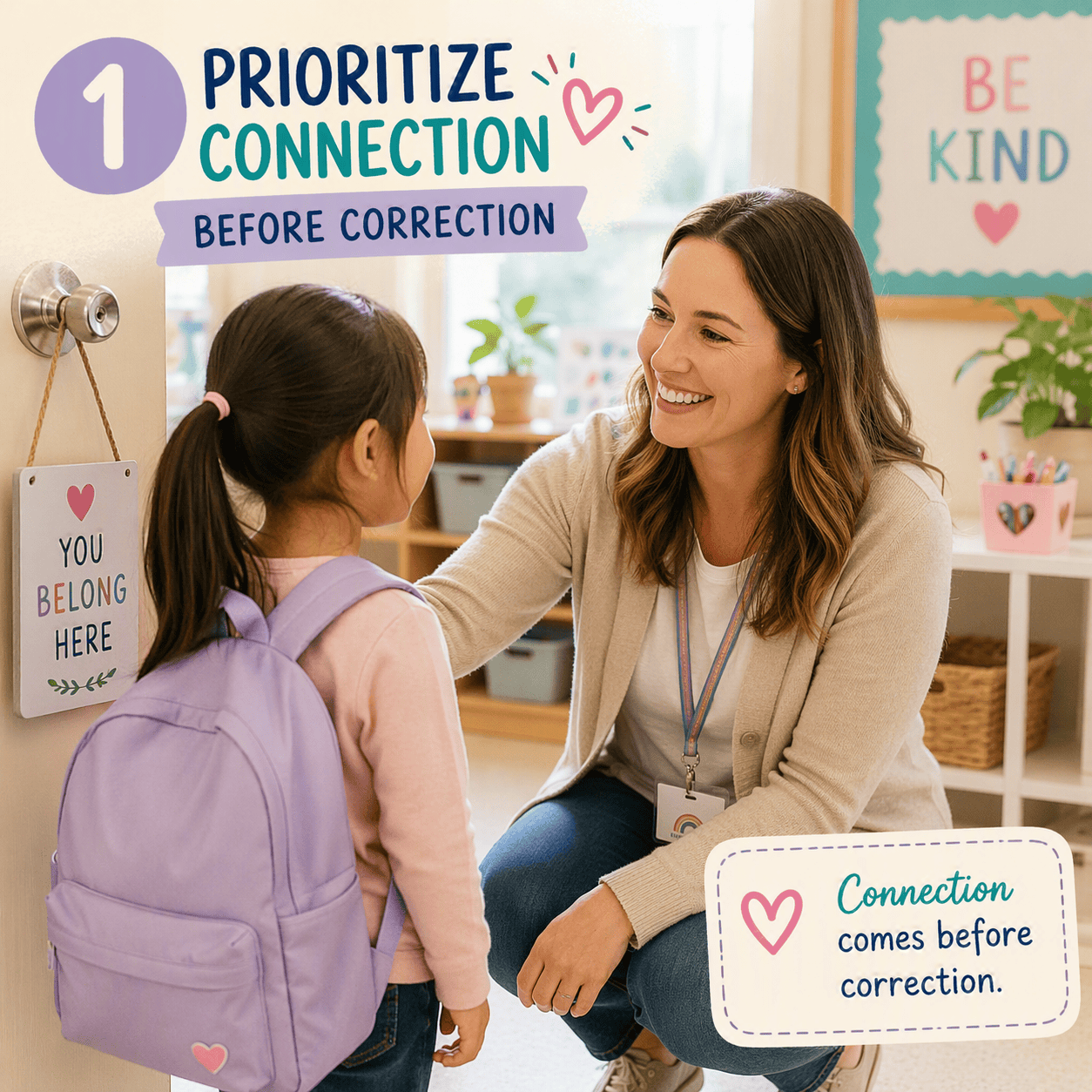
Classroom Management - Connection before correction

In the first month, children need to feel connected before they can follow routines. A gentle classroom management approach starts with relationships.

Try:

  • greeting each child by name
  • offering predictable morning routines
  • using a warm, calm tone
  • validating feelings (“It’s okay to feel unsure. I’m here.”)

When children feel emotionally safe, they are far more able to follow expectations.

Coming soon…….Explore connection-based routines.


2️⃣ Teach Routines Slowly — and Revisit Them Often

The first month is all about explicit teaching, not assuming children “know” how school works.

Break routines into small steps:

  • how to enter the classroom
  • how to sit for whole group
  • how to transition to centres
  • how to tidy materials
  • how to line up

Model → practice → celebrate → repeat.

Gentle classroom management means understanding that routines take time — and reteaching is not a failure; it’s developmentally appropriate.

Coming soon……Explore first-month routines.


3️⃣ Use Visuals to Support Independence

Classroom Management - Visual Supports

Visuals reduce anxiety and increase independence — especially in September.

Try:

  • picture schedules
  • centre icons
  • tidy-up visuals
  • calm-down visuals
  • line-up markers

Visuals help children understand expectations without constant verbal reminders, which keeps the classroom calm and predictable.

Explore visual supports for Kindergarten.


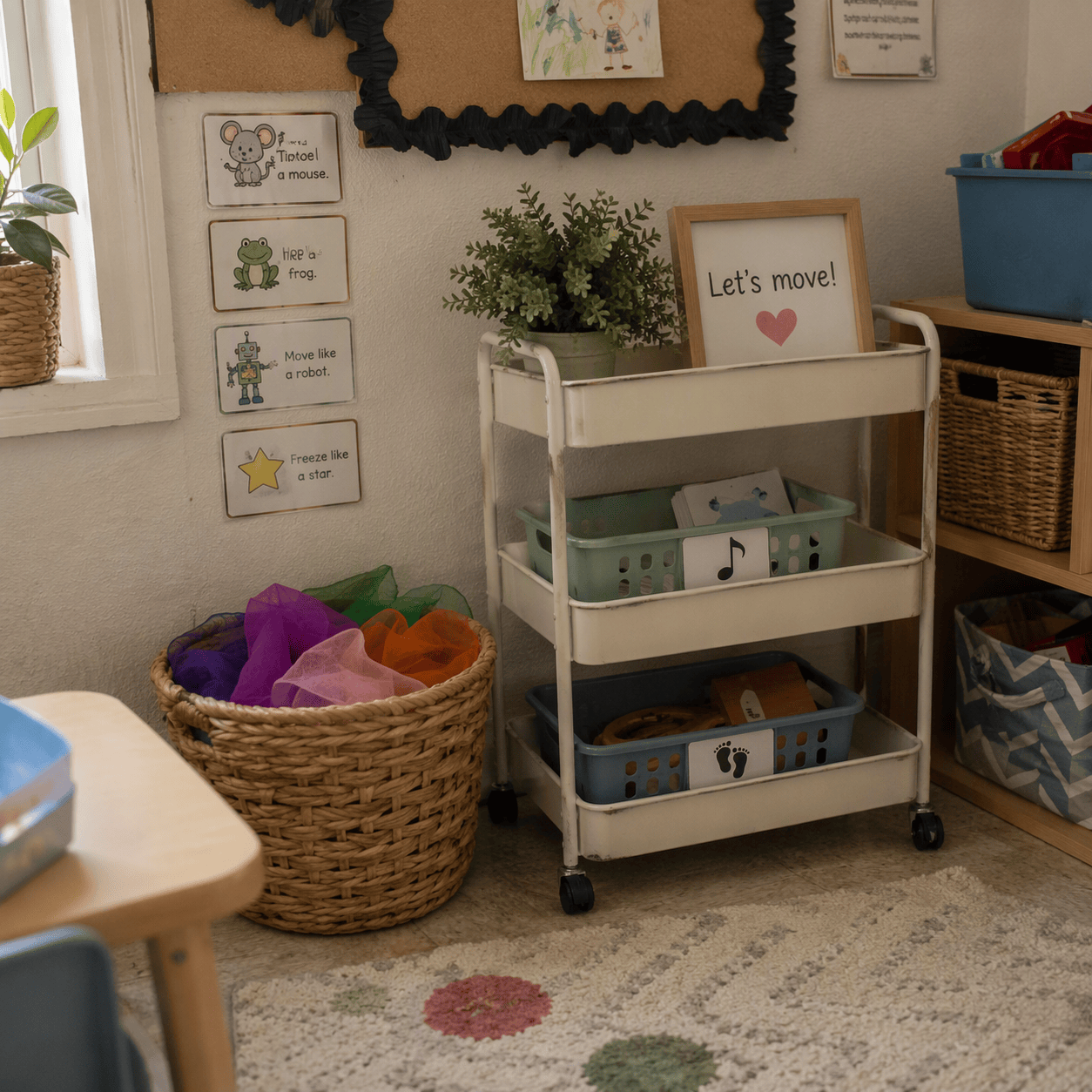
Classroom Managment - Transitions

4️⃣ Create Predictable, Play-Based Transitions

Transitions are often the hardest part of the day. Gentle classroom management uses play-based transitions to keep children engaged and regulated.

Try:

  • “Tiptoe like a mouse to the carpet.”
  • “Find something red on your way to your cubby.”
  • “Let’s move like robots to tidy up.”
  • “Freeze like a statue when the music stops.”

These playful cues reduce chaos and help children shift between activities with ease.

Explore play-based transition ideas.


5️⃣ Use Calm, Consistent Language

Consistency builds trust. Children thrive when your language is predictable and gentle.

Try phrases like:

  • “Let’s try that again together.”
  • “I’m here to help you.”
  • “This is a safe place to learn.”
  • “Let’s make a plan.”
  • “You can do this.”

Gentle classroom management isn’t permissive — it’s supportive. You’re guiding children toward independence with warmth and clarity.

Explore gentle classroom language.


🌿 A Gentle Home Base for Classroom Management

If you’re looking for more support as you navigate the first month of Kindergarten, our Classroom Management page is your calm, clear home base. Classroom management in Kindergarten isn’t about strict rules or rigid systems—it’s about creating predictable routines, building strong relationships, and helping children feel safe enough to learn. On the Classroom Management page, you’ll find a collection of gentle, developmentally appropriate strategies that align with a play‑based philosophy and support the realities of early years teaching.

This page brings together everything teachers need for a smooth start to the year: first‑month routines, play‑based transitions, visual supports, tidy‑up systems, calm‑down strategies, and the kind of language that helps children regulate and respond. You’ll also find practical tools like centre icons, visual schedules, and tidy‑up visuals that reduce overwhelm and increase independence. Whether you’re setting up your classroom, revisiting expectations, or simply looking for ways to make your day feel calmer and more connected, this page offers guidance that feels doable, supportive, and rooted in what children truly need.

Explore the full collection on our Classroom Management page to build a classroom that feels warm, predictable, and joyfully manageable.

🛒 Looking for low-prep routines, visuals, and first-month supports?

Visit the Kindergarten Forever store for calm-down visuals, centre icons, tidy-up supports, and gentle classroom management tools designed to help you start the year with clarity and confidence.

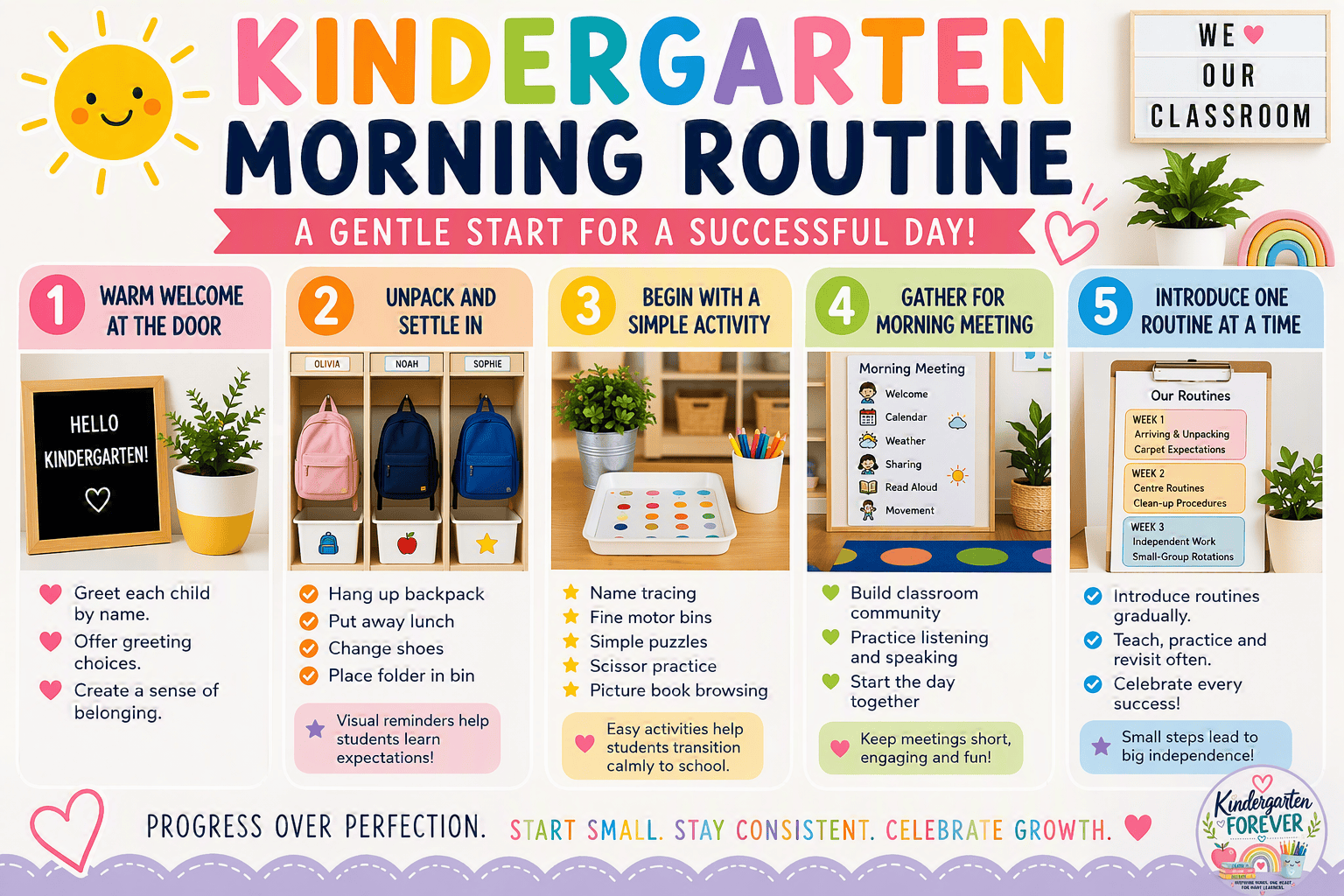
🌈 Kindergarten Morning Routine: 5 Steps For A Gentle Start for the First Weeks of School

morning routines in kindergarten

The first few weeks of Kindergarten are all about one thing:

💖 Building a Kindergarten Morning Routine That Works

Before we can dive into literacy centres, inquiry projects, and curriculum expectations, our youngest learners need to feel safe, welcomed, and confident in their new classroom environment.

Over the years, I’ve learned that a calm, predictable Kindergarten morning routine can make a huge difference for both students and teachers. When children know exactly what to expect each morning, they become more independent, transitions run more smoothly, and everyone starts the day feeling successful.

An effective Kindergarten morning routine doesn’t need to be complicated. The best routines are simple, predictable, and easy for young learners to follow. Here is a simple morning routine that works beautifully during those first weeks of Kindergarten.


🌈 Kindergarten Morning Routine Step 1: Warm Welcome at the Door

A positive connection starts the moment students arrive.

Greeting each child by name helps create a sense of belonging and gives you a quick opportunity to check in with how they’re feeling that day.

You might choose:

👋 A simple wave
✋ A high five
🤝 A handshake
💖 A smile and hello

Giving students a few greeting choices can be a fun way to build independence while helping nervous learners feel comfortable.


🎒 Kindergarten Morning Routine Step 2: Unpack and Settle In

Keeping arrival routines simple is key.

Students can:

✅ Hang up backpacks
✅ Put away lunch bags
✅ Change shoes if needed
✅ Place communication folders in a designated basket

Visual reminder cards are especially helpful during September as students learn expectations.

Remember: routines take practice. It’s perfectly normal to spend the first few weeks teaching, reteaching, and celebrating every successful step.


✏️ Kindergarten Morning Routine Step 3: Begin with a Simple Table Activity

Once students have unpacked, invite them to complete an easy independent activity.

Some favourites include:

🔤 Name tracing
🎨 Fine motor bins
🧩 Simple puzzles
✂️ Scissor practice
📚 Picture book browsing

The goal isn’t academic rigor. The goal is helping students transition calmly from home to school.

Short, successful tasks help build confidence and give teachers time to support students who may need extra assistance.


🗓️ Kindergarten Morning Routine Step 4: Gather for Morning Meeting

For many classrooms, Morning Meeting becomes the heart of the Kindergarten morning routine. This is where classroom community begins to grow.

Consider including:

🌤️ A welcome song
📅 Calendar discussions
🌡️ Weather observations
🧠 Sharing opportunities
📖 A read-aloud
🎵 Movement breaks

Keeping meetings short and engaging is especially important during the first month of school.


🍎 Kindergarten Morning Routine Step 5: Introduce One Routine at a Time

One mistake many teachers make (myself included!) is trying to teach every classroom procedure immediately.

Instead, focus on introducing routines gradually.

For example:

Week 1: ✨ Arriving and unpacking ✨ Carpet expectations
Week 2: ✨ Centre routines ✨ Clean-up procedures
Week 3: ✨ Independent work expectations ✨ Small-group rotations

Students learn best when new routines are introduced in manageable chunks.

Kindergarten Morning Routines: A gentle start for a successful day

🌱 Remember: Progress Over Perfection

September can feel overwhelming, especially in Kindergarten. Establishing a successful Kindergarten morning routine takes time, patience, and lots of practice.

Some mornings will run beautifully.

Others may involve missing lunch bags, tears at drop-off, and a student who absolutely must tell you about their neighbour’s dog before taking off their backpack.

That’s okay.
The goal isn’t perfection.
The goal is creating a classroom where children feel safe, valued, and excited to learn.

Every successful routine you establish in September becomes time you’ll gain back throughout the school year.


Kindergarten Curriculum Bundle

📚 Helpful Ontario Kindergarten Planning Support

If you’re looking for support with long-range planning, organization, and setting up for a successful year, take a look at my:

🍎 Ontario Kindergarten Planning Bundle (Updated for 2026)

This resource includes three essential planning tools designed specifically for Ontario Kindergarten educators.

👉 3 Essential Tools – 2026 Ontario Kindergarten Curriculum Expectation Bundle


💖 Final Thoughts

A strong Kindergarten morning routine helps create the foundation for a calm, successful school year. The first few weeks of Kindergarten aren’t about doing everything.

They’re about building a classroom community, establishing predictable routines, and helping students fall in love with coming to school each day.

Start small.
Stay consistent.
Celebrate progress.
And remember—you don’t have to have it all figured out by September Day 1. 🌈

Happy teaching!

– Kindergarten Forever 💕

🛒 Invitation to Explore My Store

If you’re looking for ideas and activities for morning routines that fit perfectly into a play‑based Kindergarten classroom, I’d love for you to visit my Kindergarten Forever store on Teachers Pay Teachers. You’ll find classroom‑tested resources designed to make your morning routines meaningful, engaging, and fun for your learners.


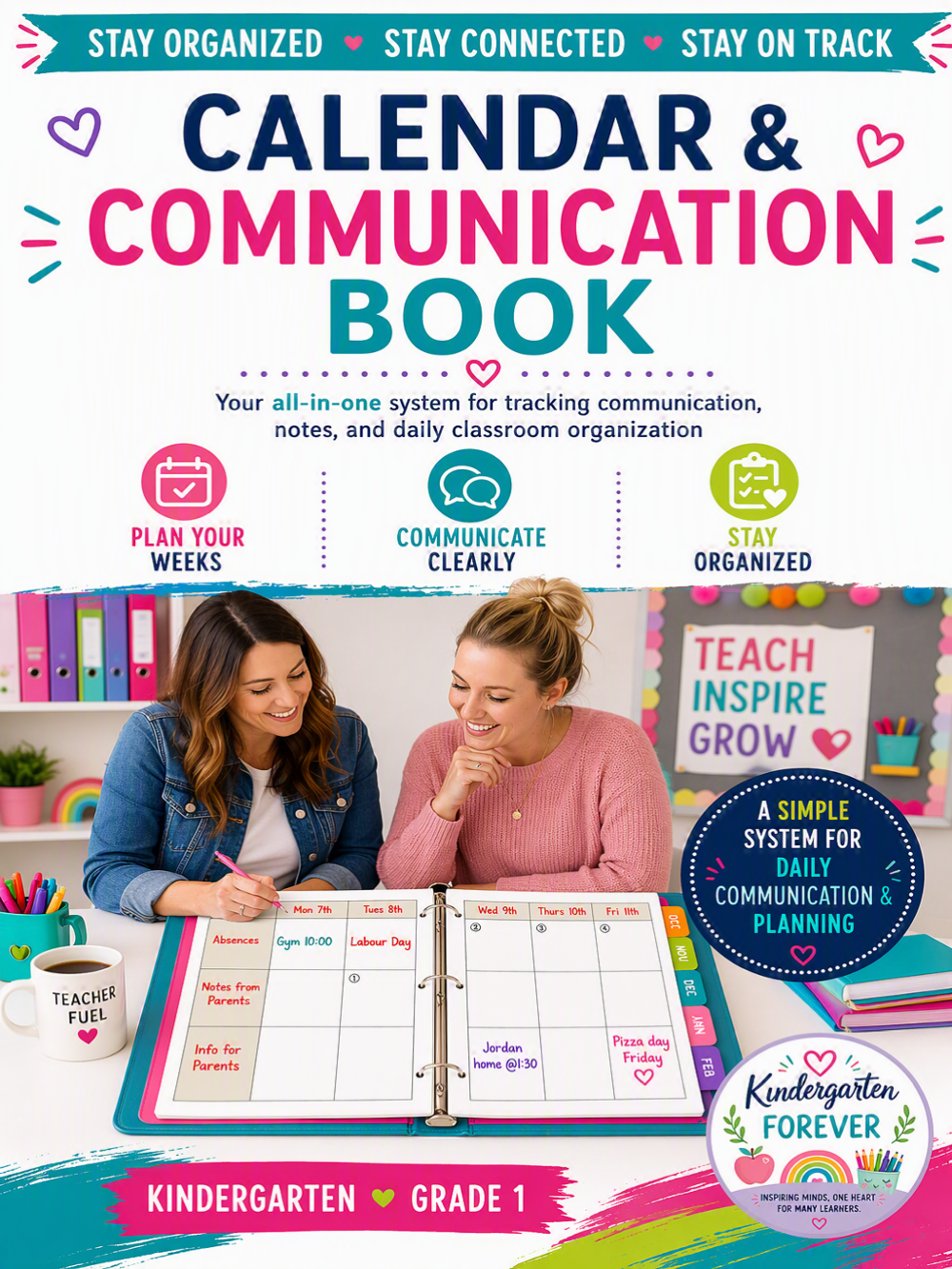
✏️Ontario Teacher Communication Book: The 1 Amazing Organization Tool I Can’t Teach Without

🍎 Every teacher has that one resource.

Not the flashy one that gets all the attention. Not the newest trend. Not the resource that looks the prettiest on social media.

🩷 I’m talking about the tool you reach for every single day without even thinking about it.

For me, that resource is my Ontario Teacher Communication Book. This Ontario Teacher Communication Book has become the organizational tool I rely on most throughout the school year.. In fact, it’s so useful that former teaching partners still message me every year asking if the updated version is ready. And honestly? I completely understand why.

✨ Why My Ontario Teacher Communication Book Became Essential

When people first see the communication book, they often assume it’s just a planner.

But it’s so much more than that.

It started as a practical solution for a very real classroom challenge: keeping multiple educators on the same page.

If you teach in Ontario Kindergarten, you know exactly what I mean. Most Kindergarten classrooms have two educators working together—an Ontario Certified Teacher (OCT) and an Early Childhood Educator (ECE). There are countless conversations happening throughout the day, and important information can easily get lost between planning periods, meetings, student support discussions, yard duty schedules, and the everyday busyness of teaching.

💡 I needed one place where everything could live.

So I created it.

👩‍🏫 More Than Just an Ontario Resource

While I call it an Ontario Teacher Communication Book, this teacher communication book has become a favourite among teaching partners, shared classrooms, and support teams alike.

It works for:

✅ Teaching partners
✅ OCT and ECE teams
✅ Job-share teachers
✅ Shared classrooms
✅ Resource and support staff
✅ Administrators
✅ Educational assistants
✅ Homeschool co-op programs
✅ Any educator who likes having information written down in one place

✨ Because the truth is simple:

The more people involved, the more important communication becomes.

🗂️ Why We Still Love Paper

We live in a world full of digital tools. And I use plenty of them. But there is something powerful about having a communication book sitting on a desk, open and ready to use.

❌ No tabs.
❌ No notifications.
❌ No searching through emails.
❌ No wondering where that important note was saved.

Instead, you have one reliable place to record:

✅ Student updates
✅ Parent communication notes
✅ Team reminders
✅ Supply needs
✅ Assessment reminders
✅ Important dates

✨ Sometimes the simplest systems are the ones that actually last.

🤦‍♀️ For Teachers Who Forget Everything They Don’t Write Down

Let’s be honest. Most teachers are juggling about a hundred things before 9:00 a.m.
🙋‍♀️ I am absolutely one of those people who needs to write something down or risk forgetting it entirely.
A quick note during a busy morning becomes a lifesaver later in the day.

Instead of trying to remember:

“Didn’t we talk about that yesterday?”
“Who was supposed to follow up on that?”
“Where did I write that information?”

✅ Everything is already documented in one consistent location.

📅 The Annual Update Teachers Wait For

One of my favourite parts about this resource is hearing from educators who have made it part of their yearly routine.

Every year, educators return looking for the newest edition of the Ontario Teacher Communication Book with updated calendars and important school dates.

🩷 Some have used it for years.

🩷 Others were introduced to it by a colleague and now can’t imagine starting a school year without it.

There is something incredibly rewarding about creating a resource that quietly supports teachers behind the scenes every single day.

It may not be the most exciting classroom purchase you’ll make.

✨ But it just might become the most-used.

Ontario Teacher Communication Book

🍎 The Resource I Reach For Every Day

If I had to choose one organizational tool, my Ontario Teacher Communication Book would be it.

✅ Keeps teaching teams connected
✅ Reduces missed information
✅ Supports smooth classroom organization
✅ Helps busy educators keep track of everything that matters

💡 Not bad for a resource that most people never knew they needed.

Take a look at the Ontario Teacher Communication Book here:
📖 https://www.teacherspayteachers.com/Product/Ontario-Teacher-Communication-Book-Calendar-2026-27-Yearly-Update-Included-2750640

📅 One purchase = free updated editions every school year, forever! ✨

🩷 You might just discover your new favourite everyday teaching tool.

If you’re looking for an Ontario Teacher Communication Book that supports communication, organization, planning, and collaboration, this resource may be exactly what your teaching team needs.

📋 Kindergarten Assessment Documentation Made Simple

Kindergarten assessment documentation is one of the most important—and often most challenging—parts of teaching in an early years classroom.

Between observing play, recording anecdotal notes, taking photos, assessing learning, and preparing report cards, it’s easy to become overwhelmed by paperwork and scattered notes. Effective kindergarten assessment documentation helps educators track student growth, collect evidence of learning, and make informed instructional decisions throughout the school year.

Over the years, I’ve experimented with countless ways to document student learning. I’ve used sticky notes, notebooks, clipboards, binders, and digital tools. While all of these methods have their place, I was always searching for a system that would make kindergarten assessment more organized, efficient, and manageable.

That’s what inspired me to create my At-A-Glance Kindergarten Assessment Tracking System, a practical resource designed to help teachers collect, organize, and reference evidence of learning with confidence.

📸 Capturing Evidence of Learning Throughout the Day

One of the biggest challenges in kindergarten assessment documentation is collecting meaningful evidence while actively teaching and supporting students. Learning happens throughout the day—in conversations, play-based learning experiences, small-group instruction, independent activities, and classroom routines.

Having a simple system for recording observations makes it easier to capture important learning moments as they occur. Rather than trying to remember details later, educators can quickly document student thinking, skills, accomplishments, and next steps.

When assessment tools are aligned with the Ontario Kindergarten Curriculum (2026), teachers can more easily connect observations to curriculum expectations while building a comprehensive picture of each child’s growth, development, and achievement throughout the school year.

🍎 A Simple Way to Track Student Learning

That’s why I created my At-A-Glance Kindergarten Assessment Tracking System.

Designed to help teachers collect evidence of learning throughout the year, these tracking sheets provide an organized place to record observations, anecdotal notes, and assessment data for every student.

Instead of searching through piles of papers or sticky notes, you can keep assessment information in one easy-to-reference location while documenting learning as it happens.

Kindergarten Assessment Documentation - 2026 Ontario Kindergarten Expections Tracking Sheets

📚 Aligned with the Ontario Kindergarten Curriculum (2026)

The updated version of this resource has been designed to support the Ontario Kindergarten Curriculum (2026).

The tracking sheets align with the four curriculum frames:

✅ Foundations of Language and Mathematics
✅ Problem Solving and Innovating
✅ Self-Regulation and Well-Being
✅ Belonging and Contributing

This makes it easier to collect meaningful assessment evidence while monitoring student growth across all areas of the curriculum.

🌟 Why Documentation Matters in Kindergarten

Strong kindergarten assessment practices help educators:

  • Track student progress over time
  • Inform future instruction
  • Support report card writing
  • Identify student strengths and needs
  • Collect evidence of learning
  • Communicate growth with families and administrators
  • Make learning visible within a play-based classroom

In Kindergarten, learning often happens through conversations, exploration, inquiry, and play. Documentation helps capture those important moments that might otherwise be forgotten.

✏️ Designed for Busy Kindergarten Teachers

This resource was created by a teacher who understands the realities of a busy classroom.

The goal is simple: provide a practical system for organizing observations, tracking curriculum expectations, and making kindergarten assessment documentation more efficient.

Whether you’re collecting anecdotal notes during center time, recording observations during small-group instruction, or preparing for reporting periods, having a streamlined tracking system can save valuable time while reducing stress.

💕 Making Assessment More Manageable

Assessment doesn’t have to mean carrying stacks of sticky notes or trying to remember observations at the end of the day.

With an organized tracking system and curriculum-aligned assessment tools, you can spend less time managing paperwork and more time focusing on what matters most—supporting student learning and growth.

👉 Explore the updated Ontario Kindergarten Curriculum 2026 Assessment Tracking Resource and discover a simpler way to document learning throughout the school year.