6 Play‑Based Math Centers for Early September

A calm, hands‑on start to Kindergarten math learning.

Early September is the perfect time to introduce play‑based math centers that help children explore numbers, shapes, patterns, and early math concepts through hands‑on, joyful play. In a Kindergarten classroom, math learning grows best when children manipulate materials, talk about their thinking, and discover patterns naturally — long before formal instruction begins.

These 6 developmentally appropriate math centers are low‑prep, high‑impact, and designed to help children build confidence, independence, and curiosity during the first weeks of school.

1️⃣ Loose Parts Counting Station

Loose parts are one of the easiest ways to introduce early counting. Children naturally sort, count, group, and compare quantities — strengthening one‑to‑one correspondence and early number sense.

Try:

  • buttons
  • stones
  • pom‑poms
  • shells
  • wooden discs

This centre encourages flexible thinking and early number conversations.
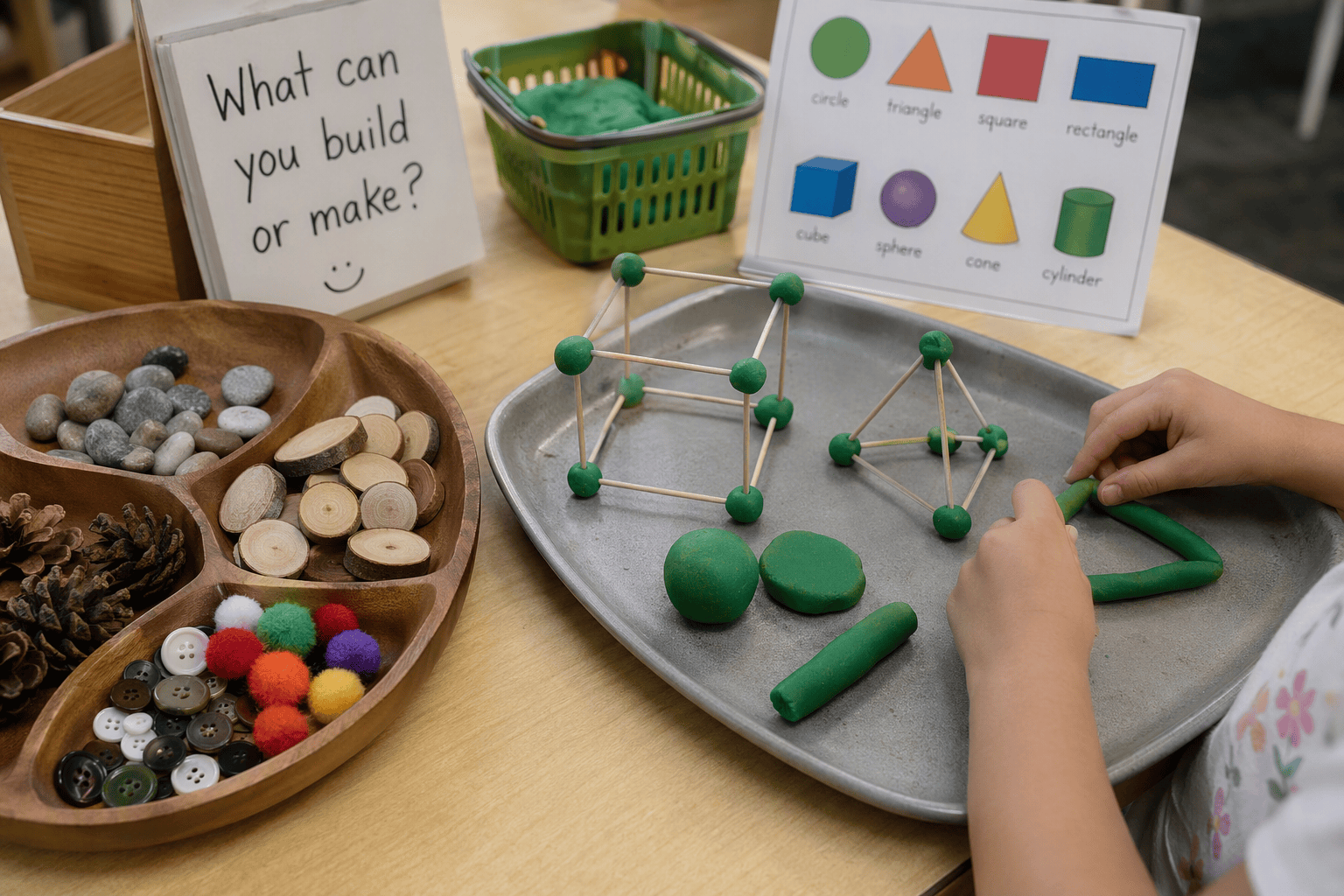
Play-based Math Centres - Build shapes and explore with natural materials

2️⃣ Shape Building With Playdough

Playdough is a September essential, and it’s perfect for exploring 2D shapes and 3D shapes through hands‑on construction.

Try:

  • rolling “shape sides”
  • building circles, triangles, rectangles
  • creating 3D shapes with toothpicks + dough
  • matching shapes to simple shape cards

This centre supports fine motor development and early understanding of geometry.

3️⃣ Sorting & Classifying Centre

Sorting is foundational for early math thinking — and children LOVE it.

Try sorting:

  • animals
  • blocks
  • nature items
  • manipulatives
  • classroom objects

Children sort by colour, size, shape, type, or their own invented categories. This builds early data management skills and flexible thinking.

4️⃣ Pattern Play With Natural Materials

Patterns are one of the earliest math concepts children notice in the world around them.

Try:

  • leaf patterns
  • stick patterns
  • rock patterns
  • pinecone patterns
  • loose‑parts AB, ABC, AAB patterns

This centre encourages children to create, extend, and describe patterns — strengthening early algebraic thinking.

5️⃣ Counting Collections

Counting collections are a powerful early‑September math routine. Provide small containers, sets of 10–30 items, number cards, and ten‑frames. Children count, organize, and represent quantities using tools that support early number sense.

This centre builds independence and mathematical language.

6️⃣ Math Story Mats

Story mats help children explore math through imaginative play. Children use small manipulatives to act out math stories involving counting, comparing, sorting, shape identification, and positional language.

This centre strengthens vocabulary, problem‑solving, and conceptual understanding.

⭐ Gentle Consolidation After Play — Worksheets & Write the Room

In a play‑based classroom, worksheets are never the teaching tool — but they do offer gentle consolidation after rich math exploration. Once children have explored shapes through playdough, loose parts, and story mats, they’re ready for quiet follow‑up activities that reinforce what they’ve discovered.

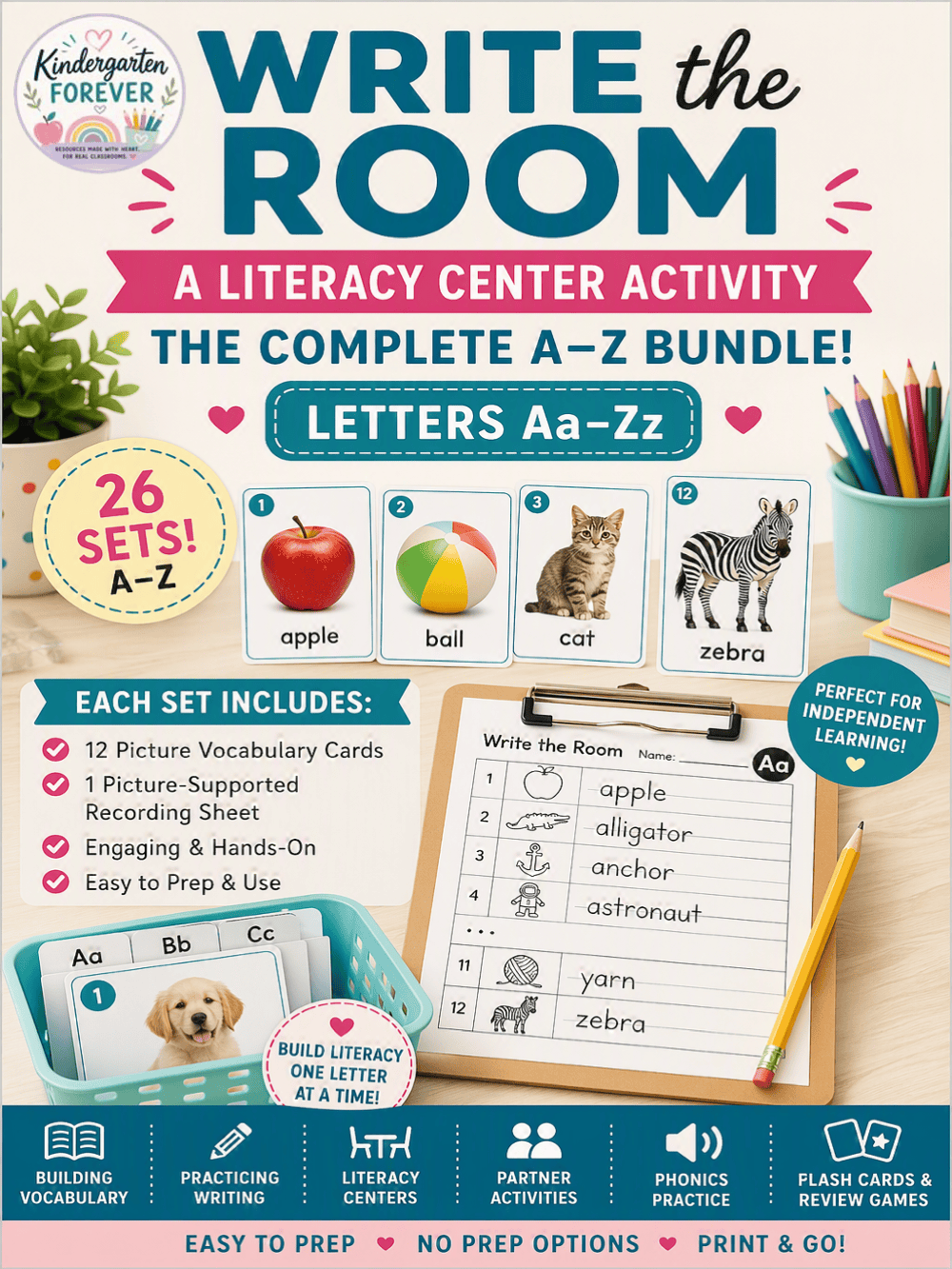
Play-Based Math Centers - Write the Room

Our Shapes Write the Room resources are perfect for this stage of learning because they bridge hands‑on exploration with early recording skills. Children move, search, identify shapes, and then record their learning — a beautiful blend of play and early pencil‑paper practice.

These tools help children revisit shapes in a low‑pressure way, strengthen vocabulary, and build confidence with early math recording — all while staying true to your play‑based philosophy.

🌿 A Play‑Based Home Base for Kindergarten Math Learning

If you’re looking for more ways to support early math learning in a developmentally appropriate, play‑based way, our Math page is the perfect place to explore next. Early September is full of curiosity, counting, sorting, building, and noticing patterns — and the Math page brings all of these ideas together in one calm, organized space. It’s designed to help teachers feel confident, prepared, and inspired as they introduce foundational math concepts through hands‑on exploration.

On the Math page, you’ll find gentle, practical guidance for number sense, shapes, patterns, sorting, counting collections, and early math routines that fit beautifully into a play‑based classroom. Each section highlights low‑prep invitations, centre ideas, and quiet consolidation options that support children’s natural mathematical thinking. You’ll also find links to classroom‑ready tools like Shapes Write the Room, number sense practice pages, sorting cards, and pattern mats — resources that help bridge playful exploration with early recording skills.

Whether you’re planning your first week of math centres, refreshing your September routines, or looking for ways to make math feel joyful and accessible, the Math page offers a clear, supportive starting point. Visit our Math page to build a classroom where early math learning grows through curiosity, confidence, and play.

🛒 Looking for low‑prep math centres for September?

Visit the Kindergarten Forever store for shape activities, number sense practice pages, sorting cards, pattern mats, and early counting tools designed to support exploration — not replace it.

5 Gentle Classroom Management Strategies for the First Month of Kindergarten

A calm, connected, developmentally appropriate start to the year.

The first month of Kindergarten is a beautiful mix of excitement, curiosity, and big emotions. Children are learning how school works, how to be part of a community, and how to navigate routines that are brand new to them. Classroom management in Kindergarten isn’t about control — it’s about connection, clarity, and creating an environment where children feel safe, seen, and supported.

Here are 5 gentle classroom management strategies that help you build a calm, predictable, and joyful start to the year.

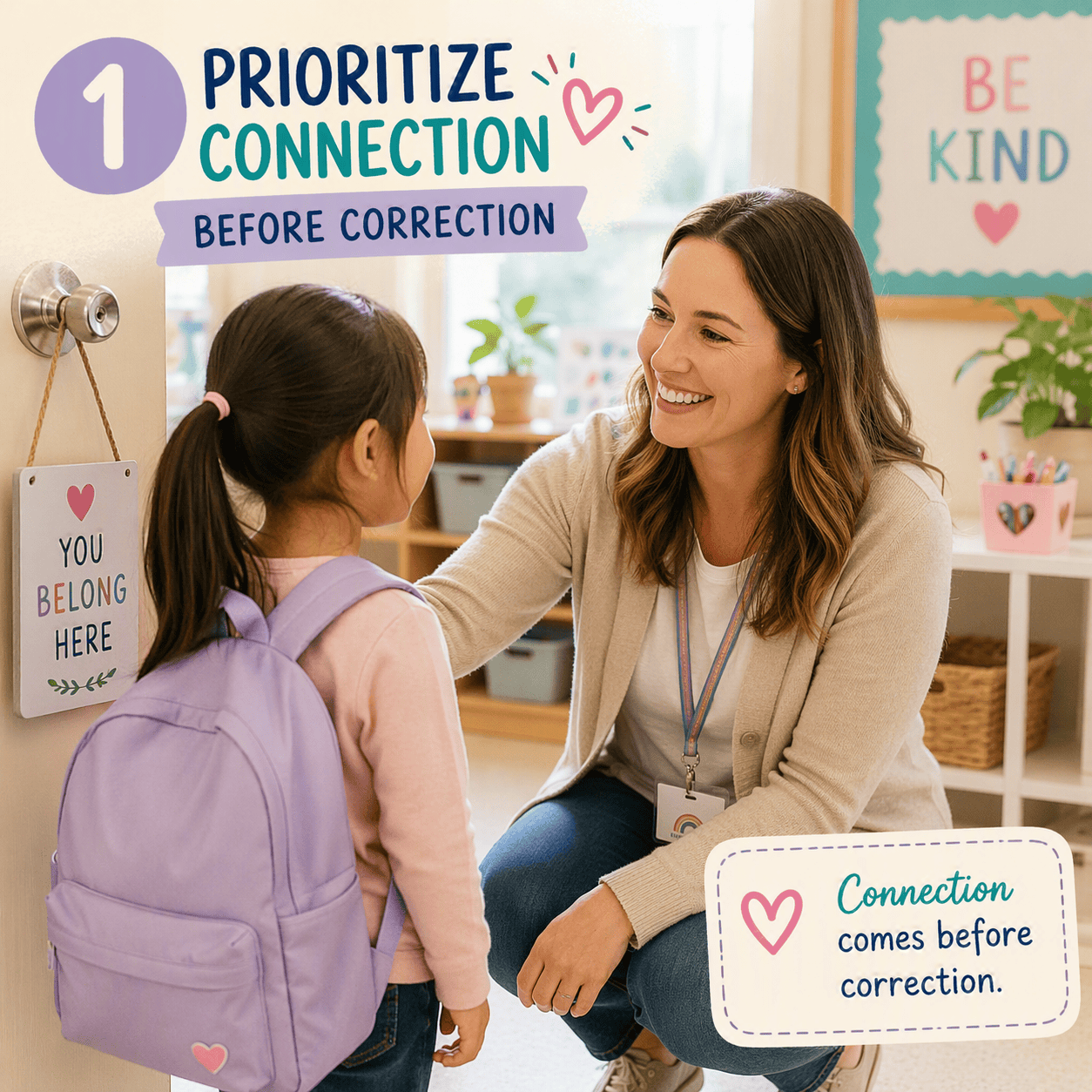
1️⃣ Prioritize Connection Before Correction

Classroom Management - Connection before correction

In the first month, children need to feel connected before they can follow routines. A gentle classroom management approach starts with relationships.

Try:

  • greeting each child by name
  • offering predictable morning routines
  • using a warm, calm tone
  • validating feelings (“It’s okay to feel unsure. I’m here.”)

When children feel emotionally safe, they are far more able to follow expectations.

Coming soon…….Explore connection-based routines.


2️⃣ Teach Routines Slowly — and Revisit Them Often

The first month is all about explicit teaching, not assuming children “know” how school works.

Break routines into small steps:

  • how to enter the classroom
  • how to sit for whole group
  • how to transition to centres
  • how to tidy materials
  • how to line up

Model → practice → celebrate → repeat.

Gentle classroom management means understanding that routines take time — and reteaching is not a failure; it’s developmentally appropriate.

Coming soon……Explore first-month routines.


3️⃣ Use Visuals to Support Independence

Classroom Management - Visual Supports

Visuals reduce anxiety and increase independence — especially in September.

Try:

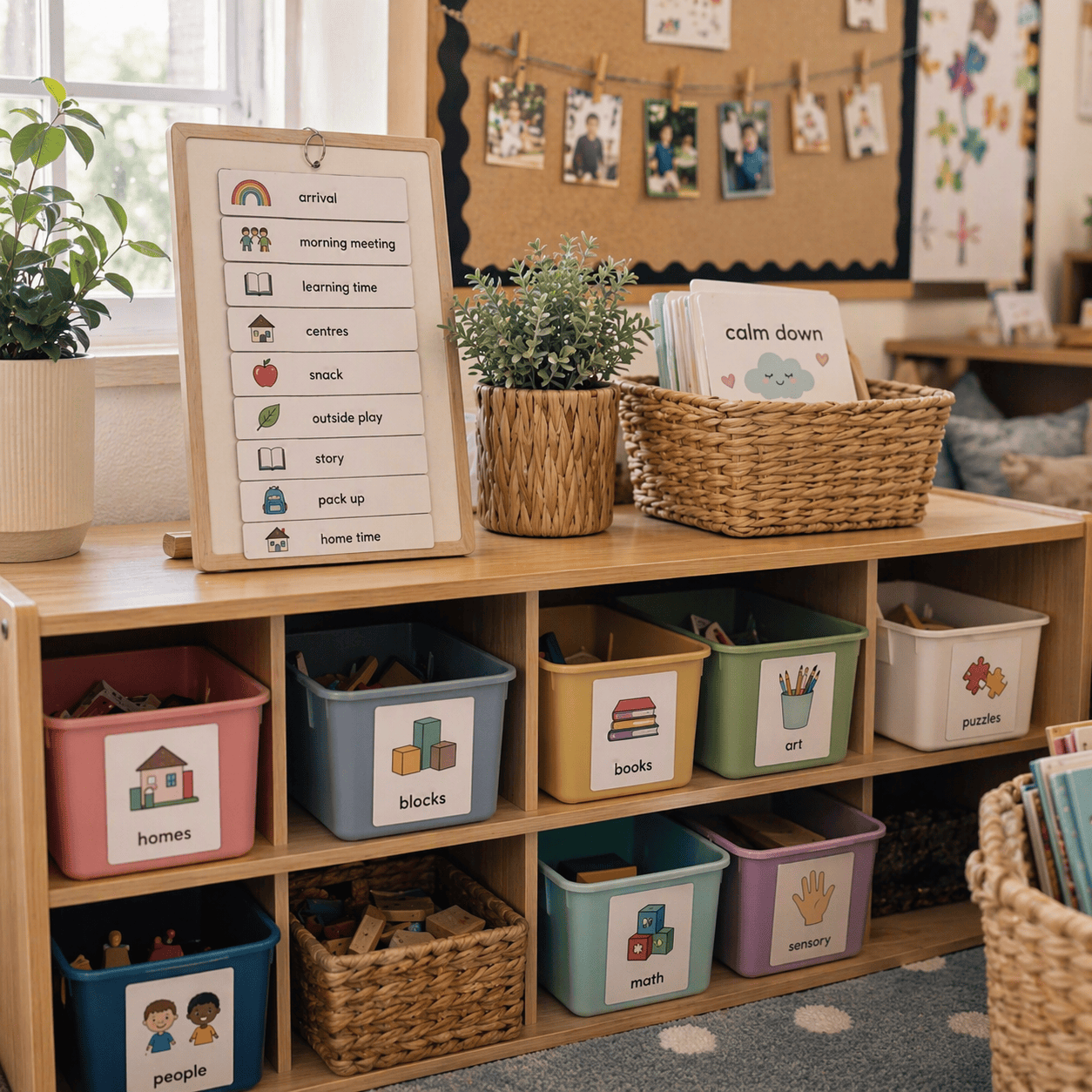
  • picture schedules
  • centre icons
  • tidy-up visuals
  • calm-down visuals
  • line-up markers

Visuals help children understand expectations without constant verbal reminders, which keeps the classroom calm and predictable.

Explore visual supports for Kindergarten.


Classroom Managment - Transitions

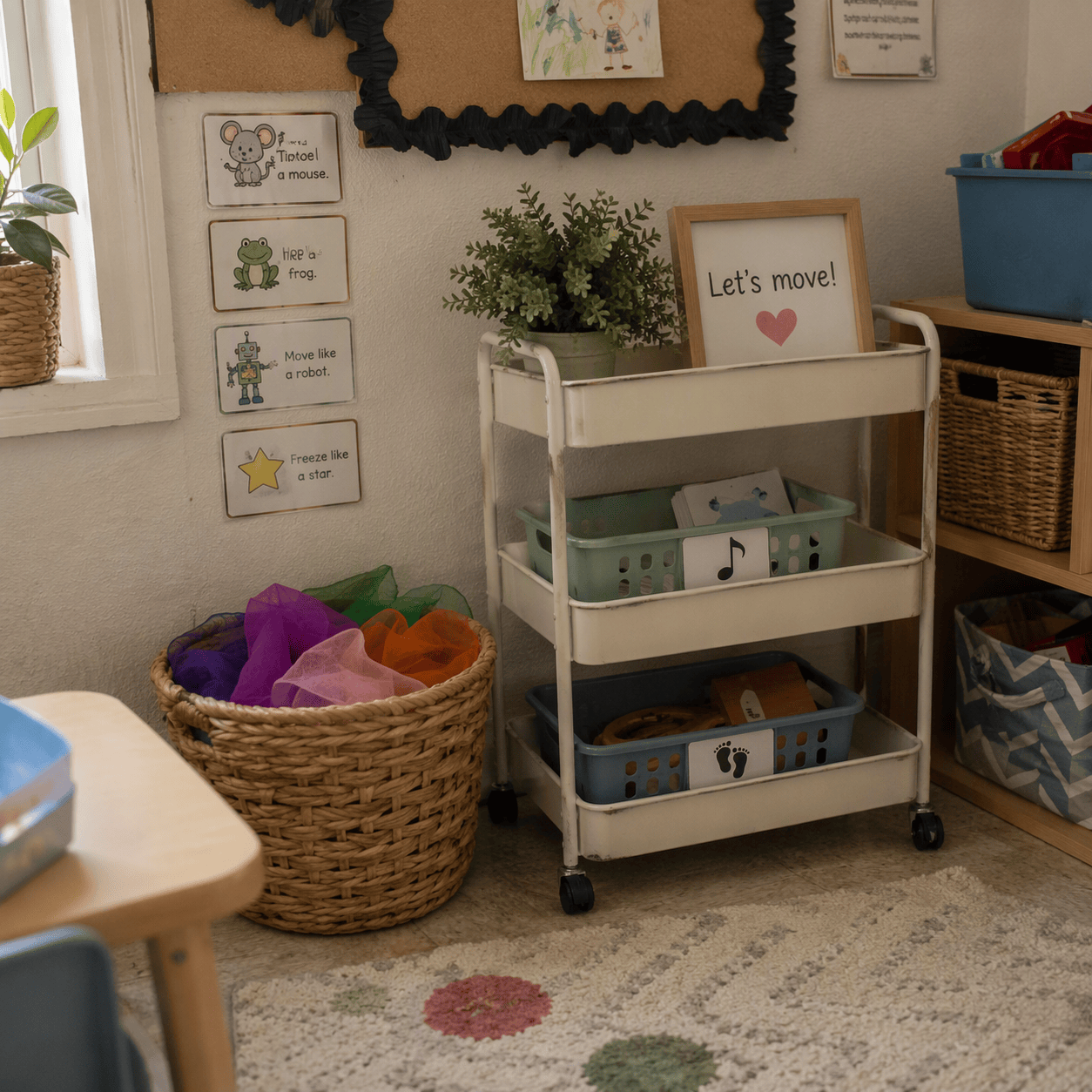
4️⃣ Create Predictable, Play-Based Transitions

Transitions are often the hardest part of the day. Gentle classroom management uses play-based transitions to keep children engaged and regulated.

Try:

  • “Tiptoe like a mouse to the carpet.”
  • “Find something red on your way to your cubby.”
  • “Let’s move like robots to tidy up.”
  • “Freeze like a statue when the music stops.”

These playful cues reduce chaos and help children shift between activities with ease.

Explore play-based transition ideas.


5️⃣ Use Calm, Consistent Language

Consistency builds trust. Children thrive when your language is predictable and gentle.

Try phrases like:

  • “Let’s try that again together.”
  • “I’m here to help you.”
  • “This is a safe place to learn.”
  • “Let’s make a plan.”
  • “You can do this.”

Gentle classroom management isn’t permissive — it’s supportive. You’re guiding children toward independence with warmth and clarity.

Explore gentle classroom language.


🌿 A Gentle Home Base for Classroom Management

If you’re looking for more support as you navigate the first month of Kindergarten, our Classroom Management page is your calm, clear home base. Classroom management in Kindergarten isn’t about strict rules or rigid systems—it’s about creating predictable routines, building strong relationships, and helping children feel safe enough to learn. On the Classroom Management page, you’ll find a collection of gentle, developmentally appropriate strategies that align with a play‑based philosophy and support the realities of early years teaching.

This page brings together everything teachers need for a smooth start to the year: first‑month routines, play‑based transitions, visual supports, tidy‑up systems, calm‑down strategies, and the kind of language that helps children regulate and respond. You’ll also find practical tools like centre icons, visual schedules, and tidy‑up visuals that reduce overwhelm and increase independence. Whether you’re setting up your classroom, revisiting expectations, or simply looking for ways to make your day feel calmer and more connected, this page offers guidance that feels doable, supportive, and rooted in what children truly need.

Explore the full collection on our Classroom Management page to build a classroom that feels warm, predictable, and joyfully manageable.

🛒 Looking for low-prep routines, visuals, and first-month supports?

Visit the Kindergarten Forever store for calm-down visuals, centre icons, tidy-up supports, and gentle classroom management tools designed to help you start the year with clarity and confidence.

7 Play‑Based Ways to Build Letter Recognition in Kindergarten

A joyful, developmentally appropriate approach to early literacy.

Building letter recognition in Kindergarten is one of the most meaningful early literacy milestones. In a play‑based classroom, children learn letters through exploration, conversation, curiosity, and meaningful interactions with print—not through memorization or drill. When we focus on teaching letter sounds in Kindergarten, strengthening phonemic awareness, and offering gentle opportunities for consolidation, children develop the skills they need to become confident early readers.

Below are 7 play‑based ways to build letter recognition in Kindergarten, blending hands‑on literacy play with intentional sound‑first phonics and gentle worksheet support.

1️⃣ Start With Meaningful Exposure to Letters

The foundation of letter recognition in Kindergarten is exposure—seeing letters in real, meaningful contexts.

Try:

  • Labels around the classroom
  • Daily message boards
  • Shared writing
  • Environmental print
  • Name cards and cubby labels

This natural exposure helps children understand that letters are symbols connected to meaning. It also supports alphabet recognition activities without pressure.

Explore more print-rich classroom setups.

2️⃣ Use Children’s Names as the Anchor for Letter Learning

Names are the most powerful entry point for play‑based letter recognition.

Try:

  • Name puzzles
  • Name tracing
  • Sorting names by first letter
  • Building names with magnetic letters

Names make letters personal and emotionally meaningful, strengthening both letter recognition and phonemic awareness in Kindergarten.

Explore name recognition activities.

Letter Recognition in Kindergarten - Write the room  - Letters A-Z

3️⃣ Teach Letter Sounds First — or Alongside Letter Names

A crucial part of teaching letter recognition in Kindergarten is understanding what children actually need to recall to read: letter sounds, not letter names.

Children don’t need to know the names of letters to decode words. In fact, for some learners, letter names can slow down phonemic awareness because the name often contains a different sound than the one used for reading. For example, W begins with a /d/ sound, and Y begins with a long /ī/ sound—neither helps a child sound out words.

Letters are simply symbols. To read, children must recall the sound the symbol represents.

This is why many educators emphasize:

  • letter sounds before letter names, or
  • teaching both together with a strong focus on sounds

This approach strengthens phonemic awareness in Kindergarten, supports blending and segmenting, and builds early decoding confidence.

Explore sound-first alphabet routines.

4️⃣ Introduce Letters Through Play‑Based Invitations

Hands-on literacy invitations are essential for play‑based letter recognition.

Try:

  • Alphabet loose parts
  • Playdough letters
  • Sensory trays
  • Alphabet construction
  • Alphabet art

These invitations support fine motor development, creativity, and letter sound awareness.

Explore alphabet loose‑parts invitations.

5️⃣ Use Gentle Literacy Talk to Build Understanding

Children learn letters through conversation, not correction.

Try prompts like:

  • “Tell me what you notice about this letter.”
  • “What sound does your name start with?”
  • “Can you find this letter somewhere in our classroom?”

This strengthens phonemic awareness, letter recognition, and confidence.

6️⃣ Embed Letters in Daily Routines

Daily routines are powerful for building letter recognition in Kindergarten.

Use:

  • Morning message
  • Shared reading
  • Shared writing
  • Songs and chants
  • Alphabet books
  • Outdoor literacy walks

The more naturally letters appear in your day, the more confidently children use them.

7️⃣ Use Worksheets as Gentle Consolidation Tools

Letter Recognition in Kindergarten - Alphabet Tracing Pages

Kindergarten letter worksheets are perfect for:

In a play‑based classroom, worksheets are not the teaching method—but they do serve an important role in consolidating letter recognition in Kindergarten.

  • reinforcing letter sounds
  • checking understanding
  • supporting phonemic awareness
  • building confidence
  • offering quiet follow‑up activities

Think of worksheets as the bridge between exploration and formal practice. They support alphabet recognition activities without replacing play.

Explore letter recognition practice pages.

🌟 Celebrate Letter Learning Through Creation

End your letter recognition unit with joyful literacy creations:

  • Alphabet art
  • Letter posters
  • Name books
  • Letter galleries

These celebrations reinforce learning and build pride.

For more play‑based literacy ideas to support letter recognition in Kindergarten, explore our main Literacy page, where early reading, phonemic awareness, and alphabet learning come together.


🛒 If you’re looking for gentle, confidence‑building ways to consolidate letter recognition in Kindergarten, visit the Kindergarten Forever store.

You’ll find play‑aligned alphabet practice pages, phonics‑first activities, and low‑prep literacy worksheets designed to support exploration—not replace it. Every resource is created with intention, clarity, and heart.

Teaching 2D and 3D Shapes in Kindergarten

A play‑based, hands‑on approach that builds confidence and mathematical thinking.

Teaching 2D and 3D shapes in Kindergarten is one of the most joyful parts of early math learning. Shapes are everywhere — in the classroom, outdoors, in art, in building, in storytelling — which makes this topic perfect for a play‑based program. When children explore shapes through movement, building, touching, comparing, and noticing, they develop deep mathematical thinking that lasts far beyond the unit.

But alongside rich play‑based learning, teachers also need simple, low‑prep ways to consolidate understanding. That’s where Kindergarten shape worksheets come in: not as the focus, but as gentle tools that reinforce vocabulary, strengthen recognition, and help teachers check for understanding in a calm, developmentally appropriate way.

This post blends both worlds — hands‑on exploration and meaningful consolidation — to help you teach 2D and 3D shapes with confidence and intention.

🌿 Start With Real Objects — The Foundation of Play‑Based Math

Before naming shapes or introducing formal vocabulary, give children time to explore shapes with their hands. This is the heart of play‑based math learning.

Use:

  • Wooden blocks
  • Pattern blocks
  • Magnetic tiles
  • Everyday objects (cups, boxes, balls, cans)
  • Loose parts (stones, lids, bottle caps, cardboard tubes)
2D and 3D Shapes in Kindergarten - Shape Hunt Pack

Encourage noticing:

  • Which shapes roll
  • Which shapes stack
  • Which shapes slide
  • Which shapes fit together

This exploration builds spatial reasoning — a key expectation in Kindergarten math.

If you want to extend this exploration, try a shape hunt or a loose‑parts building invitation.


💫 Introduce Shape Language Through Gentle Math Talk

Once students have explored freely, begin layering in vocabulary. This is where teaching shapes in Kindergarten becomes intentional.

Use prompts like:

  • “Tell me what you notice.”
  • “Which shapes look the same?”
  • “Which ones feel different?”
  • “Can you find something in our classroom that matches this shape?”

Introduce vocabulary slowly:

  • 2D shapes: circle, square, triangle, rectangle, hexagon
  • 3D shapes: sphere, cube, cone, cylinder, pyramid

The goal is exposure, not mastery. Children learn shape language best when it’s woven naturally into play.

🩵 Connect Shapes to Everyday Life

Math becomes meaningful when children see it in their world.

Try:

  • Indoor and outdoor shape hunts
  • Photographing shapes around the school
  • Creating shape collages
  • Building shape collections
  • Using shapes in art invitations

These activities strengthen shape recognition and help children understand that shapes aren’t just math concepts — they’re part of their daily environment.

If you want ideas for art‑based learning, explore shape collage invitations.

🌸 Use Hands‑On Centres to Deepen Understanding

Play‑based math centres are essential for exploring 2D and 3D shapes for Kindergarten.

Try centres like:

  • Build a Shape Museum — students display objects and label them
  • Roll & Sort — roll 3D shapes down ramps and sort by movement
  • Shape Builders — create pictures using 2D shapes
  • Playdough Shapes — form shapes using dough and loose parts
  • Block Challenges — “Build something using only cubes and cylinders”

These centres support problem‑solving, collaboration, and spatial reasoning.

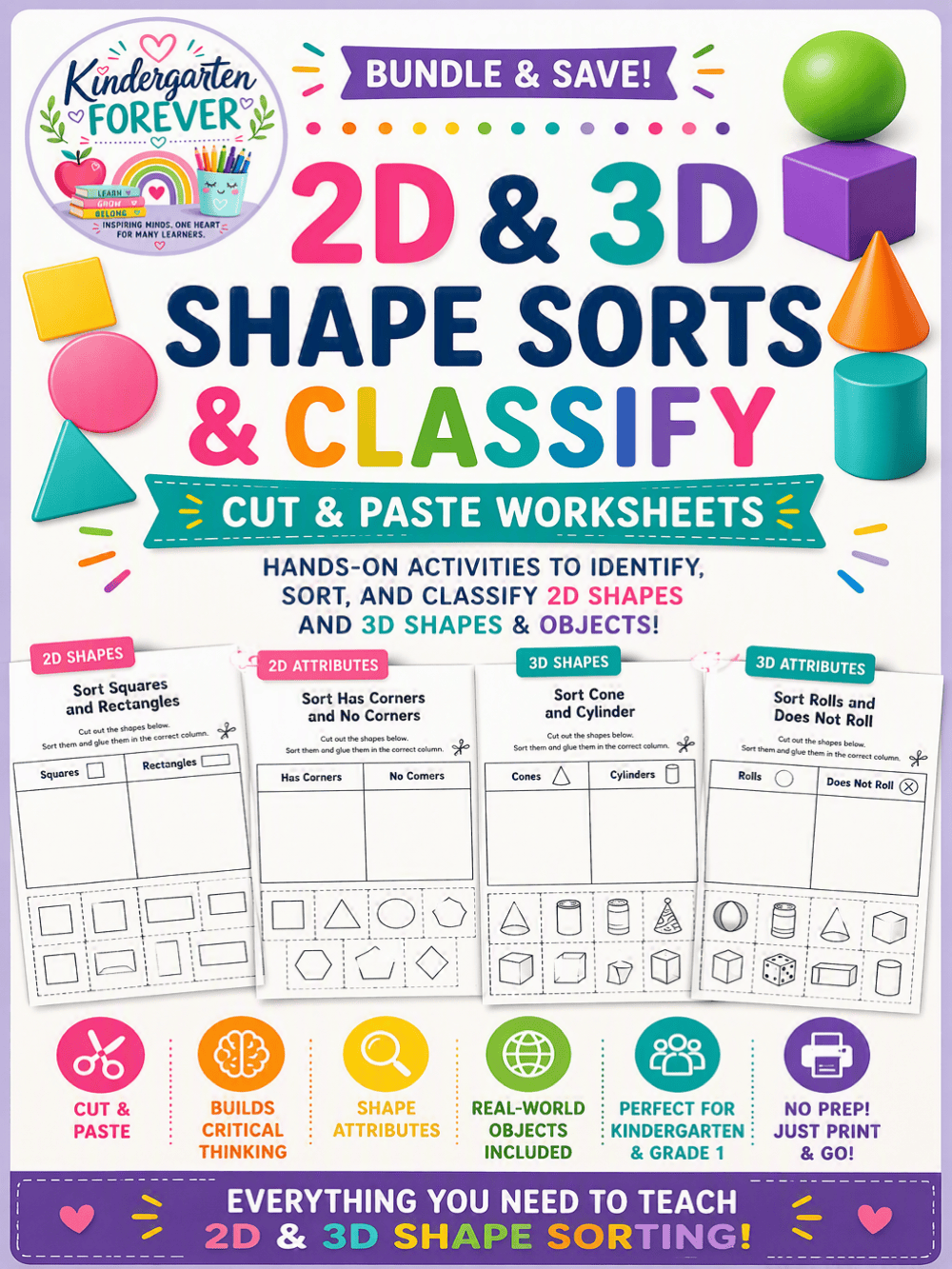
2D and 3D Shapes in Kindergarten - Shape Sorting

💖 Where Worksheets Fit In — Gentle Consolidation

In a play‑based classroom, worksheets are not the teaching method — but they do serve an important purpose.

Kindergarten shape worksheets are perfect for:

  • reinforcing vocabulary
  • checking understanding
  • building confidence
  • supporting early pencil‑paper skills
  • giving students a quiet, focused follow‑up activity

Think of worksheets as the bridge between exploration and formal practice. They help consolidate learning without replacing hands‑on play.

✨ Celebrate Shape Learning Through Creation

End your shape unit with something joyful:

  • Shape art
  • Shape sculptures
  • Shape storytelling
  • Shape posters
  • Shape galleries

These celebrations reinforce learning and give students a sense of pride.

Teaching 2D and 3D shapes in Kindergarten doesn’t need to be complicated. It needs to be playful, hands‑on, and supported by gentle consolidation tools that help students feel confident and capable.

Using a combination of play‑based centres and intentional worksheets creates a balanced, developmentally appropriate math ecosystem — one that supports curiosity, exploration, and mastery.


🛒 If you’re looking for simple, confidence‑building ways to consolidate your students’ shape learning, I’d love for you to visit my Kindergarten Forever store. You’ll find play‑aligned 2D and 3D shape practice pages, gentle consolidation worksheets, and low‑prep math activities designed to support hands‑on exploration—not replace it. Every resource is created with intention, clarity, and a whole lot of heart to help you feel prepared without the pressure.

The Gentle Art of Easing Into Summer Planning in 5 Steps

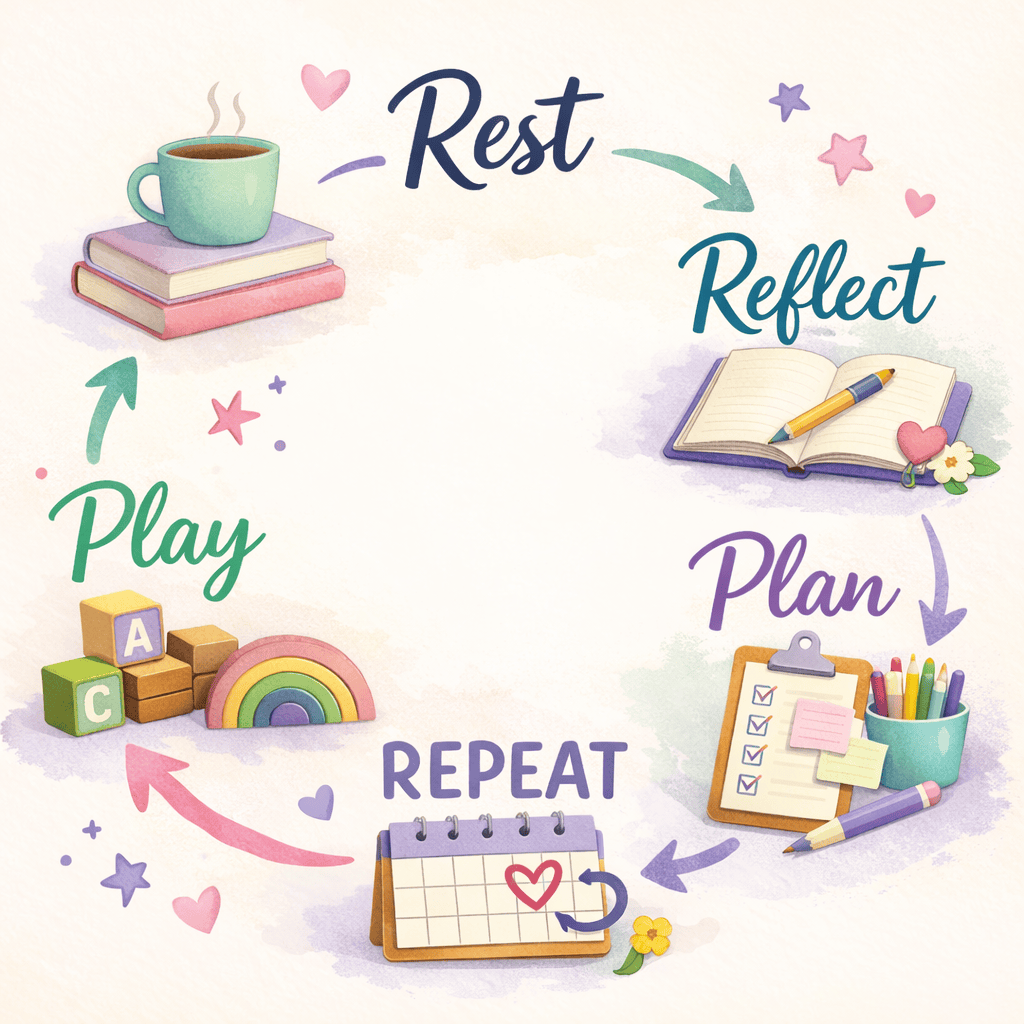
Summer Planning:  Play, Rest, Reflect, Plan, Repeat
Summer Planning – A Cycle for Balance and Renewal

A teacher’s rhythm for balance and renewal.

Summer planning doesn’t have to feel heavy, rushed, or guilt‑filled. For many teachers, the tension is real: you want to rest, but you also want to feel prepared. You want to enjoy your summer, but you also want September to feel smooth and intentional.

This is exactly why a gentle summer planning cycle matters. It’s not about doing more — it’s about doing what nourishes your mind, your heart, and your teaching practice.

The cycle is simple: Rest → Reflect → Plan → Play → Repeat. But its impact is profound.


🌿 1. Rest — Rest your mind and body. You’ve earned it.

Summer planning begins with rest — real rest. Not the “I’m resting but still thinking about my classroom” kind. The deep, nervous‑system‑reset kind.

“Rest isn’t indulgent. It’s recovery.”

Teachers carry an emotional and cognitive load that most people never see. You’ve spent ten months making thousands of decisions, supporting dozens of little hearts, and adapting to constant change. Rest is not optional — it’s essential.

Let yourself sleep in. Let yourself sit quietly. Let yourself do nothing without guilt.

You’ve earned every moment.

💫 2. Reflect — Look back with gratitude. Celebrate wins and growth.

Once your mind has softened, reflection becomes possible.

Reflection is not about reliving stress or replaying mistakes. It’s about noticing what went well, what grew, and what mattered. Gratitude shifts your perspective from exhaustion to appreciation — and appreciation into wisdom.

“Reflection turns experience into insight.”

Think about:

  • A student who blossomed
  • A routine that finally clicked
  • A moment that reminded you why you teach

This gentle reflection becomes the foundation for meaningful summer planning.

🩵 3. Plan — Create with purpose and intention. Focus on what matters most.

Planning is often where teachers jump first — but when you begin after rest and reflection, your planning becomes clearer, calmer, and more intentional.

Summer planning doesn’t mean building your entire September. It means choosing what matters most.

Maybe it’s:

  • Refining your morning routine
  • Reorganizing your literacy centers
  • Mapping out your first two weeks
  • Preparing a few anchor activities

Purposeful planning is not about doing more — it’s about doing what aligns with your values, your students, and your energy.

“Plan from intention, not urgency.”

When you plan gently, your classroom becomes a reflection of your heart, not your stress.

🌸 4. Play — Make time for joy and the things that recharge your heart.

Play is the part teachers forget — but it’s essential to summer planning.

Joy isn’t separate from teaching; it fuels it.

Read for fun. Garden. Bake. Laugh. Move. Create. Explore.

“When you nourish your joy, you nourish your teaching.”

Play recharges the creativity and curiosity you’ll bring back to your students in September.

💖 5. Repeat — Return refreshed, inspired, and ready to make a difference.

The final step in summer planning is simply to repeat the cycle as needed.

Rest. Reflect. Plan. Play. Repeat.

This rhythm isn’t just for July — it’s a sustainable pattern you can return to throughout the year. When you honor this flow, you protect your energy, strengthen your purpose, and show up as the teacher your students need.

“Gentle planning builds sustainable teaching.”

Summer planning doesn’t have to be heavy. It can be gentle, meaningful, and restorative. When you follow this cycle, you enter September not drained, but grounded — not overwhelmed, but inspired.

Visit Kindergarten Forever for more gentle summer planning ideas, classroom inspiration, and resources created with heart.

Inspiring minds. One heart for many learners.

🛒 If you’re moving through your own gentle summer planning cycle — resting when you need to, reflecting when it feels right, and preparing only in small, manageable moments — you might appreciate having ready‑to‑use resources that lighten your load when September arrives. When you’re in the mood to browse, you can explore my Kindergarten Forever materials on Teachers Pay Teachers at www.teacherspayteachers.com/store/kindergarten-forever. Everything there is designed to support calm, confident planning without adding pressure to your summer.

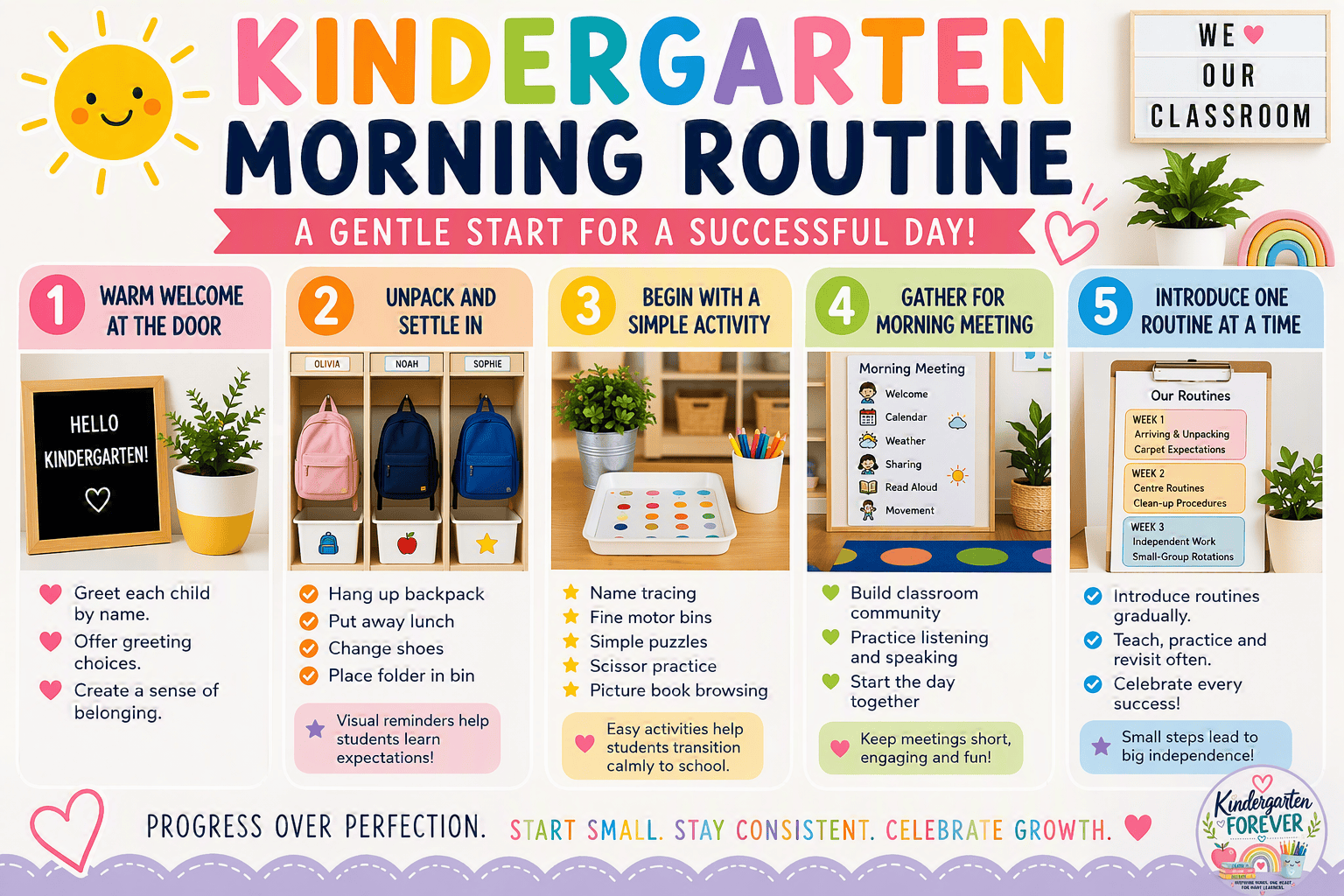
🌈 Kindergarten Morning Routine: 5 Steps For A Gentle Start for the First Weeks of School

morning routines in kindergarten

The first few weeks of Kindergarten are all about one thing:

💖 Building a Kindergarten Morning Routine That Works

Before we can dive into literacy centres, inquiry projects, and curriculum expectations, our youngest learners need to feel safe, welcomed, and confident in their new classroom environment.

Over the years, I’ve learned that a calm, predictable Kindergarten morning routine can make a huge difference for both students and teachers. When children know exactly what to expect each morning, they become more independent, transitions run more smoothly, and everyone starts the day feeling successful.

An effective Kindergarten morning routine doesn’t need to be complicated. The best routines are simple, predictable, and easy for young learners to follow. Here is a simple morning routine that works beautifully during those first weeks of Kindergarten.


🌈 Kindergarten Morning Routine Step 1: Warm Welcome at the Door

A positive connection starts the moment students arrive.

Greeting each child by name helps create a sense of belonging and gives you a quick opportunity to check in with how they’re feeling that day.

You might choose:

👋 A simple wave
✋ A high five
🤝 A handshake
💖 A smile and hello

Giving students a few greeting choices can be a fun way to build independence while helping nervous learners feel comfortable.


🎒 Kindergarten Morning Routine Step 2: Unpack and Settle In

Keeping arrival routines simple is key.

Students can:

✅ Hang up backpacks
✅ Put away lunch bags
✅ Change shoes if needed
✅ Place communication folders in a designated basket

Visual reminder cards are especially helpful during September as students learn expectations.

Remember: routines take practice. It’s perfectly normal to spend the first few weeks teaching, reteaching, and celebrating every successful step.


✏️ Kindergarten Morning Routine Step 3: Begin with a Simple Table Activity

Once students have unpacked, invite them to complete an easy independent activity.

Some favourites include:

🔤 Name tracing
🎨 Fine motor bins
🧩 Simple puzzles
✂️ Scissor practice
📚 Picture book browsing

The goal isn’t academic rigor. The goal is helping students transition calmly from home to school.

Short, successful tasks help build confidence and give teachers time to support students who may need extra assistance.


🗓️ Kindergarten Morning Routine Step 4: Gather for Morning Meeting

For many classrooms, Morning Meeting becomes the heart of the Kindergarten morning routine. This is where classroom community begins to grow.

Consider including:

🌤️ A welcome song
📅 Calendar discussions
🌡️ Weather observations
🧠 Sharing opportunities
📖 A read-aloud
🎵 Movement breaks

Keeping meetings short and engaging is especially important during the first month of school.


🍎 Kindergarten Morning Routine Step 5: Introduce One Routine at a Time

One mistake many teachers make (myself included!) is trying to teach every classroom procedure immediately.

Instead, focus on introducing routines gradually.

For example:

Week 1: ✨ Arriving and unpacking ✨ Carpet expectations
Week 2: ✨ Centre routines ✨ Clean-up procedures
Week 3: ✨ Independent work expectations ✨ Small-group rotations

Students learn best when new routines are introduced in manageable chunks.

Kindergarten Morning Routines: A gentle start for a successful day

🌱 Remember: Progress Over Perfection

September can feel overwhelming, especially in Kindergarten. Establishing a successful Kindergarten morning routine takes time, patience, and lots of practice.

Some mornings will run beautifully.

Others may involve missing lunch bags, tears at drop-off, and a student who absolutely must tell you about their neighbour’s dog before taking off their backpack.

That’s okay.
The goal isn’t perfection.
The goal is creating a classroom where children feel safe, valued, and excited to learn.

Every successful routine you establish in September becomes time you’ll gain back throughout the school year.


Kindergarten Curriculum Bundle

📚 Helpful Ontario Kindergarten Planning Support

If you’re looking for support with long-range planning, organization, and setting up for a successful year, take a look at my:

🍎 Ontario Kindergarten Planning Bundle (Updated for 2026)

This resource includes three essential planning tools designed specifically for Ontario Kindergarten educators.

👉 3 Essential Tools – 2026 Ontario Kindergarten Curriculum Expectation Bundle


💖 Final Thoughts

A strong Kindergarten morning routine helps create the foundation for a calm, successful school year. The first few weeks of Kindergarten aren’t about doing everything.

They’re about building a classroom community, establishing predictable routines, and helping students fall in love with coming to school each day.

Start small.
Stay consistent.
Celebrate progress.
And remember—you don’t have to have it all figured out by September Day 1. 🌈

Happy teaching!

– Kindergarten Forever 💕

🛒 Invitation to Explore My Store

If you’re looking for ideas and activities for morning routines that fit perfectly into a play‑based Kindergarten classroom, I’d love for you to visit my Kindergarten Forever store on Teachers Pay Teachers. You’ll find classroom‑tested resources designed to make your morning routines meaningful, engaging, and fun for your learners.


10 Effective Ways to Build Number Sense in Kindergarten

🌟 Building Strong Number Sense Through Play

Number sense is the foundation of all early math learning. When Kindergarten students explore numbers through play, conversation, and hands‑on experiences, they begin to understand quantity, relationships, and how numbers behave. In Ontario’s play‑based Kindergarten Program, number sense grows best through meaningful exploration — not memorization. Below are 10 effective ways to help your learners build deep, flexible number sense in joyful, developmentally appropriate ways.

🔢 1. Subitizing With Dot Cards

Subitizing — instantly recognizing a quantity without counting — is one of the most important early math skills. Use dot cards, dice, or ten‑frame flashes to help students “see” numbers quickly. Ask questions like, “How did you know it was four?” to encourage flexible thinking.

🎲 2. Number Talks

Number talks are short, whole‑group conversations where students explain their thinking. Show a dot pattern, ten frame, or simple equation and ask, “What do you notice?” or “How do you see this number?” Number talks build mental math, confidence, and mathematical language.

🧮 3. Composing & Decomposing Numbers

Students need to understand that numbers can be broken apart and put together in different ways. Use counters, cubes, or playdough to explore combinations:

  • “Show me 5 in two parts.”
  • “How else can you make 6?”
  • “What happens if you take one away?”

This builds early addition and subtraction understanding.

🧊 4. Estimation Jars

Estimation jars help students develop magnitude awareness — understanding roughly how “big” a number is. Fill a jar with objects and ask students to estimate how many are inside. Reveal the actual number and compare. Over time, students become more accurate and confident.

🍎 5. Comparing Quantities

Understanding “more,” “less,” and “equal” is essential for number sense. Provide sets of objects and invite students to compare them. Ask questions like:

  • “Which group has more?”
  • “How do you know?”
  • “Can you make them equal?”

This builds early algebraic thinking and mathematical reasoning.

🧩 6. Dot Card Matching

Dot cards help students connect visual patterns to quantities. Students match dot cards to numerals, ten frames, or counters. This strengthens subitizing, number recognition, and flexible thinking — especially when students explain how they see the number.

📏 7. Number Lines

Even in Kindergarten, number lines help students understand order, magnitude, and spacing. Use large floor number lines for movement‑based learning. Students can hop to numbers, compare distances, and explore “before” and “after.” This builds strong mental math foundations.

Number Sense - Butterfly Matching activity

🧱 8. Build & Represent Numbers

Invite students to build numbers using cubes, beads, or playdough — then represent the number in multiple ways:

  • numeral
  • picture
  • ten frame
  • tally marks
  • dot pattern

This helps students understand that numbers can be shown in many forms.

🎯 9. Counting Collections

Counting collections allow students to explore quantity deeply. Provide bins of objects and invite students to count, sort, and compare. Encourage them to group items into tens or fives as they grow more confident. This builds one‑to‑one correspondence and cardinality. Counting also introduces the concepts of number patterns to our little learners. Hundreds charts are a fantastic way to practice these patterns, especially as we progress to grades 1, 2 and 3.

🧠 10. Math Story Problems

Story problems help students apply number sense in meaningful contexts. Use simple, play‑based stories:

  • “Three frogs sat on a log. Two more hopped over…”
  • “You have five apples. You give one away…”

Students act out the story with manipulatives, building early addition and subtraction understanding.

🔗 For more math ideas, activities, and resources, visit our Kindergarten Math page

❤️ Why These Number Sense Activities Work

These activities honour how young children learn best: through exploration, conversation, and meaningful repetition. They encourage students to notice patterns, explain their thinking, and use materials creatively. When math feels joyful and accessible, students develop a strong foundation that carries into Grade 1 and beyond.

🛒 Invitation to Explore My Store

If you’re looking for ready‑to‑use number sense activities, ten‑frame games, dot card sets, or hands‑on math materials that fit perfectly into a play‑based Kindergarten classroom, I’d love for you to visit my Kindergarten Forever store on Teachers Pay Teachers. You’ll find classroom‑tested resources designed to make early math meaningful, engaging, and fun for your learners.

10 Engaging Kindergarten Math Centers That Actually Work

🌟 Building Math Confidence Through Play

Kindergarten

Math centers are more than just activities — they’re the heartbeat of a play‑based Kindergarten classroom. When students rotate through hands‑on, meaningful tasks, they build independence, confidence, and a deeper understanding of numeracy. The best math centers allow children to explore, test ideas, collaborate with peers, and revisit concepts over time.

In Ontario’s Kindergarten Program, this kind of exploration is essential because it supports problem‑solving, flexible thinking, and real‑world math connections. When centers are thoughtfully designed, students stay engaged and excited to learn. Below are 10 engaging math centers and play-based math ideas that truly work in real classrooms and help strengthen early numeracy skills.

🔢 1. Counting Collections

Students explore small bins of objects — buttons, gems, cubes, pom‑poms — and count them in different ways. This center builds:

  • one‑to‑one correspondence
  • cardinality
  • flexible counting strategies

Add recording sheets for students who are ready to show their thinking.

🎲 2. Roll & Build

Give students dice and building materials (LEGO, cubes, links). They roll a number and build it. This center reinforces:

  • number recognition
  • subitizing
  • fine motor skills

It’s simple, low‑prep, and endlessly engaging.

🧩 3. Number Puzzles

Two‑piece puzzles with numerals and matching quantities help students connect symbols to meaning. Try puzzles with:

  • ten frames
  • tally marks
  • dot patterns
  • pictures

This is perfect for early learners who need visual support.

Kindergarten math centre - Butterfly Number Match

🧮 4. Ten Frame Match

Ten frames are one of the most powerful tools in Kindergarten math. Students match:

  • numeral → ten frame
  • ten frame → picture
  • ten frame → number word

This center builds strong number sense and prepares students for addition.

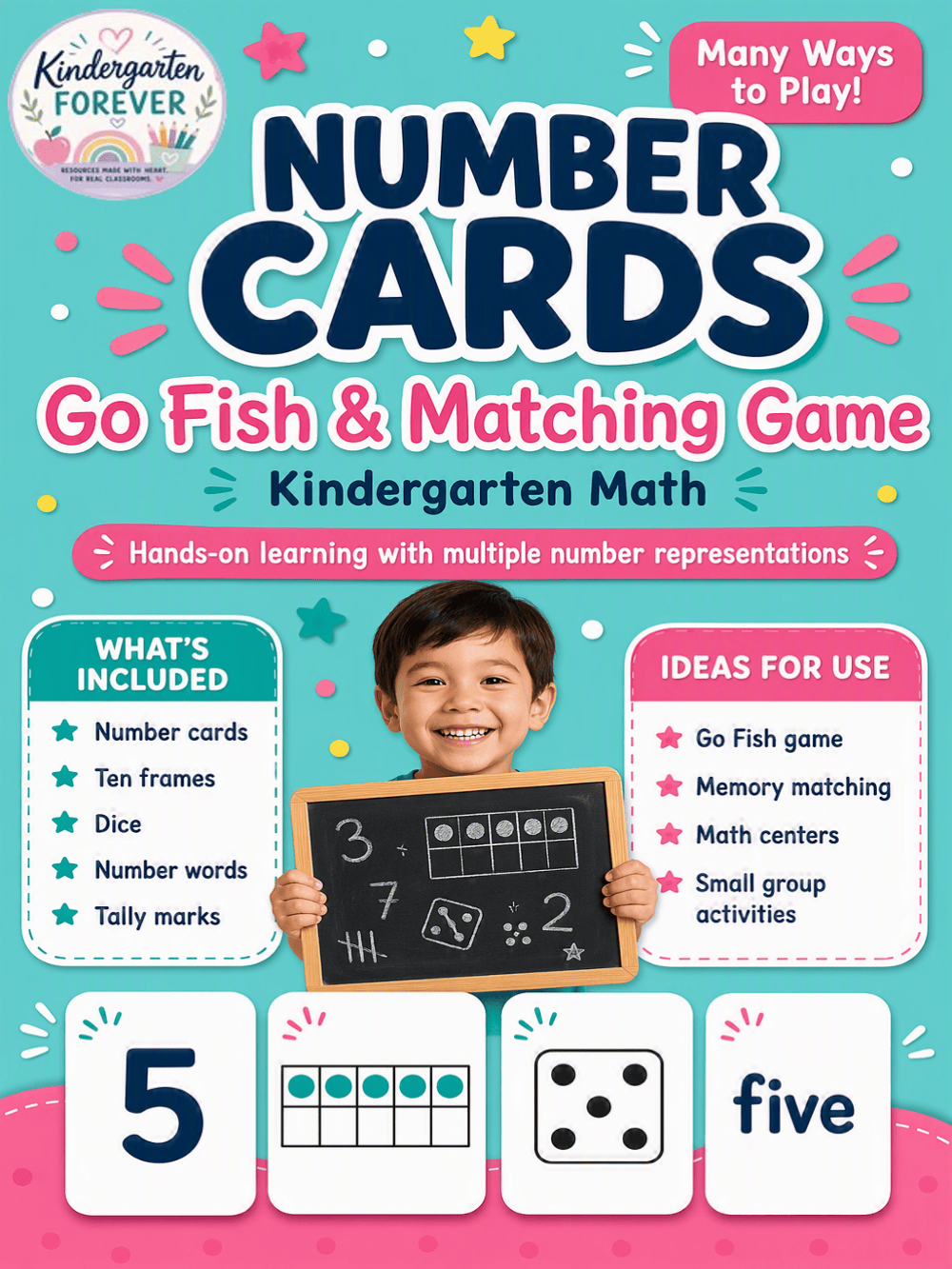
Kindergarten Math Centers - Number Card game

🧱 5. Build the Number

Provide number cards and building materials. Students build the number using:

  • blocks
  • playdough
  • beads
  • snap cubes

This center supports tactile learners and encourages creativity.

🐾 6. Count & Move

Place number cards around the room. Students move, hop, or skip to a number and complete a counting challenge. This center blends:

  • movement
  • counting
  • gross motor skills

Perfect for busy Kindergarteners who learn best through action.

🍎 7. Sorting Station

Sorting is foundational for early math. Students sort objects by:

  • colour
  • size
  • shape
  • type

Then they count each group. This builds classification skills and early data management.

🎯 8. Number Hunt

Hide number cards around the classroom. Students search, find, and match them to a recording sheet or ten frame. This center builds excitement and reinforces number recognition.

🧊 9. Pattern Play

Provide pattern blocks, beads, or snap cubes. Students create:

  • AB patterns
  • ABC patterns
  • growing patterns

Patterning strengthens algebraic thinking — a key part of the Ontario curriculum.

🧠 10. Math Story Mats

Story mats encourage problem‑solving through play. Students act out simple math stories using manipulatives:

  • “Three bears came to the cave. Two more arrived…”
  • “You have five apples. You give one away…”

This builds early understanding of addition and subtraction.

🔗 Strengthen Your Math Pillar

For more math ideas, activities, and resources, visit our Kindergarten Math page.

❤️ Why These Kindergarten Math Centers Work

These kindergarten math centers work because they honour how young children learn best: through movement, exploration, and meaningful repetition. Each center encourages students to make choices, talk about their thinking, and use materials in creative ways. They also allow you to observe students closely so you can plan next steps, differentiate instruction, and support learners who need extra practice. When math feels joyful and accessible, students develop a strong foundation that carries into Grade 1 and beyond.

These centers are effective because they are:

  • hands‑on
  • play‑based
  • developmentally appropriate
  • easy to differentiate
  • aligned with the Ontario Kindergarten Program
  • engaging for all learners

When students explore math through play, they build confidence, independence, and a strong foundation for future learning.

If you’re looking for ready‑to‑use math centers, number sense activities, or hands‑on numeracy resources that fit perfectly into a play‑based Kindergarten classroom, I’d love for you to visit my Kindergarten Forever store on Teachers Pay Teachers. You’ll find classroom‑tested materials designed to make math meaningful and fun.

⭐ 6 Fun Play‑Based Ways to Teach Beginning Sounds in Kindergarten

🌱 Building Strong Phonics Skills Through Play

Beginning sounds are one of the first phonics skills our Kindergarten learners master — and when we teach them through play, movement, and meaningful routines, students build confidence quickly.

In Ontario’s play‑based Kindergarten program, beginning sounds fit beautifully into:

  • literacy centers
  • morning meeting
  • small‑group instruction
  • inquiry learning
  • whole‑group routines

Today I’m sharing simple, effective, play‑based ways to help your students connect letters to sounds — without worksheets, overwhelm, or pressure.

🔤 1. Start With Sound Awareness Before Letters

Before students match letters to sounds, they need to hear sounds in words.

Try these playful oral language warm‑ups:

  • I Spy With Sounds — “I spy something that starts with /b/.”
  • Sound Stretching — stretch the first sound: “sssssock,” “mmmmilk.”
  • Mystery Bag — pull an item and identify the beginning sound.
  • Name Play — “Whose name starts with /j/?”

These activities build phonological awareness — the foundation of beginning sound mastery.

🧩 2. Use Hands‑On Matching Activities

Hands-on matching is one of the most effective ways to teach beginning sounds because students can touch, move, and sort.

Try:

  • picture → letter matching
  • uppercase → lowercase matching
  • sound sorting mats
  • beginning sound puzzles
  • alphabet card games
Beginning Sounds Cut and Paste Worksheet

If you want a ready‑to‑use set, check out my Beginning Sound Alphabet Literacy Cards in my TPT shop. They are perfect for:

  • literacy centers
  • small‑group instruction
  • partner games
  • morning tubs

🎲 3. Turn Beginning Sounds Into Games

Games make repetition feel fun — and repetition is exactly what beginning sounds need.

Here are easy, low‑prep options:

  • Go Fish — match letters and beginning sound pictures
  • Memory Match — flip cards to find pairs
  • Sound Scavenger Hunt — find items around the room
  • Sound Hop — place letters on the floor and hop to the correct one
  • Spin & Say — spin a spinner and say a word that starts with that sound

Games build confidence and keep students engaged without worksheets.

🧠 4. Integrate Beginning Sounds Into Morning Meeting

Morning meeting is one of the BEST places to reinforce beginning sounds because it’s:

  • predictable
  • social
  • interactive
  • language-rich

Try:

  • “Today’s Sound of the Day”
  • beginning sound chants
  • picture card reveal
  • sound sorting on chart paper
  • beginning sound movement (“Move like something that starts with /r/!”)

This connects phonics to your daily routine — and students LOVE it.

Beginning Sounds - Alphabet handwiting practice worksheets

✏️ 5. Use Beginning Sounds in Writing Invitations

Even emergent writers can begin using beginning sounds in their writing.

Try:

  • labeling pictures
  • writing the first sound of a word
  • sound boxes
  • “What sound do you hear first?” prompts
  • shared writing with sound stretching

Celebrate attempts — even if the letter isn’t perfect. The goal is confidence, not correctness.

Beginning Sounds - Vowel and Digraph Posters

🌈 6. Make Beginning Sounds Visible in Your Classroom

Environmental print helps students make connections all day long.

Add:

  • alphabet posters
  • picture cards
  • sound anchor charts
  • beginning sound word wall
  • student name cards sorted by beginning sound

🎒 Beginning Sound Centers You Can Prep in Minutes

Teachers need low‑prep centers — especially in September.

Try:

  • picture sorting mats
  • clip cards
  • mini puzzles
  • sound jars
  • alphabet manipulatives
  • matching cards

These centers build independence and give you time for small‑group instruction.

❤️ Why Play‑Based Beginning Sound Instruction Works

Because it:

  • builds confidence
  • supports oral language
  • encourages movement
  • reduces pressure
  • increases engagement
  • aligns with the Ontario Kindergarten Program
  • supports diverse learners

Beginning sounds don’t need to be complicated — they need to be meaningful.


If you’re looking for ready‑to‑use beginning sound activities, literacy centers, or alphabet resources that fit perfectly into a play‑based Kindergarten classroom, I’d love for you to visit my Kindergarten Forever store on Teachers Pay Teachers. You’ll find classroom‑tested materials designed to make early literacy joyful and meaningful.