
🌟 Building Math Confidence Through Play
Kindergarten
Math centers are more than just activities — they’re the heartbeat of a play‑based Kindergarten classroom. When students rotate through hands‑on, meaningful tasks, they build independence, confidence, and a deeper understanding of numeracy. The best math centers allow children to explore, test ideas, collaborate with peers, and revisit concepts over time.
In Ontario’s Kindergarten Program, this kind of exploration is essential because it supports problem‑solving, flexible thinking, and real‑world math connections. When centers are thoughtfully designed, students stay engaged and excited to learn. Below are 10 engaging math centers and play-based math ideas that truly work in real classrooms and help strengthen early numeracy skills.
🔢 1. Counting Collections
Students explore small bins of objects — buttons, gems, cubes, pom‑poms — and count them in different ways. This center builds:
- one‑to‑one correspondence
- cardinality
- flexible counting strategies
Add recording sheets for students who are ready to show their thinking.
🎲 2. Roll & Build
Give students dice and building materials (LEGO, cubes, links). They roll a number and build it. This center reinforces:
- number recognition
- subitizing
- fine motor skills
It’s simple, low‑prep, and endlessly engaging.
🧩 3. Number Puzzles
Two‑piece puzzles with numerals and matching quantities help students connect symbols to meaning. Try puzzles with:
- ten frames
- tally marks
- dot patterns
- pictures
This is perfect for early learners who need visual support.

🧮 4. Ten Frame Match
Ten frames are one of the most powerful tools in Kindergarten math. Students match:
- numeral → ten frame
- ten frame → picture
- ten frame → number word
This center builds strong number sense and prepares students for addition.
🧱 5. Build the Number
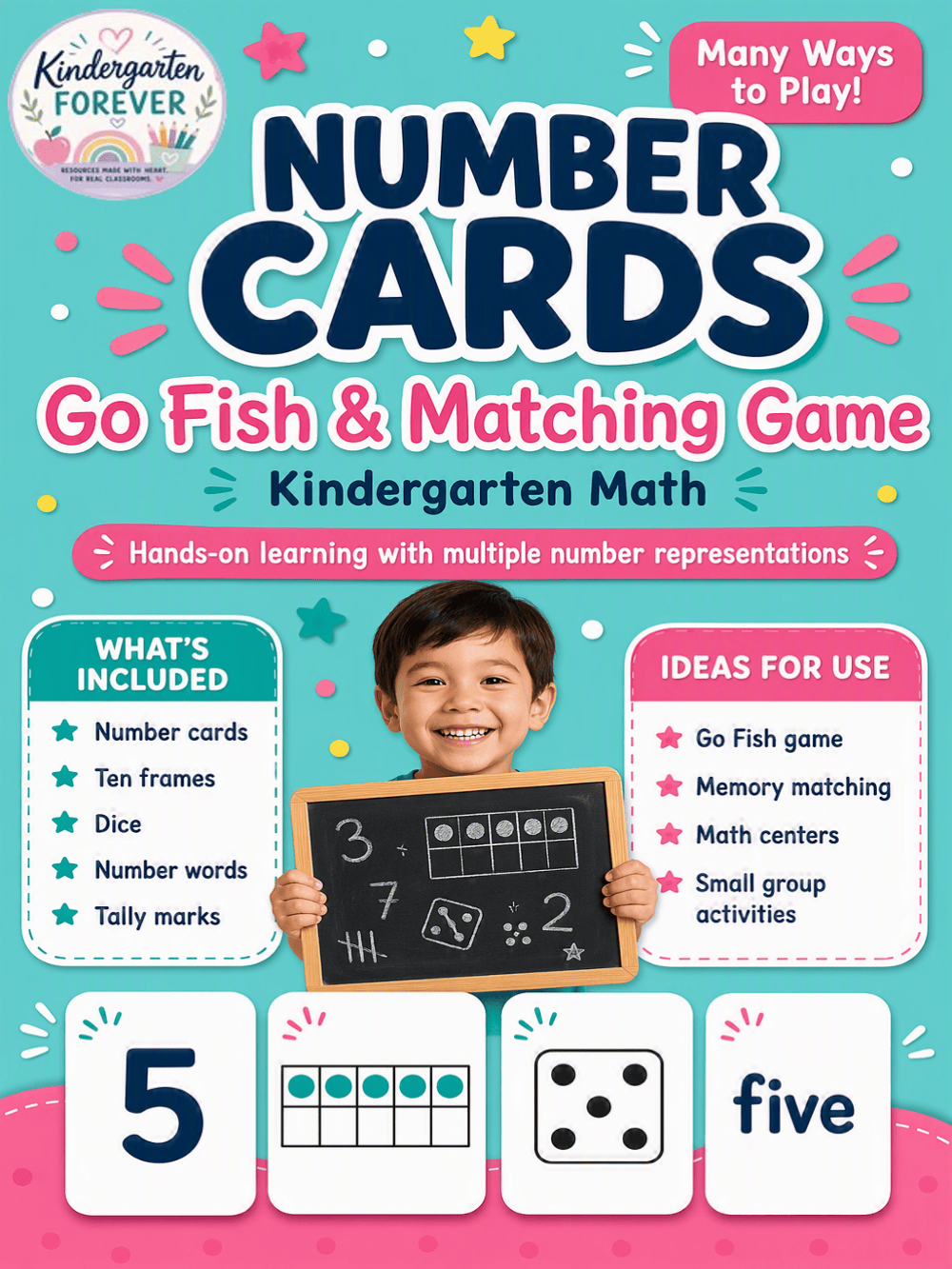
Provide number cards and building materials. Students build the number using:
- blocks
- playdough
- beads
- snap cubes
This center supports tactile learners and encourages creativity.
🐾 6. Count & Move
Place number cards around the room. Students move, hop, or skip to a number and complete a counting challenge. This center blends:
- movement
- counting
- gross motor skills
Perfect for busy Kindergarteners who learn best through action.
🍎 7. Sorting Station
Sorting is foundational for early math. Students sort objects by:
- colour
- size
- shape
- type
Then they count each group. This builds classification skills and early data management.
🎯 8. Number Hunt
Hide number cards around the classroom. Students search, find, and match them to a recording sheet or ten frame. This center builds excitement and reinforces number recognition.
🧊 9. Pattern Play
Provide pattern blocks, beads, or snap cubes. Students create:
- AB patterns
- ABC patterns
- growing patterns
Patterning strengthens algebraic thinking — a key part of the Ontario curriculum.
🧠 10. Math Story Mats
Story mats encourage problem‑solving through play. Students act out simple math stories using manipulatives:
- “Three bears came to the cave. Two more arrived…”
- “You have five apples. You give one away…”
This builds early understanding of addition and subtraction.
🔗 Strengthen Your Math Pillar
For more math ideas, activities, and resources, visit our Kindergarten Math page.
❤️ Why These Kindergarten Math Centers Work
These kindergarten math centers work because they honour how young children learn best: through movement, exploration, and meaningful repetition. Each center encourages students to make choices, talk about their thinking, and use materials in creative ways. They also allow you to observe students closely so you can plan next steps, differentiate instruction, and support learners who need extra practice. When math feels joyful and accessible, students develop a strong foundation that carries into Grade 1 and beyond.
These centers are effective because they are:
- hands‑on
- play‑based
- developmentally appropriate
- easy to differentiate
- aligned with the Ontario Kindergarten Program
- engaging for all learners
When students explore math through play, they build confidence, independence, and a strong foundation for future learning.
If you’re looking for ready‑to‑use math centers, number sense activities, or hands‑on numeracy resources that fit perfectly into a play‑based Kindergarten classroom, I’d love for you to visit my Kindergarten Forever store on Teachers Pay Teachers. You’ll find classroom‑tested materials designed to make math meaningful and fun.