
⭐ In kindergarten, math should feel like discovery — not drill.
When children explore numbers through hands‑on play, they build the deep, flexible understanding that worksheets simply cannot provide. Worksheets may look tidy, but they often reduce math to memorization and isolated tasks. Play, on the other hand, invites children to think, reason, compare, estimate, and problem‑solve — all the skills that form true number sense.
Number sense is more than counting from 1 to 10. It’s the ability to understand what numbers mean, how they relate to each other, and how they behave in real situations. When children develop number sense, they can subitize, compose and decompose numbers, recognize patterns, and explain their thinking. These are the foundations of future math success — and they grow strongest through play‑based experiences.
🎲 Why Worksheets Fall Short
Worksheets often focus on:
- rote counting
- tracing numbers
- matching numerals to pictures
- filling in blanks
These tasks may look productive, but they rarely build conceptual understanding. A child can trace the number 5 perfectly and still have no idea what “five” means. They can circle the correct answer without understanding why it’s correct.
Worksheets also limit movement, creativity, and exploration — all essential for early math development. When children are confined to paper, they lose opportunities to manipulate objects, compare quantities, build sets, and test ideas. Play allows children to make mistakes, try again, and learn through meaningful action.
🌈 What Play‑Based Math Looks Like
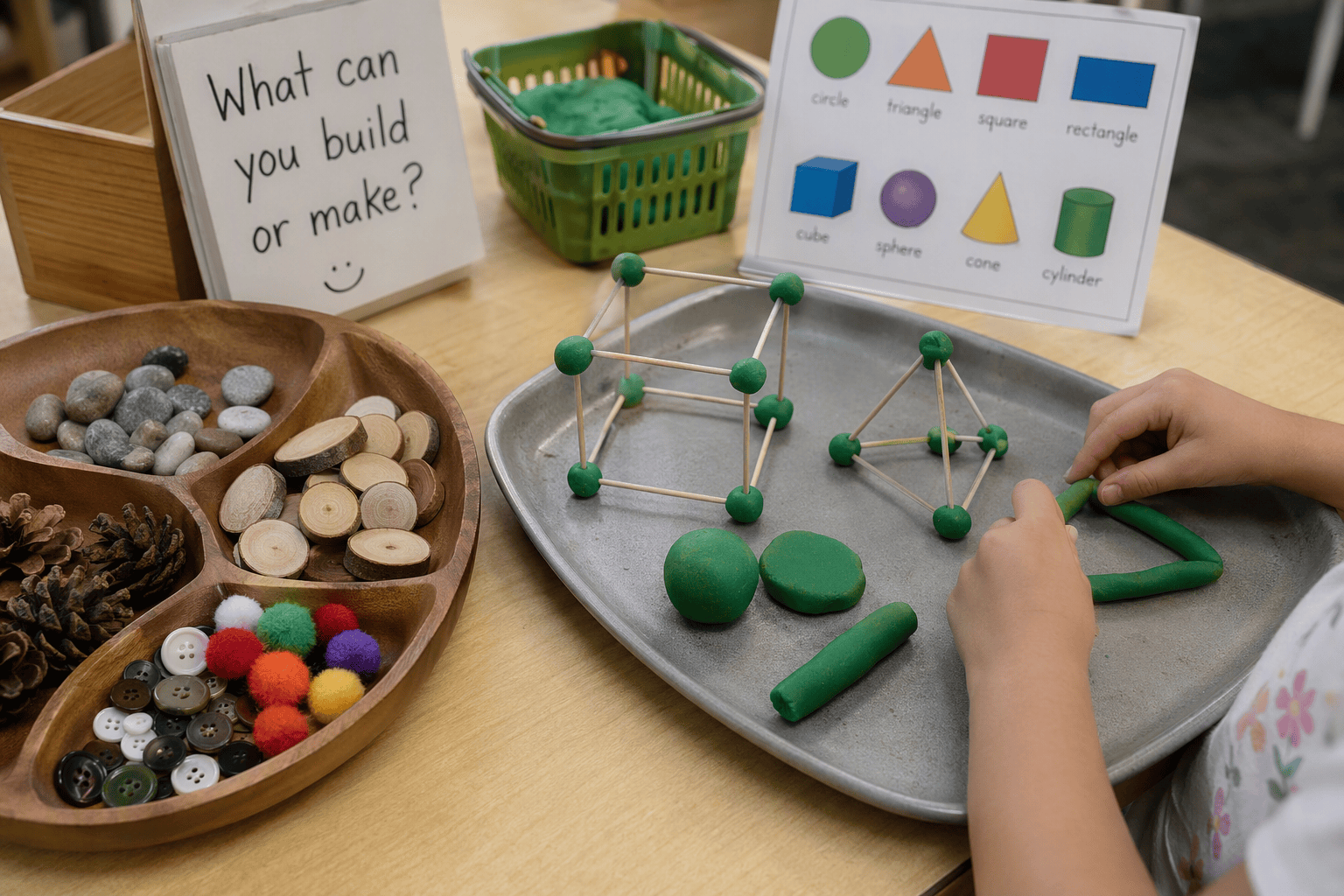
Play‑based math is active, hands‑on, and joyful. It includes:
Counting Collections
Children gather objects — buttons, blocks, pom‑poms — and count them in different ways. They learn that the last number said tells “how many,” and they begin grouping items into sets to make counting easier.
Subitizing Games
Quick‑glance dot patterns help children recognize quantities without counting. This builds mental math and prepares them for addition and subtraction.
Ten‑Frames
Ten‑frames help children visualize numbers, compare quantities, and understand how numbers relate to ten — a critical early math milestone.
Math Talks
Short conversations about “how you know” encourage reasoning, flexible thinking, and vocabulary development.
Real‑World Problem Solving
Children explore math through snack time, block building, dramatic play, and outdoor exploration. Math becomes meaningful because it connects to their world.
🧠 Play Builds the Math Skills Worksheets Can’t
Through play, children learn to:
- compare quantities
- estimate
- sort and classify
- recognize patterns
- compose and decompose numbers
- explain their thinking
- make connections
These skills form the backbone of number sense — and they grow naturally when children are given time, materials, and freedom to explore.
🃏 Add Hands‑On Math Tools to Strengthen Learning
Your classroom already thrives on play, and adding intentional math tools can deepen learning even further. Here are three resources that fit seamlessly into play‑based math centers:
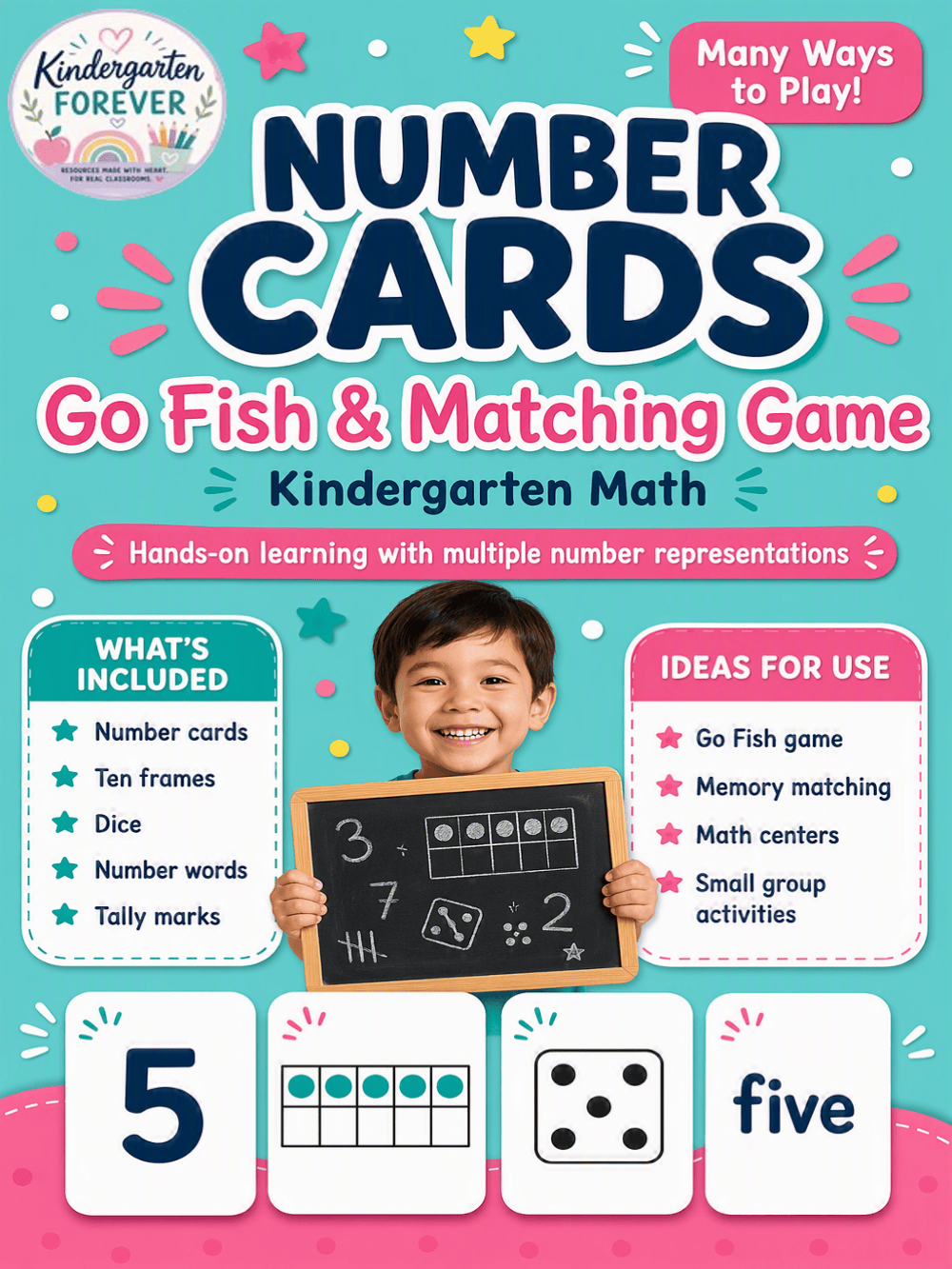
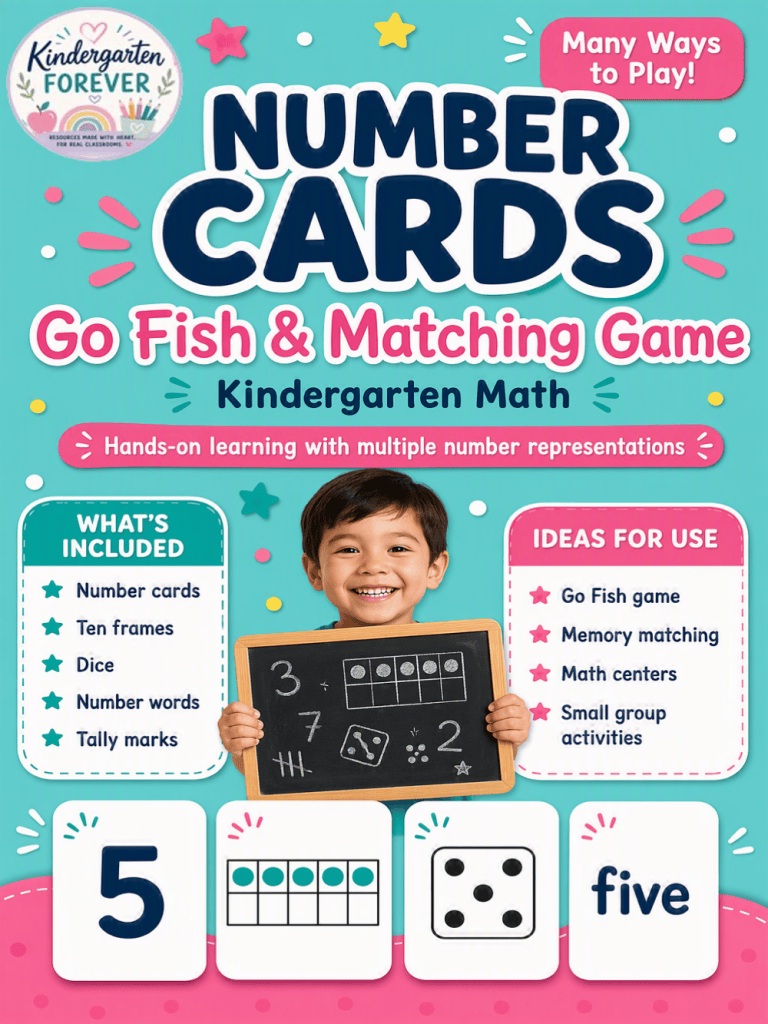
⭐ Go‑Fish Number Sense Card Games (English & French)
These card games build number recognition, matching, comparing quantities, and early math fluency — all through play. Children practice essential skills while laughing, taking turns, and engaging socially. They’re perfect for math centers, small groups, or early‑finisher bins.
🦋 Number‑Matching Butterflies (English & French)
These butterflies strengthen visual discrimination, sorting, and matching — foundational cognitive skills that support math development. Children naturally begin grouping, comparing, and organizing as they match numerals with number words, tallies, dice, and ten frames.


💯 Hundreds Chart Activity (for advanced learners)
For students ready to stretch their thinking, your hundreds chart activity introduces patterns, skip counting, and early place value. It’s an excellent extension for children who need challenge beyond typical kindergarten expectations.
These tools keep learning playful while reinforcing the math concepts children need most.
❤️ The Goal: Confident, Flexible Thinkers
When math is playful, children develop confidence. They learn that numbers are not scary — they are tools they can use to solve problems, explore ideas, and understand their world. Worksheets may check boxes, but play builds thinkers.
Your kindergarten classroom is already rich with curiosity, movement, and joy. By choosing play‑based math experiences, you’re giving children the strongest possible foundation for future learning.
Building number sense doesn’t happen in isolation — it grows through consistent, predictable math experiences woven into your daily routines. If you’re looking to deepen your understanding of how play supports early numeracy, our Kindergarten Math page brings all of these ideas together in one place. It explores hands‑on math centers, subitizing, counting collections, ten‑frames, problem‑solving, and the developmental progression of number sense from emergent to advanced learners.