Kindergarten Classroom Labels: The Secret to a Calm, Confident, Organized Classroom in 12 Beautiful Themes

Kindergarten Classroom Labels:  The Secret to a Calm, Confident, Organized Classroom in 12 Beautiful Themes

In kindergarten, organization isn’t just about aesthetics — it’s about creating a learning environment where children feel confident, capable, and independent. When everything has a place, routines run smoothly, transitions are calmer, and students know exactly where to find what they need. That’s why kindergarten classroom labels are one of the most powerful tools teachers can use to build structure, predictability, and belonging.

And today, I’m thrilled to officially launch the Kindergarten Forever Classroom Label Collection — a growing, beautifully coordinated system designed to help teachers achieve that “Pinterest Classroom” look without the cost, stress, or hours of design work.

🌈 Why Kindergarten Classroom Labels Matter

Kindergarten students thrive when their environment is predictable. Clear, consistent classroom labels help children understand routines, navigate the classroom independently, and build confidence in their ability to manage materials.

Here’s why labels matter so much:

  • They reduce anxiety. Children know where things belong and where to find them.
  • They support independence. Students can access materials without relying on adults.
  • They strengthen routines. Clean‑up, transitions, and centers run more smoothly.
  • They build literacy. Labels expose children to environmental print all day long.
  • They create a sense of belonging. A clearly organized classroom feels safe and welcoming.

When your classroom is labeled well, students don’t have to guess — they know.

✨ The Pinterest Classroom… Without the Pinterest Price Tag

Let’s be honest: those dreamy Pinterest classrooms are gorgeous, but they often require expensive décor, custom printing, and hours of design work.

Your new Kindergarten Forever Classroom Label Collection gives teachers that same polished, coordinated look — but without the cost or the effort.

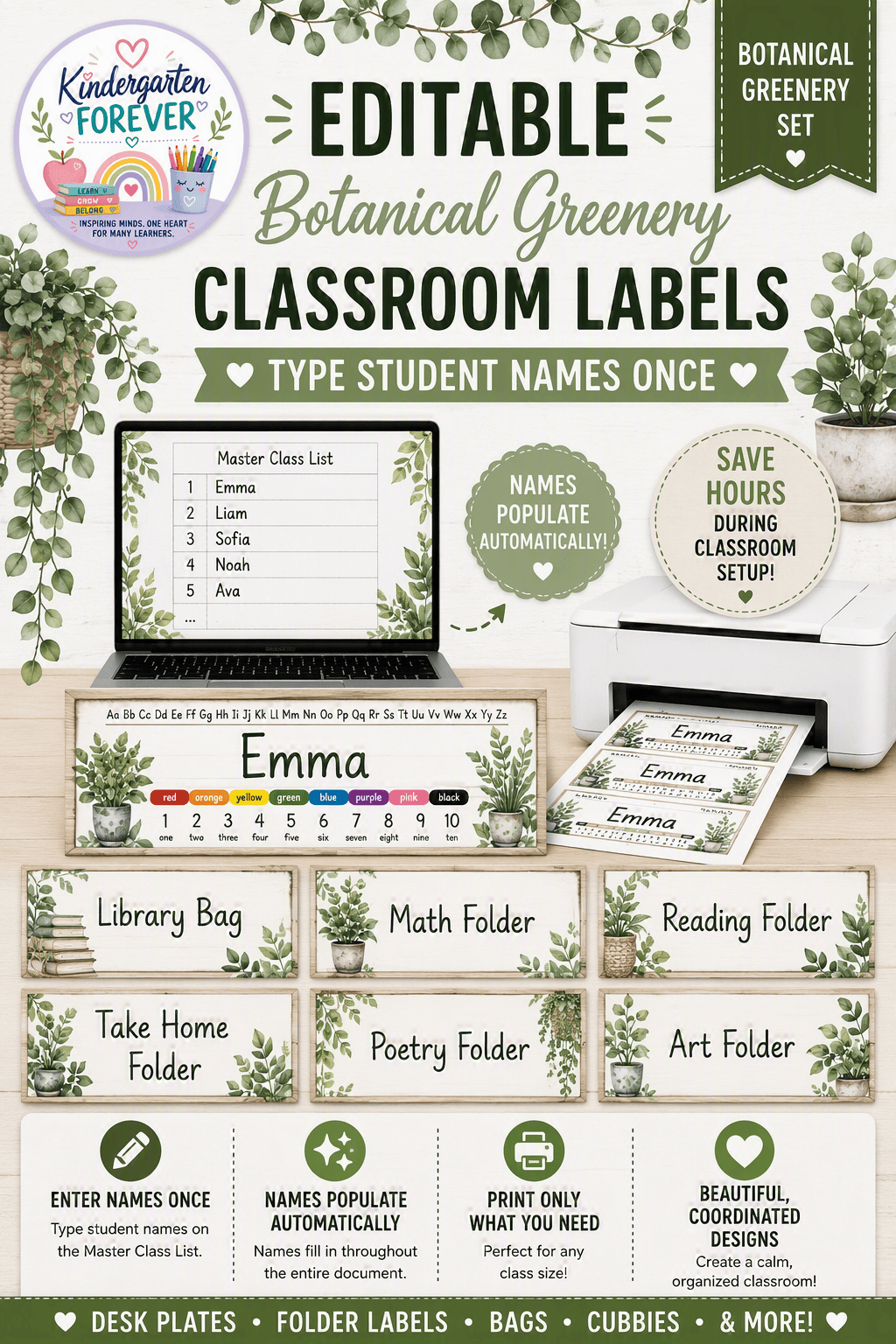
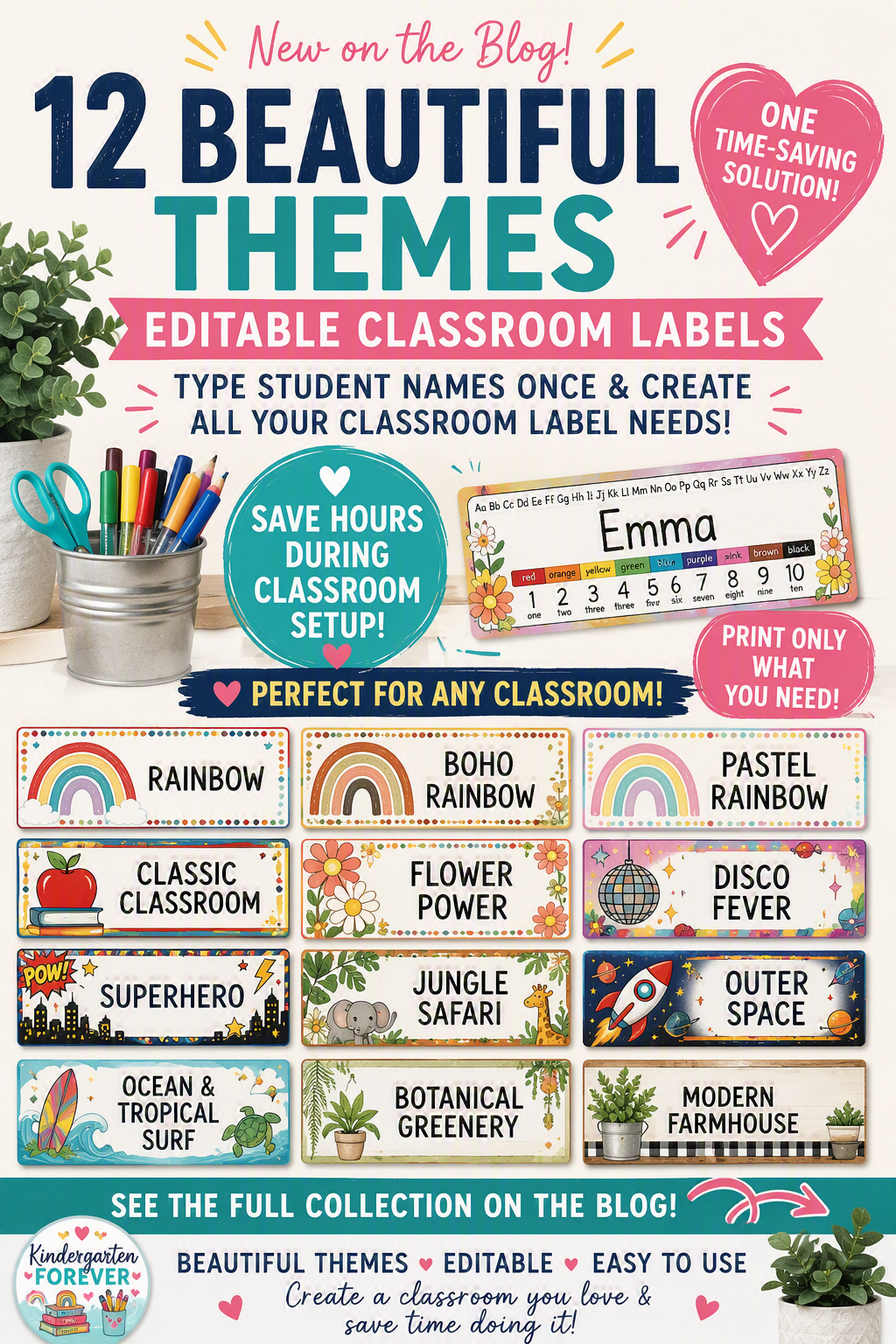
You simply type your list once, and the system generates every label you need in your chosen theme. No formatting. No resizing. No hunting for matching fonts. No Canva rabbit holes.

Just:

  • type
  • print
  • stick
  • done

This is classroom setup made simple, sustainable, and beautiful.

The Classroom Label Collection

🌈 Rainbow Classroom Theme

Bright, cheerful, and full of energy, the Rainbow Classroom Theme creates an inviting learning environment that celebrates color and creativity. Vibrant rainbow accents, bold colors, and playful classroom elements help foster a positive atmosphere while keeping your classroom beautifully organized. This timeless theme is perfect for teachers who love a fun, welcoming space that students immediately feel excited to enter.


🤎 Boho Rainbow Classroom Theme

The Boho Rainbow Classroom Theme combines soft rainbow colors with earthy tones to create a calm, modern classroom aesthetic. Featuring muted rainbows, warm neutrals, and natural accents, this theme offers a relaxed and stylish learning environment that feels both peaceful and organized. It is a beautiful blend of contemporary classroom design and timeless charm.


🩷 Pastel Rainbow Classroom Theme

Soft, dreamy, and full of warmth, the Pastel Rainbow Classroom Theme uses delicate rainbow hues to create a soothing classroom atmosphere. Gentle pinks, lavenders, aquas, and soft yellows provide a cheerful yet calming backdrop that helps students feel comfortable, focused, and ready to learn.


🍎 Classic Classroom Theme

Inspired by traditional schoolhouse colors and timeless educational elements, the Classic Classroom Theme never goes out of style. Bright primary colors, apples, books, pencils, and stars create a familiar and welcoming environment that feels both educational and fun. It is the perfect choice for teachers who love a traditional classroom look with modern organization.


🌼 Flower Power Classroom Theme

Bursting with retro charm and happy energy, the Flower Power Classroom Theme brings colorful flowers, groovy patterns, and feel-good vibes into your classroom. Inspired by the playful designs of the 1970s, this theme creates a bright and joyful space where creativity and positivity can flourish.


🪩 Disco Daisy Fever Classroom Theme

The Disco Fever Classroom Theme mixes retro style with modern classroom fun. Featuring disco balls, groovy colors, smiley accents, and playful vintage details, this theme creates a lively learning environment that encourages creativity while helping your classroom feel coordinated and unique.


🦸 Superhero Classroom Theme

Power up your classroom with the exciting energy of the Superhero Classroom Theme. Bold colors, action-inspired graphics, shields, stars, and comic-style elements help create an engaging environment where students feel empowered to be classroom heroes every day. This theme inspires confidence, teamwork, and a love of learning.


🦁 Jungle Safari Classroom Theme

Bring the adventure of the wild into your classroom with the Jungle Safari Classroom Theme. Realistic safari animals, lush greenery, natural textures, and animal-print accents create an exciting yet sophisticated learning environment. Students will love exploring a classroom filled with adventure while teachers enjoy a beautifully coordinated space.


🚀 Dreamy Outer Space Classroom Theme

Blast off into learning with the Dreamy Outer Space Classroom Theme. Soft galaxies, colorful planets, twinkling stars, and adventurous rockets inspire curiosity and imagination while creating a stunning classroom atmosphere. Perfect for young explorers, this theme encourages students to dream big and reach for the stars.


🌊 Ocean & Tropical Surf Classroom Theme

Calm, refreshing, and inspired by the coast, the Ocean & Tropical Surf Classroom Theme combines sea turtles, coral reefs, tropical elements, and soothing ocean colors to create a serene learning environment. The relaxing palette helps students feel grounded and focused while bringing the beauty of the ocean into the classroom.


🌿 Botanical Greenery Classroom Theme

The Botanical Greenery Classroom Theme brings the calming beauty of nature indoors. Featuring potted plants, hanging vines, succulents, and soft sage green accents, this theme creates a peaceful and refreshing learning space. Its natural aesthetic encourages focus, organization, and a sense of calm throughout the school day.


🏡 Modern Farmhouse Classroom Theme

Warm, welcoming, and effortlessly organized, the Modern Farmhouse Classroom Theme blends shiplap textures, woodgrain accents, black-and-white gingham, and touches of greenery to create a cozy classroom environment. Inspired by the comfort of home, this theme offers a clean, structured look that feels both timeless and inviting.

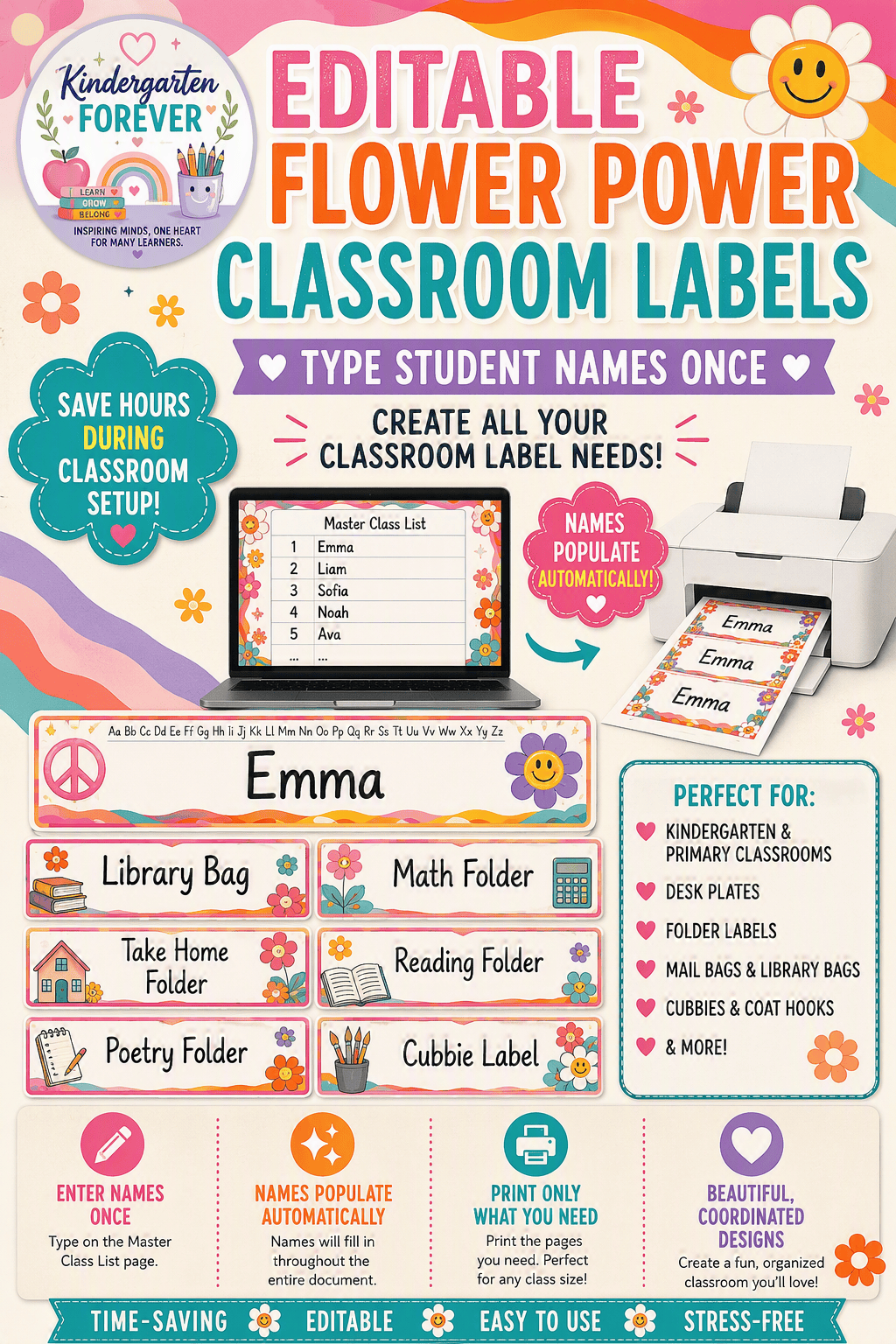
🌟 What’s Included Right Now

The collection is already packed with essential kindergarten classroom labels teachers use every single day:

⭐ Desk Plates / Name Cards

Editable, clean, and theme‑coordinated — perfect for tables, desks, cubbies, or center rotations.

⭐ Folder & Mail Bag Labels

Keep communication organized and ensure everything gets home (and back!) with ease.

⭐ Library Bag Labels

Matching labels that help students track their book bags independently.

These pieces alone create a cohesive, professional look across your classroom — but this is only the beginning.

🚀 Coming Soon: A Fully Coordinated Classroom System

This label line is designed to grow — and grow fast. Here’s what’s coming next:

  • Word Wall Cards
  • Visual Schedule Cards
  • Calendar Cards
  • Bin & Basket Labels
  • Center Labels
  • Supply Labels
  • Binder Spines
  • Classroom Posters
  • Routine Cards
  • And much more

Every new addition will match your chosen theme, giving you a fully unified classroom aesthetic.

This is the start of a complete Kindergarten Forever Classroom Organization System — one that evolves with your needs and keeps your classroom looking polished all year long.

🧠 Why Organization Builds Confidence in Kindergarten

When children walk into a classroom where everything is clearly labeled, visually consistent, and easy to navigate, they feel safe. They know what to expect. They know where things belong. They know how to participate.

This is how independence grows.

Predictability reduces behaviour challenges. Clear labels reduce transition time. Visual organization helps children regulate themselves because the environment supports them instead of confusing them.

Your classroom becomes a place where children feel capable — and that confidence spills into every part of their learning.

💙 Ready to Explore the Collection?

You can browse the full line of Kindergarten Classroom Labels here: 👉 Kindergarten Forever Label Collection

This is the perfect time of year to refresh your classroom, simplify your routines, and give your students the gift of clarity and confidence.

⭐ Final Thoughts

A beautifully organized classroom isn’t about perfection — it’s about creating a space where children feel secure, independent, and ready to learn. With the Kindergarten Forever Classroom Label Collection, you can build that environment quickly, affordably, and in a way that grows with you.

Gentle Parenting in the Classroom: 5 Insights for Parents and Teachers

Gentle parenting has reshaped early childhood over the past decade. Its emphasis on connection, emotional validation, and respectful communication has offered families a compassionate alternative to punitive discipline. Many of these ideas are deeply supportive and developmentally sound.

But as more children raised with gentle parenting enter Kindergarten, teachers are noticing a shift. A growing number of students arrive at school expecting negotiation, choice, and extended dialogue around every request. This isn’t because gentle parenting is “wrong.” It’s because gentle parenting in the classroom functions very differently than gentle parenting at home.

This post explores why the mismatch is happening, what teachers are seeing, and how both parents and educators can work together to support children through the transition.

Gentle Parenting in the classroom - love and limits

💛 What Gentle Parenting Intends to Do

At its best, gentle parenting mirrors authoritative parenting—warm, responsive, and structured. Research consistently shows that this combination leads to stronger emotional regulation, better academic outcomes, and healthier peer relationships.

A helpful overview of parenting styles and why they matter can be found here: https://www.verywellmind.com/parenting-styles-2795072

When gentle parenting includes clear limits, predictable routines, and consistent follow‑through, children thrive.

📱 Where Gentle Parenting Drifts on Social Media

The challenge isn’t the philosophy—it’s the trend. On TikTok, Instagram, and parenting blogs, gentle parenting is often presented as endless empathy, negotiation, and calm conversation. Boundaries are softened or removed entirely.

This drift can unintentionally resemble permissive parenting, a style linked to:

  • difficulty with frustration tolerance
  • challenges with compliance
  • emotional dysregulation
  • negotiation during simple routines

Zero-to-Three has a great article about the buzzwords of gentle parenting. You can read it here: https://www.zerotothree.org/resource/distillation/buzzwords-explained-gentle-parenting/

When boundaries are inconsistent or negotiable, children may struggle in environments where expectations are shared, predictable, and non‑negotiable.

Gentle Parenting in the Classroom - Setting expectations with love and intention

🚸 What Teachers Are Seeing

Teachers across North America report similar patterns among children raised with the trend version of gentle parenting:

  • Negotiating every request (“I don’t want to,” “Can I do it later?”)
  • Difficulty accepting ‘no,’ ‘stop,’ or ‘it’s time to…’
  • Assuming all tasks have choices
  • Emotional dysregulation during transitions
  • Low tolerance for adult‑led routines
  • High verbal debate during simple instructions

In a home with one or two children, these negotiations can be manageable—even relationship‑building. In a classroom of 30+ students, they quickly become overwhelming.

This is the heart of the issue: gentle parenting in the classroom requires a different balance than gentle parenting at home.

🌱 Why This Matters for School Readiness

School readiness isn’t about knowing letters or numbers — it’s about being able to participate in a group learning environment. When children arrive expecting negotiation, extended dialogue, or individualized pacing, they struggle with the core skills Kindergarten requires:

  • stopping a preferred activity
  • following shared routines
  • transitioning with the group
  • tolerating limits
  • managing frustration without one‑on‑one adult coaching

Gentle parenting builds emotional awareness, but school readiness requires emotional flexibility — the ability to shift, adapt, and follow expectations even when it’s not preferred.

This is where the mismatch becomes most visible.

🧠 Why This Happens: What Research Shows

Two well‑established findings help explain why the gentle‑to‑permissive drift shows up so strongly in classrooms:

1. Attention During Misbehavior Reinforces the Behavior

Long conversations during tantrums or refusals provide high levels of attention. Behavioral science shows that attention—even calm, empathetic attention—can reinforce the behaviour.

The Centre on the Developing Child at Harvard University talks about executive function and emotional development here: https://developingchild.harvard.edu/science/key-concepts/executive-function/

2. Inconsistent Boundaries Create Confusion

Children thrive on predictable limits. When boundaries shift based on adult energy or emotional bandwidth, children struggle to understand when expectations apply.

The Child Mind Institute outlines how consistent limits support emotional regulation: https://childmind.org/article/teaching-kids-boundaries-empathy/

These patterns don’t make children “bad.” They simply mean children are practicing one set of norms at home and encountering a very different set at school.

🏫 Why Gentle Parenting in the Classroom Feels Different

A Kindergarten classroom is a micro‑community. It relies on:

  • shared materials
  • predictable routines
  • time‑bound transitions
  • safety protocols
  • collective cooperation

Teachers cannot negotiate every request. Teachers cannot offer endless choices. Teachers cannot pause instruction for extended emotional processing.

Even the gentlest, most play‑based classroom requires:

  • clear limits
  • adult‑led transitions
  • non‑negotiable safety routines
  • group compliance for the good of the whole

The Ontario Kindergarten Program emphasizes the importance of self‑regulation, routines, and co‑regulation within group settings: https://www.ontario.ca/document/ontario-kindergarten-program

This is not authoritarian. It’s functional—and developmentally appropriate.

💛 What Gentle Parenting Gets Right

It’s important to acknowledge that gentle parenting has tremendous strengths. Children raised with connection‑based parenting often enter Kindergarten with:

  • strong emotional vocabulary
  • comfort seeking help from adults
  • healthy attachment patterns
  • empathy for peers
  • the ability to name feelings

These are powerful foundations. The challenge isn’t the philosophy — it’s the implementation drift that happens when boundaries fade.

This balanced framing helps avoid parent defensiveness and positions you as a thoughtful, research‑aligned educator.

🌱 How Teachers Can Support Children Raised with Gentle Parenting

These strategies help bridge home norms and classroom expectations while maintaining warmth and connection.

1. Use predictable, consistent routines

Children who are used to negotiation thrive when transitions follow a clear pattern.

2. Offer structured choices

Instead of open‑ended negotiation, provide two teacher‑approved options.

3. Use calm, brief language during dysregulation

Avoid long explanations during refusal or upset; save conversation for after regulation.

4. Model firm + warm boundaries

“I hear you. It’s still time to clean up.” This mirrors authoritative parenting and supports emotional safety.

5. Teach group‑based expectations explicitly

Many children simply haven’t practiced these skills at home.

For more strategies that support routines, boundaries, and co‑regulation in early learning, visit the Classroom Management page.

🌼 How Parents Can Support the Transition to School

Parents can maintain gentle parenting values while preparing children for the realities of group learning.

1. Practice non‑negotiable routines at home

Choose one or two daily tasks that are consistent and predictable.

2. Use short, clear directions

Children benefit from hearing simple instructions without extended reasoning.

3. Introduce “school‑like” transitions

Timers, cleanup routines, and shared responsibilities build readiness.

4. Teach frustration tolerance

Small moments of “waiting,” “trying again,” or “not getting your way” build resilience.

5. Explain the difference between home and school

Children do better when they understand that classrooms have shared rules.

🚦 Why Transitions Are the Breaking Point

If there’s one place where gentle‑parenting drift shows up most clearly, it’s transitions.

Transitions require children to:

  • stop a preferred activity
  • shift attention
  • follow a multi‑step direction
  • regulate emotions
  • move with a group

Children who are used to extended negotiation or individualized pacing often find transitions overwhelming. This is why teachers see the most dysregulation during:

  • cleanup
  • moving to carpet
  • lining up
  • switching centres
  • coming inside from recess

💬 A Gentle Closing Thought

Most parents are doing the best they can with the information they have. Most teachers are doing the best they can with the children in front of them. The tension between gentle parenting and classroom expectations isn’t a failure — it’s a signal.

Children need both compassion and boundaries. Both validation and limits. Both negotiation and non‑negotiable expectations.

When home and school work together, children develop the resilience, flexibility, and self‑regulation they need to thrive — not just at home, but in every community they join.

🌈 Kindergarten Morning Routine: 5 Steps For A Gentle Start for the First Weeks of School

morning routines in kindergarten

The first few weeks of Kindergarten are all about one thing:

💖 Building a Kindergarten Morning Routine That Works

Before we can dive into literacy centres, inquiry projects, and curriculum expectations, our youngest learners need to feel safe, welcomed, and confident in their new classroom environment.

Over the years, I’ve learned that a calm, predictable Kindergarten morning routine can make a huge difference for both students and teachers. When children know exactly what to expect each morning, they become more independent, transitions run more smoothly, and everyone starts the day feeling successful.

An effective Kindergarten morning routine doesn’t need to be complicated. The best routines are simple, predictable, and easy for young learners to follow. Here is a simple morning routine that works beautifully during those first weeks of Kindergarten.


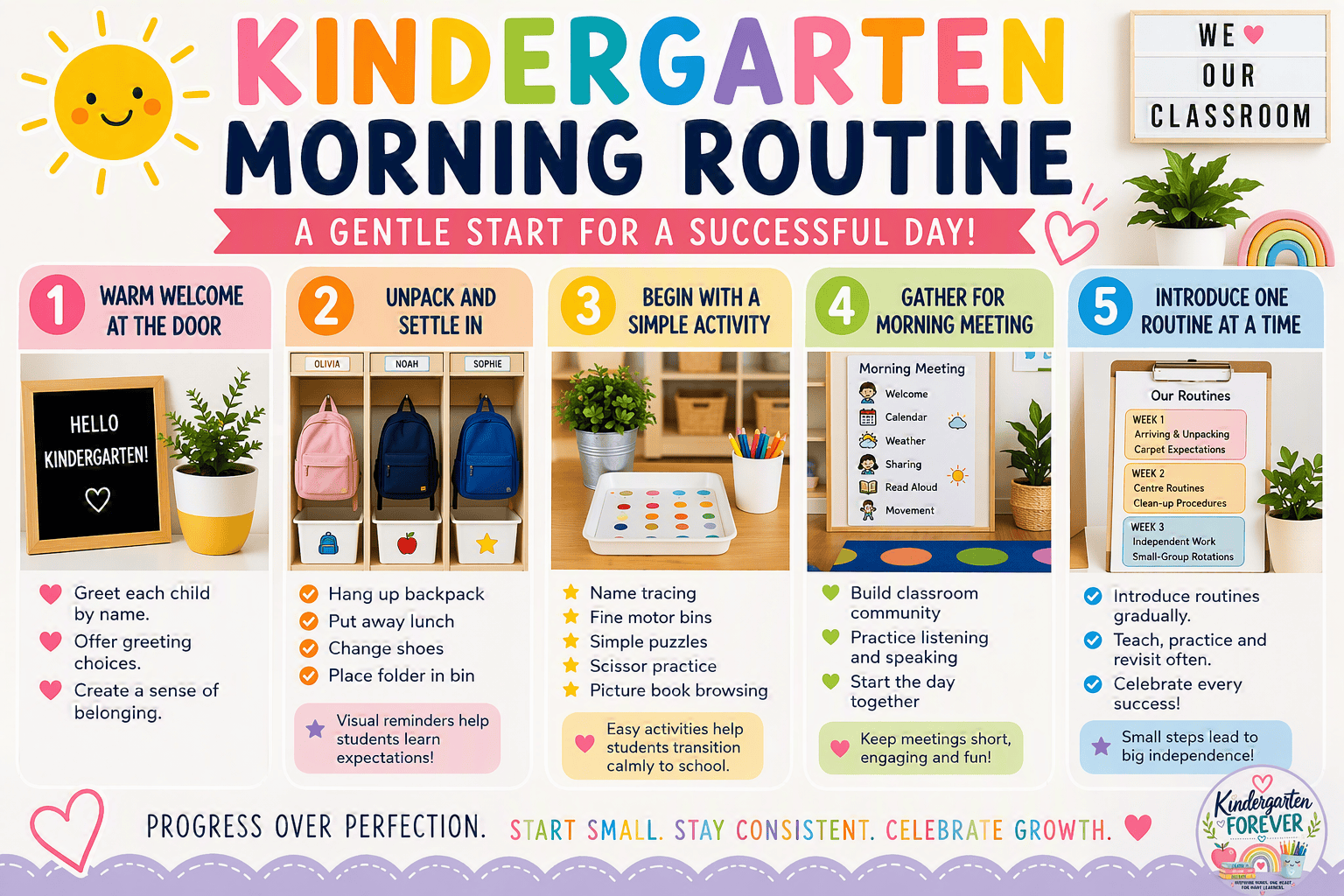
🌈 Kindergarten Morning Routine Step 1: Warm Welcome at the Door

A positive connection starts the moment students arrive.

Greeting each child by name helps create a sense of belonging and gives you a quick opportunity to check in with how they’re feeling that day.

You might choose:

👋 A simple wave
✋ A high five
🤝 A handshake
💖 A smile and hello

Giving students a few greeting choices can be a fun way to build independence while helping nervous learners feel comfortable.


🎒 Kindergarten Morning Routine Step 2: Unpack and Settle In

Keeping arrival routines simple is key.

Students can:

✅ Hang up backpacks
✅ Put away lunch bags
✅ Change shoes if needed
✅ Place communication folders in a designated basket

Visual reminder cards are especially helpful during September as students learn expectations.

Remember: routines take practice. It’s perfectly normal to spend the first few weeks teaching, reteaching, and celebrating every successful step.


✏️ Kindergarten Morning Routine Step 3: Begin with a Simple Table Activity

Once students have unpacked, invite them to complete an easy independent activity.

Some favourites include:

🔤 Name tracing
🎨 Fine motor bins
🧩 Simple puzzles
✂️ Scissor practice
📚 Picture book browsing

The goal isn’t academic rigor. The goal is helping students transition calmly from home to school.

Short, successful tasks help build confidence and give teachers time to support students who may need extra assistance.


🗓️ Kindergarten Morning Routine Step 4: Gather for Morning Meeting

For many classrooms, Morning Meeting becomes the heart of the Kindergarten morning routine. This is where classroom community begins to grow.

Consider including:

🌤️ A welcome song
📅 Calendar discussions
🌡️ Weather observations
🧠 Sharing opportunities
📖 A read-aloud
🎵 Movement breaks

Keeping meetings short and engaging is especially important during the first month of school.


🍎 Kindergarten Morning Routine Step 5: Introduce One Routine at a Time

One mistake many teachers make (myself included!) is trying to teach every classroom procedure immediately.

Instead, focus on introducing routines gradually.

For example:

Week 1: ✨ Arriving and unpacking ✨ Carpet expectations
Week 2: ✨ Centre routines ✨ Clean-up procedures
Week 3: ✨ Independent work expectations ✨ Small-group rotations

Students learn best when new routines are introduced in manageable chunks.

Kindergarten Morning Routines: A gentle start for a successful day

🌱 Remember: Progress Over Perfection

September can feel overwhelming, especially in Kindergarten. Establishing a successful Kindergarten morning routine takes time, patience, and lots of practice.

Some mornings will run beautifully.

Others may involve missing lunch bags, tears at drop-off, and a student who absolutely must tell you about their neighbour’s dog before taking off their backpack.

That’s okay.
The goal isn’t perfection.
The goal is creating a classroom where children feel safe, valued, and excited to learn.

Every successful routine you establish in September becomes time you’ll gain back throughout the school year.


Kindergarten Curriculum Bundle

📚 Helpful Ontario Kindergarten Planning Support

If you’re looking for support with long-range planning, organization, and setting up for a successful year, take a look at my:

🍎 Ontario Kindergarten Planning Bundle (Updated for 2026)

This resource includes three essential planning tools designed specifically for Ontario Kindergarten educators.

👉 3 Essential Tools – 2026 Ontario Kindergarten Curriculum Expectation Bundle


💖 Final Thoughts

A strong Kindergarten morning routine helps create the foundation for a calm, successful school year. The first few weeks of Kindergarten aren’t about doing everything.

They’re about building a classroom community, establishing predictable routines, and helping students fall in love with coming to school each day.

Start small.
Stay consistent.
Celebrate progress.
And remember—you don’t have to have it all figured out by September Day 1. 🌈

Happy teaching!

– Kindergarten Forever 💕

🛒 Invitation to Explore My Store

If you’re looking for ideas and activities for morning routines that fit perfectly into a play‑based Kindergarten classroom, I’d love for you to visit my Kindergarten Forever store on Teachers Pay Teachers. You’ll find classroom‑tested resources designed to make your morning routines meaningful, engaging, and fun for your learners.